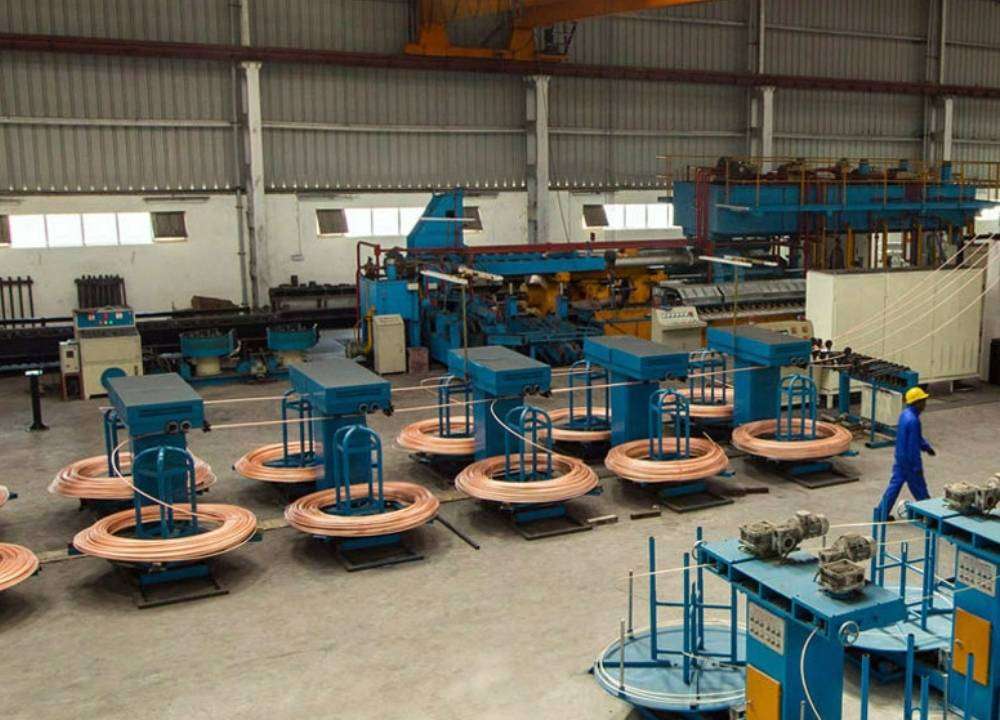
India’s manufacturing story has, for years, been closely associated with capacity creation, more plants, larger production lines and higher output. That focus has been necessary, but as India moves towards becoming a globally competitive manufacturing base, the next advantage will not come from capacity alone. It will come from how effectively the different layers of the industrial ecosystem work together.
As the growth of India’s manufacturing GDP is expected to rise on average 6.5% per year in the coming years to reach ₹93.5 lakh crore in FY35, compared to an estimated ₹46.9 lakh crore in FY24. This is the magnitude of the opportunity available. However, the growth of the manufacturing sector cannot be simply about the number of plants built and the production of manufactured items. Rather, what is key is the efficiency of the integration of the various parts of this growing manufacturing base.
Supply Chain Integration
One of the lessons from recent global disruptions is that manufacturing competitiveness cannot be measured only by the capacity of the final assembly plant. It also depends on the strength of the upstream ecosystem that feeds it.
In industries like power equipment, renewable energy, cars, electronics and machinery, some of the most fundamental raw materials may make all the difference in terms of quality, cost and scalability of the end-product. Copper, aluminium, brass and other conductive materials are fundamental inputs across this industrial landscape.
This makes localisation of critical inputs increasingly important. For example, copper demand in India is expected to increase significantly. As electrification continues to grow, the demand for materials will increasingly intertwine sectors which used to be seen independently. The renewable power, electric mobility, the grid, the data centers and industrial automation all compete for material resources and manufacturing capacity.
The message is simple: India needs to develop connections between raw materials, manufacturing and application sectors.
From capacity creation to capability creation
The next phase of manufacturing should therefore focus not just on adding machines, but on building capabilities around them. This means greater process integration, better quality control, faster customisation, stronger recycling systems and greater use of data across production. It also means reducing unnecessary dependence on multiple external layers for critical stages of manufacturing.
Control over more parts of the value chain can help in improving reliability and response for manufacturers. For consumers, it can translate into lower lead times, product customization and better predictability of quality. On a country level, it makes supply chains more resilient.
It becomes especially important as India tries to climb up the global value chain. The direction is significant. Global competitiveness is increasingly being determined by the depth of the ecosystem surrounding a product, rather than by the final manufacturing facility alone.
India’s energy transition makes this even more relevant. As of January 2026, India had reached 520.51 GW of installed power capacity. Yet adding generation capacity is only one part of the equation. Power must also be transmitted, distributed and managed efficiently.
Recent developments demonstrate the scale of this challenge. India’s transmission sector is facing an estimated ₹7.6 trillion investment pipeline, driven partly by the need to support rising renewable generation and evolving electricity demand. This creates a direct connection between energy infrastructure and manufacturing. Transmission expansion requires conductors and other engineered materials. Renewable projects require electrical components. Electrified industries require reliable grids. Manufacturing facilities themselves increasingly depend on stable and efficient power.
More electrification will drive greater demand for materials, which in turn will require more manufacturing and transmission infrastructure, creating stronger demand for engineered materials and reinforcing the need for integrated supply chains. Circularity must become part of competitiveness
Integration also has an important sustainability dimension. As material demand rises, India cannot rely indefinitely on a linear model of extracting, processing, using and discarding resources. Recycling and recovery need to become embedded within manufacturing strategies.
For non-ferrous metals in particular, circular manufacturing can reduce dependence on virgin resources while improving material efficiency. The objective should not be sustainability as a parallel initiative, but sustainability integrated into the economics of production.
This is where the Indian industry has a chance to differentiate itself. Combining resource efficiency, recycling, energy optimization, and quality control processes can help the industry gain competitive advantage both environmentally and commercially.
The next manufacturing race is about ecosystems
India has demonstrated that it can build manufacturing capacity at scale. The next challenge is to make that capacity work as an integrated ecosystem. Manufacturing facilities in the future will no longer be independent of each other. They will be connected to their suppliers, customers, power grids, recycling processes, and even technology platforms and logistics systems. The flow of information will follow the flow of material, allowing companies to predict demand and optimize production.
Thinking beyond individual products and asking a larger question: how can we become a stronger link within the industries that India is building for the next decade? India’s manufacturing advantage will ultimately not come from having the largest number of factories or the highest installed capacity. It will come from the ability to connect capabilities materials with engineering, manufacturing with technology, production with recycling, and infrastructure with industrial demand.
That deeper integration can make Indian manufacturing not only larger, but more resilient, efficient and globally competitive. The next chapter of India’s manufacturing journey should therefore be about building more connected industrial ecosystems, not simply bigger factories.