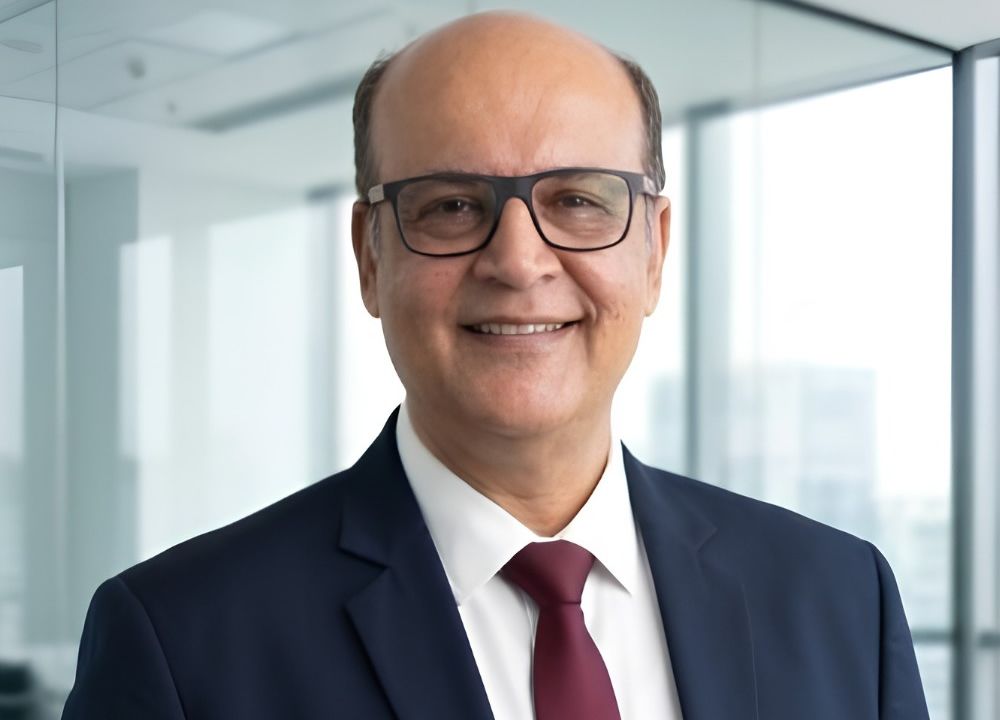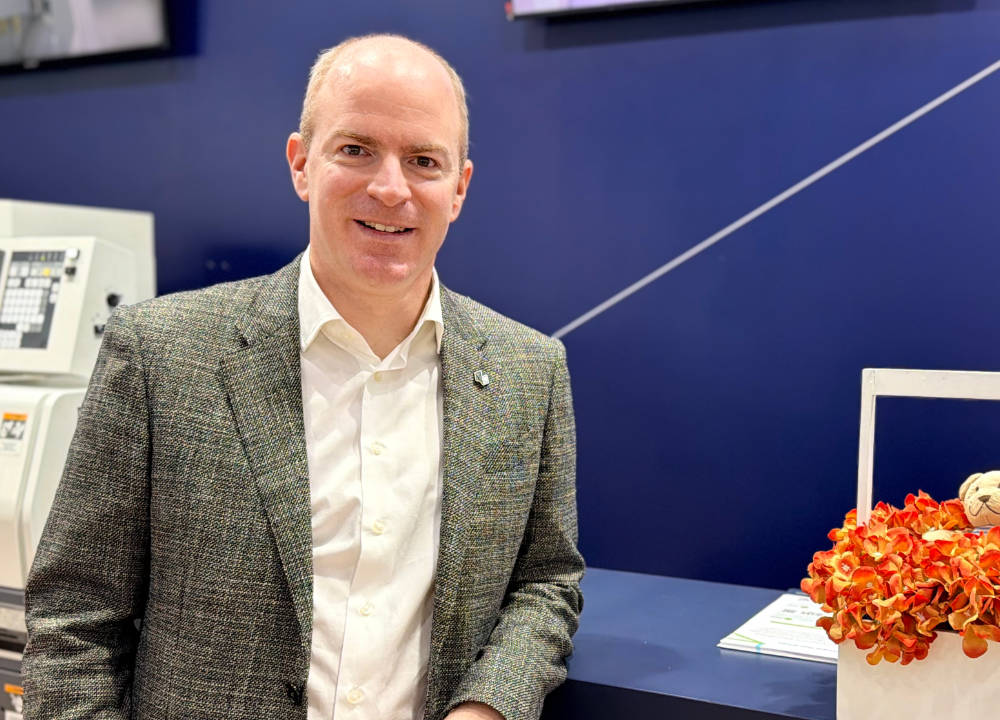
As METALEX 2026 celebrates its 40th edition at BITEC in Bangkok, the show, billed as the leading machine tool and metalworking exhibition serving ASEAN, has become a meeting point for technology companies chasing growth across Southeast and South Asia. On the sidelines of the show, Machine Maker spoke exclusively with Steffen Dilger, President of the Production Software Division at Hexagon, who leads the group’s global CAM business. He named Vietnam as ASEAN’s rising market, said Thailand will find new opportunities as its automotive industry moves toward electric vehicles, and described India as one of the world’s top machine tool markets where Hexagon will continue to invest. Mr Dilger also explained how Hexagon has sharpened its focus after selling its design and engineering business to Cadence, and why repeatable and resilient processes matter more than ever. On artificial intelligence his message was clear: AI has to earn its place in the products, and manufacturers need a balance between AI and the traditional way.
For most people in manufacturing, the name Hexagon brings to mind coordinate measuring machines and metrology hardware. The Stockholm-headquartered group, listed on Nasdaq Stockholm, calls itself the global leader in measurement technologies, and in its 2025 year-end report it stated net sales of about EUR 5.4 billion with around 24,500 employees in 50 countries. Since then the group has reshaped itself significantly. In May 2026 it completed the spin-off of Octave, its software business for asset lifecycle intelligence and safety, infrastructure and geospatial, which now trades as a separate company on Nasdaq in New York and Stockholm.
Hexagon’s Production Software business was formed in January 2019, when Vero Software, FASys and SPRING Technologies were brought together under the Hexagon brand. Vero, acquired in 2014, brought CAD CAM brands such as WORKNC, Edgecam and Radan, while SPRING Technologies brought the NCSIMUL verification software. In 2020 Hexagon added DP Technology, the California based developer of the ESPRIT CAM system, which had sales of about EUR 35 million in 2019. The division today sits within Hexagon’s Manufacturing Intelligence business area, headed by Andreas Renulf, and serves machine shops, mould makers and sheet metal fabricators across the world.
The bigger change came with Hexagon’s decision to sell its Design and Engineering business, which included the former MSC Software, to Cadence Design Systems for about EUR 2.7 billion. The deal was announced in September 2025 and completed in February 2026. “Over the last year we have been sharpening our footprint,” said Mr Dilger. “Earlier we were along the whole life cycle, from design and engineering to production and quality. With the sale of the CAE business to Cadence, it is now much clearer, also for our shareholders, what we offer as a company.”
Repeatable Processes in an Uncertain World
Asked to describe the purpose of his division in simple terms, Mr Dilger pointed to consistency and reliability rather than speed alone. “In easy words, we want to enable manufacturers to manufacture in a better, more consistent and more reliable way,” he said. “You do it again, you repeat it, and regardless of what is happening, the process is repeatable.” He believes this resilience has become a business necessity, because supply chains are no longer working the way they did ten years ago and manufacturers need processes they can depend on.
The portfolio is organised around three CAM pillars. For mould and die, Hexagon offers WORKNC, while ESPRIT EDGE is its flagship for production machining and carries embedded AI technology that Mr Dilger described as among the most advanced in the market. On the sheet metal side, the company offers Radan, a segment he said is growing well with strong demand. These are supported by NCSIMUL for verification, which allows manufacturers to check and optimise toolpaths and cut down cycle times before a part reaches the machine.
Mr Dilger is clear about how he wants the market to see Hexagon. “We want to be the go-to place for reliability and resilience in production processes,” he said. “We position ourselves as a premium OEM for production software, and I would love to see people perceive Hexagon not only as the leader in metrology but also as a leader in production software.” For a brand so closely associated with measurement, that is a deliberate shift in how it presents itself to manufacturers.
From the Shop Floor to a Global Role
Mr Dilger’s own career has moved between software, finance and manufacturing. He studied business informatics at Hochschule Karlsruhe in Germany and also studied in France, and he has held finance and audit roles in industry, including a stint as a group CFO. On the customer side of the industry, he led production operations as Managing Director of STEICO France, the French arm of the German wood fibre building materials maker, for about four years. That experience of running a plant shaped the way he looks at software today.
He joined Hexagon in 2017 as General Manager of the Q-DAS Group, the group’s statistical process control software business for quality, while also heading Production Software for the DACH region covering Germany, Austria and Switzerland. In 2020 he became Vice President for EMEA, and in 2025 he took global responsibility as President of the Production Software Division. “My advantage now is that I understand the production processes behind it, and I also know from the IT side what is feasible,” he said.
That combination is relevant for a business that sells software to people who run machines. Production managers judge a CAM system by whether it saves time and avoids crashes on the floor, not by its feature list. Mr Dilger’s background on both sides gives him a practical lens on what customers actually need from the software.
Vietnam Rising, Thailand in Transition, India a Priority
Looking at Asia beyond China, Mr Dilger named Vietnam as one of the biggest emerging markets. “There is a lot of foreign direct investment into Vietnam, and a lot of production is happening there,” he said. “If you look at its GDP growth, it is one of the highest in the world. It is a good place to be at the moment.”
On Thailand, the host country of METALEX, he acknowledged that growth has been slower in recent years as the automotive component industry adjusts to the shift towards electric vehicles. “Moving away from the combustion engine and preparing the supply chain for EVs takes a little time,” he said. “But I still believe Thailand will have equally good opportunities in that space going forward.” He added that Thailand is, for Hexagon, an easier market to access than India.
India, he said, is a super important market because Hexagon’s products sit very close to the machine tool. “India as a machine tool market is huge, maybe a little smaller than China, but I would say number two or three in the world,” he said. At the same time, he admitted that market access is not as easy as in Europe, because India is a vast country and putting one or two sales people there will not move the needle.
Hexagon already has a strong base in the country, with about 30 people and an R&D centre in Hyderabad, according to Mr Dilger. “India is one of the markets we will continue to invest in,” he said. “We will need to change our setup a little going forward to adapt to how the market is evolving.” He did not share details of the new setup, but made it clear that the Indian market remains firmly on the company’s growth plan.
AI That Creates Value, Not a Tick Box
On technology trends, Mr Dilger chose to step back from the hype around artificial intelligence. “Everyone talks about AI at the moment, it is the big buzzword,” he said. “For me, AI is not a tick box where we say AI is embedded. What matters is what actually creates value for the customer.”
In Hexagon’s CAM products, this takes the form of a copilot that answers programmers’ questions, and a further step called copilot execute, where a user can operate the CAM software in a conversational manner. A programmer can simply ask the system to program a set of features and direct the CAM through the copilot. Alongside this, ProPlanAI learns from the programs a company has already created and then programs new parts in an automated way, which Mr Dilger said is already reducing programming effort a great deal. Hexagon says the tool can cut programming time by up to 75 per cent, and he added that there is much more to come.
For Mr Dilger, the real question is where the customer’s pain lies, and one of the biggest pains is the loss of programming knowledge. “In saturated markets, a lot of people are going into retirement with a lot of knowledge sitting in their heads, and that programming experience is never really handed over to the next generation,” he said. He accepted that the issue is less pressing in a market like India, with its large young population, but explained that ProPlanAI captures this knowledge by adapting to the programming style of a specific company. “We are not working on a generic base. We adopt the programs of that one customer, and that is more spot on than taking thousands of programs from different customers with very different approaches,” he said, calling this the key differentiator from what others are doing.
Even so, he does not see AI as an answer to everything. “Like any other technology, AI has to earn its place in the products. It is not a given,” he said. “There might be areas where AI is good, but the traditional way is just as good, and then where is the point? So we need to find a balance between AI and the traditional way.” It is a measured view from a company that has invested heavily in AI for CAM, and one that shop owners who have heard many promises about the technology will appreciate.
For Indian manufacturers dealing with a shortage of skilled CAM programmers and pressure to deliver consistent quality, these tools speak directly to the resilience that Mr Dilger keeps returning to. Hexagon’s message at METALEX 2026 is that production software should make good processes repeatable, regardless of who is at the machine or what is happening in the wider world. With India named as one of its priority markets, it will be worth watching how the company reshapes its presence here in the coming year.