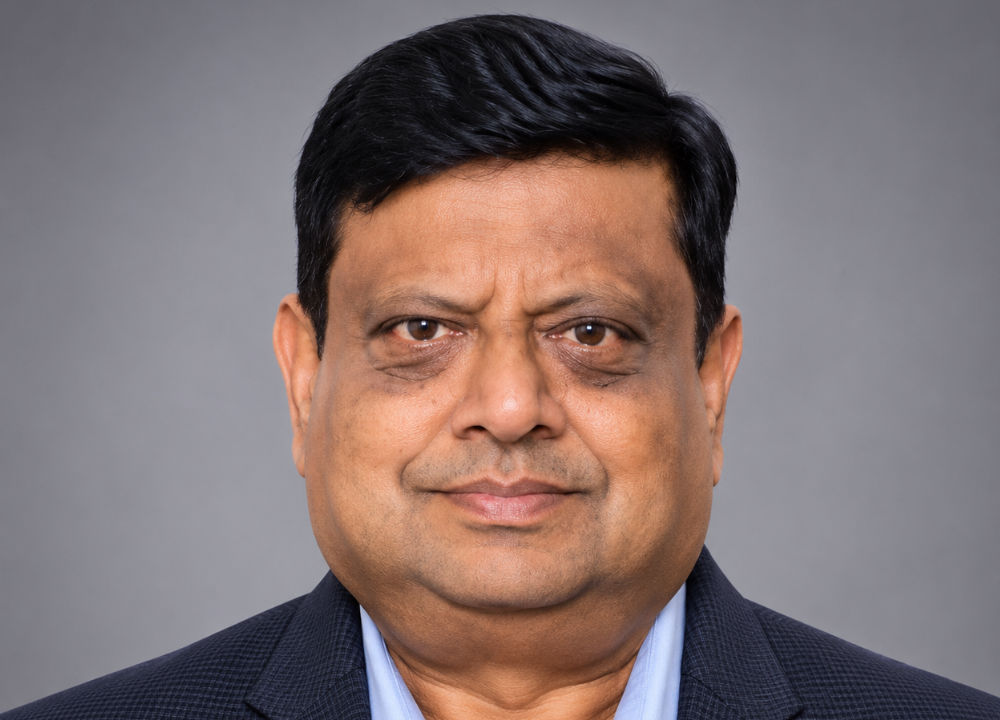
Capital-A, the Bengaluru-based early-stage venture fund founded by Ankit Kedia, has quietly built one of the more focused manufacturing theses in Indian venture capital, at a time when most institutional money in the country continues to chase software and consumer internet businesses. Across two funds, the firm has backed more than 30 companies with cheques ranging from ₹5 crore to ₹12 crore, choosing founders who understand the realities of a factory floor as closely as they understand a term sheet.
In a candid conversation with Machine Maker, Ankit Kedia, founder of the Bengaluru-based venture fund Capital-A, lays out exactly what it takes for a manufacturing founder to earn his confidence, and just as importantly, his cheque. He explains how seventeen years running Manjushree Technopack taught him to read founders on shop-floor realities rather than pitch-deck polish, and why Capital-A stays hands-off once it invests, stepping in only when a founder’s own 100-day plan goes off track. He also spells out where he draws the line altogether, rejecting the ‘China Plus One’ narrative outright and steering clear of capital-heavy categories like EV manufacturing and infrastructure. Taken together, his answers offer manufacturing founders a rare, specific view of what institutional capital in India is actually looking for, and what it will consistently walk away from.
For a long time, manufacturing founders in India found it difficult to get a serious hearing from venture capital. Most funds were built around the economics of software, fast distribution, thin capital requirements, quick multiples, and a founder asking for money to set up a plant, qualify a supplier, or run a year-long pilot with an industrial customer did not fit that mould easily. Ankit Kedia has approached this problem from both sides of the table. For seventeen years, he ran Manjushree Technopack, the plastics packaging business his family built, before a 2020 buyout by Advent International gave him the capital and the conviction to start Capital-A, a fund dedicated almost entirely to manufacturing, deep tech and climate technology. In a detailed conversation, Ankit spoke at length about how the fund evaluates founders, the sectors it avoids on principle, and what it takes to build the kind of institutional confidence that Indian manufacturing has historically struggled to attract.
Shopfloor Inspired Investments
Ankit is candid that his years at Manjushree were more useful to him as an investor than any amount of time spent reading pitch decks. He recalled joining the family business in 2006 and being made to report directly to the plant manager for his first five years on the job, without so much as a proper cabin to himself. “That’s how my dad wanted to train me,” he said, adding that while he resented it at the time, he is grateful in hindsight for having had a mentor of that nature early in his career. He believes this grounding on the factory floor lets him ask founders sharper questions than a purely financial investor could.
This shows up most clearly in how he responds to pitches built around automation and industrial software. A founder proposing to put “intelligence” at the end of a manufacturing line, he explained, is only solving part of the problem. “Now automation at the end of line, you can study downtime, uptime, but can you accurately read errors? Can you do incoming quality checks? Can you do outgoing quality checks?” he asked, going on to list the maintenance procedures, weekly to yearly, that a plant actually runs on. Capturing data, in his reading, is the easy part; using that data along with the skill experience already sitting on the shop floor is a far harder problem, and one that determines whether a plant manager can even justify the expense on his P&L. “Every large business, every P&L is driven by a consultant,” he said, by way of explaining how difficult it is to sell purely on the promise of intelligence without a demonstrated return.
Ankit is equally forthright about the industry-wide habit of borrowing the technology playbook wholesale. “Jaldi scale karo,” as he put it, describing the instinct to scale fast and lean on online distribution the way a software company would, is, according to him, a myth once it is applied to manufacturing or deep tech. When he started investing in 2021, he recalled, the market was consumed by edtech, SaaS and a handful of other categories that had nothing to do with what Capital-A was trying to build. “We stuck to our guns, and we still went ahead and did the entire manufacturing thesis,” he said, adding that the decision gave the fund real differentiation at a time when very few investors were willing to commit to the sector with any seriousness.
That conviction now sits behind two funds. Fund I, an early Category I vehicle, deployed ₹120 crore across 21 companies at an average cheque size of ₹5 to 6 crore. Fund II is considerably larger at ₹400 crore, comprising a ₹300 crore corpus with a ₹100 crore green-shoe option, structured as a Category II AIF registered with SEBI, and writing cheques of anywhere between ₹6 and 12 crore depending on the company’s stage. “We typically come in at early revenue stage. I don’t know what seed is these days, but early revenue, some pilots, become very susceptible for us to invest,” Ankit said, adding a structural detail that founders often overlook: Capital-A’s own private placement memorandum with SEBI restricts it to investing only in Indian companies, using Indian rupees raised from Indian limited partners.
How Failures Turns Into Wisdom
One of the more candid parts of the conversation was Ankit’s reflection on his own mistakes while running Manjushree, and how those lessons now shape the way he reads founders. He admitted that the company took too long to design a genuinely inclusive incentive structure that tied compensation to the performance of the whole organisation, across production, marketing, finance and sales. “Motivation is definitely gratification from your job, but eventually it boils down to how you are also being compensated for the efforts,” he said, a lesson he now repeats to founders in his portfolio who are still designing their own incentive structures.
The other lesson he draws on frequently concerns the composition of a company’s board. At Manjushree, the family brought in Sanjeev Aga, former managing director of Idea Cellular, along with Jayesh Merchant, who spent years as Asian Paints’ chief financial officer, and Manu Anand, who led Mondelez and Cadbury’s India business, as independent directors. Ankit describes this as building “a very leverageable board of people” who could bring outside operating judgment into a family-run company, rather than simply signing off on governance formalities. He keeps pushing founders in the Capital-A portfolio to think about their boards in the same way, arguing that a strong, industry-relevant board does more for a young company than most operational hires can.
Taken together, these two lessons point to something that recurs through the conversation: Ankit evaluates founders less on the sophistication of their pitch and more on whether they understand the unglamorous mechanics of actually running a company, from paying people fairly to surrounding themselves with the right advisors.
It’s Founders Business
Asked how involved Capital-A gets once a cheque is written, Ankit was careful to distinguish between tracking a company and actively directing it. Every company in the portfolio is tracked closely, he said, but “being an active role is another matter altogether. In his experience, the strongest outcomes in venture investing have rarely been engineered by investors. “Investors haven’t built the best VC outcomes that we have seen; it has been built by founders who are not troubled much by their investors,” he said, a view he holds firmly even as an investor himself.
That does not mean Capital-A stays entirely hands-off. Every investment comes with a 100-day plan agreed upon soon after the cheque is signed, and if that plan is not being executed, the fund does step in more actively to help the founder get back on track. Even then, Ankit is deliberate about how far that involvement goes. “Founders don’t need someone breathing down their neck every day. They need tactical help on some matters but strategic help on bigger matters,” he said, describing Capital-A’s role as pointing founders toward the right people and the right conversations rather than making decisions on their behalf.
He was also candid about where Capital-A draws the line on what kind of founder it will back. A founder who understands the product deeply but has no grasp of the business side of it is not, in his words, someone the fund gets excited about, because Capital-A is not built to function as an incubator or an accelerator. “We are raising funds from LPs to deploy, to redeploy, to do work rounds, eventually exit the companies, pay back our LPs with their returns of 25 to 30 per cent IRR,” he explained, noting that the fund also owes its LPs a 20 per cent carry once those exits materialise. Founders looking for the kind of hand-holding an incubator provides, he suggested, should be having that conversation a stage earlier than Capital-A.
Leaning on the “China Plus One” story
Few phrases come up as often in Indian manufacturing pitches as “China Plus One,” and it visibly irritates Ankit. His starting position is blunt: India is in no position to compete with China on its own terms. “China is 50 years ahead of us in terms of scale, in terms of technology, in terms of R&D, in terms of everything,” he said, arguing that founders who reach for global positioning before proving something more basic are getting ahead of themselves.
What he asks founders to demonstrate instead is considerably narrower and, in his view, considerably more honest. Before a company can claim to be serving the world as a “plus one” to China, he wants to see it competing for its own domestic demand at prices close to what China can land goods at in India. “We are not saying make it cheaper than China. We are just saying compete with China and their landed prices first,” he said, adding that only once a company has captured its native or captive market does the conversation about global supply chains become credible.
At the same time, Ankit is careful to separate this discipline from any illusion that India and China are comparable economies at this stage. “I am also a person who always believes that we cannot compare ourselves with China. It is completely a wrong thought process,” he said. What has genuinely worked in India’s favour, in his reading, is not domestic policy so much as a change in how the United States and Europe view China as a single-source supplier. Increasingly wary of over-dependence, Western buyers have started diversifying toward Indian manufacturers, and Ankit pointed to advanced manufacturing and aerospace companies out of Hyderabad and Bengaluru that have raised meaningful capital and scaled quickly on the back of exactly this shift.
This combination of scepticism about slogans and acceptance of genuine tailwinds runs through much of how Capital-A screens opportunities, and it explains why Ankit tends to ask founders sharper questions about unit economics and landed cost than about total addressable market.
Capital-A Empowering Advanced Manufacturing
Ankit is equally direct about the categories Capital-A avoids altogether, and the reasoning has less to do with the size of the opportunity than with the nature of the capital such businesses require. Electric two-wheeler and three-wheeler manufacturing is one such category. “EV OEMs, which startups are manufacturing, may eventually find it very difficult to scale without capital,” he said, pointing to Ather Energy as the exception that proves the rule. This company only found its footing after raising very large sums and bringing in Hero MotoCorp, through the Munjal family, as a strategic investor.
The same logic extends to infrastructure. Large infrastructure projects, in Ankit’s assessment, are legitimate businesses but not the kind that early-stage venture capital is built to fund. “Wherever there is infrastructure, wherever there are large infrastructure projects, that’s not a VC business. It’s a business, but it’s not a VC business,” he said, advising founders in that category to look toward strategic and conglomerate capital rather than early-stage funds.
Ankit applies a third, more personal filter: a founder’s history in the sector they are building in. He described watching someone with a background in dairy products attempt to build a business manufacturing aerospace components, an example he uses to illustrate why domain experience matters so much more in manufacturing than it might elsewhere. “Aerospace is sold on trust and relationships. It’s not sold on someone’s ability to raise funds and having enough cash in the bank,” he said. For Ankit, entering a sector without having worked in it before is, in manufacturing especially, close to disqualifying on its own.
Real Confidence comes from Commercial Discipline
Toward the end of the conversation, Ankit turned to what he considers the real determinant of whether a founder can take a company from its first cheque to a meaningfully larger outcome. His advice concerned less with fundraising tactics and more about restraint. “Founders have to pick their areas of strength and leverage on it fully by themselves. They have to use the investor’s network selectively, only if they need it,” he said, warning that founders who lean too heavily on investor suggestions end up building a business on borrowed conviction rather than their own credibility.
He also pointed to fundraising itself as a craft that founders need to develop deliberately, particularly at the early stages. “Early stage investing and raising investment is a combination of luck, I agree, but it’s also an art of how you can tell the right story in a very authentic manner and still end up raising funds,” he said, a formulation that leaves room for circumstance while insisting that narration discipline is not optional.
The clearest marker he offered, however, concerned commercial intent rather than capital markets know-how. Capital-A, he said, is uninterested in technology that never leaves the laboratory. A molecule or piece of deep technology with no defined route to a paying customer does not meet the fund’s bar, no matter how sound the underlying science. “Once you start manufacturing, they’re happy to come back and re-look at the investment,” he said of such companies, before pointing to what he considers the more encouraging shift he has seen across his own portfolio. “People want to commercialise it and no longer keep it as a research project, as a college project,” he said, describing this change in founder mindset as one of the more significant developments he has tracked since starting Capital-A.
Read together, these positions describe an investor trying to build something more durable than a portfolio: a working template for how Indian manufacturing founders can be taken seriously by institutional capital, without pretending their businesses behave like software companies, and without hiding behind slogans the underlying economics cannot support.