Calligo Technologies and Japan-based OGIS-RI have entered into a strategic partnership to accelerate the adoption of Vision-AI technologies across industrial sectors in India and Japan. The collaboration brings together Calligo’s advanced edge-AI vision capabilities and OGIS-RI’s industrial IoT expertise to deliver a standards-based platform designed for next-generation manufacturing and automation environments.
The partnership integrates Calligo’s CIS2 (Calligo Intelligent Surveillance System) technology with OGIS-RI’s MessagePub+, a lightweight messaging framework built on OneM2M standards for machine-to-machine communication. The combined solution provides a unified architecture that enables intelligent visual inspection, automated quality control, defect identification and real-time production monitoring across industrial operations.
Following successful validation and interoperability testing, the integrated platform is positioned to support large-scale deployments in smart factories and connected industrial environments. The solution combines edge-based artificial intelligence with standardized IoT communication, enabling manufacturers to process and analyze visual data closer to the source while maintaining seamless connectivity across distributed facilities.
As part of the collaboration, OGIS-RI will also promote Calligo’s TUNGA2.0 RISC-V-based system-on-chip through its extensive industry network. Designed for artificial intelligence and high-performance computing workloads, TUNGA2.0 provides a scalable hardware foundation for advanced industrial applications requiring efficient processing and real-time decision-making.
The partnership targets two rapidly growing markets. India continues to witness increasing adoption of machine vision technologies as manufacturers invest in automation, inspection systems and quality assurance processes. At the same time, Japan’s industrial sector is expanding the use of smart manufacturing technologies to improve productivity, reliability and operational efficiency. The combined opportunity is expected to drive demand for interoperable Vision-AI platforms capable of supporting Industry 4.0 initiatives.
Under the agreement, both companies will work on a phased implementation roadmap aimed at expanding deployments across manufacturing facilities in India and Japan. The integrated solution is designed to support multiple industrial sectors, including automotive, electronics, energy, industrial machinery and advanced manufacturing.
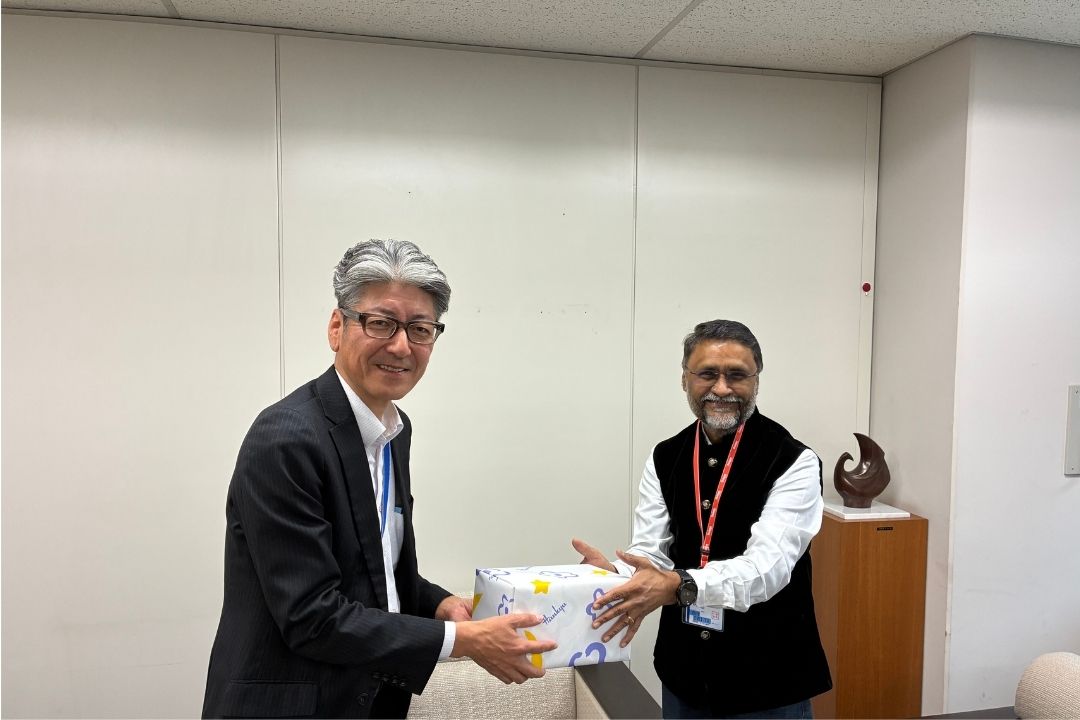
Jun Funamori, General Manager, Core Technology Department, Technology Innovation Division at OGIS-RI, said the collaboration combines visual intelligence with standardized machine-to-machine communication, creating a foundation for future industrial IoT deployments. He added that OGIS-RI intends to actively promote Calligo’s TUNGA2.0 platform as part of a comprehensive industrial automation offering.
Rajaraman Subramanian, Chief Technology Officer of Calligo Technologies, said the partnership reflects the company’s commitment to delivering scalable AI-powered solutions that help manufacturers improve productivity, quality and operational performance.
Calligo Technologies is a semiconductor and AI solutions company focused on developing advanced RISC-V-based system-on-chip (SoC) platforms for high-performance computing and intelligent edge applications. Its technology portfolio supports a wide range of industries, including automotive, industrial automation, manufacturing and IoT, enabling organizations to deploy high-performance, AI-driven solutions with enhanced efficiency and scalability.
OGIS Research Institute (OGIS-RI), a member of the Daigas Group led by Osaka Gas Co, Ltd, is a Japan-based technology company specializing in industrial IoT, smart manufacturing and digital transformation solutions. Through its expertise in automation, connectivity and enterprise technologies, OGIS-RI helps manufacturers and industrial organizations enhance operational efficiency, optimize production processes and accelerate the adoption of intelligent manufacturing systems.