Sumalini was close to a US green card. She had a stable career in quality assurance across aerospace and defence. She had three master’s degrees, years of hard-won expertise in some of the most demanding engineering environments in the world, and every reason to stay where she was. But she left. Moved back to India, started ASHWAA Engineering with her husband from nothing in 2020, and began building automation solutions for industries that had not yet committed to automation. On the hard days, when doubt crept in, she would look at her husband and say: “there is no going back.” He would look back at her and say: “you are right.” And they would tell each other, “there is only going forward.”
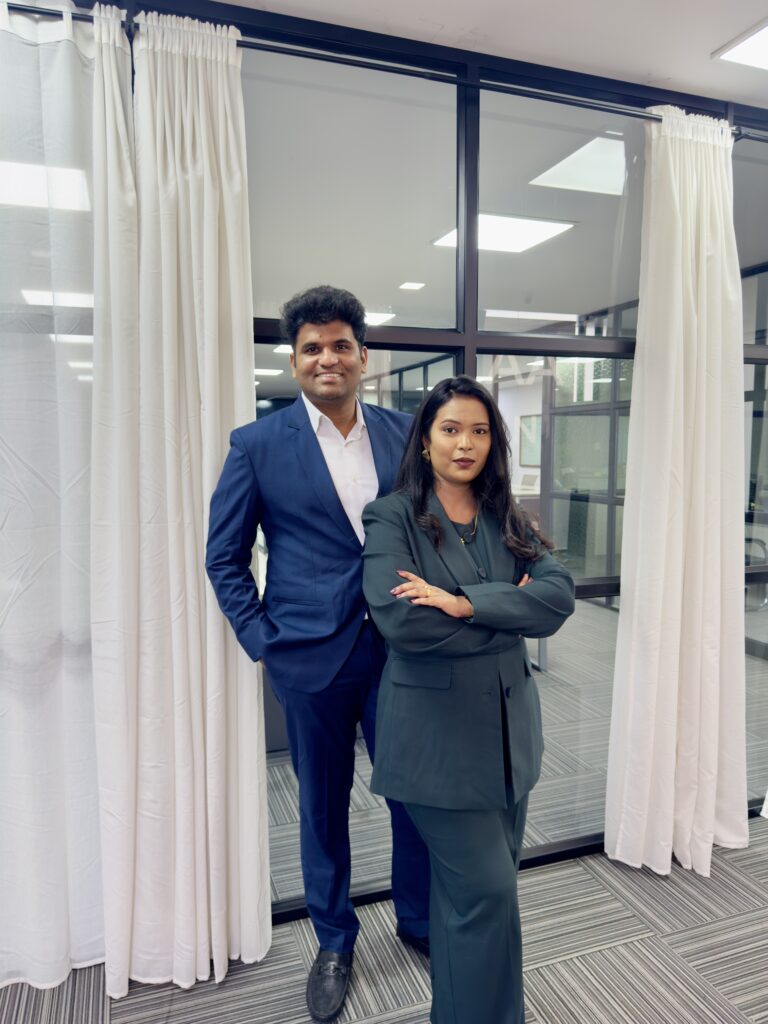
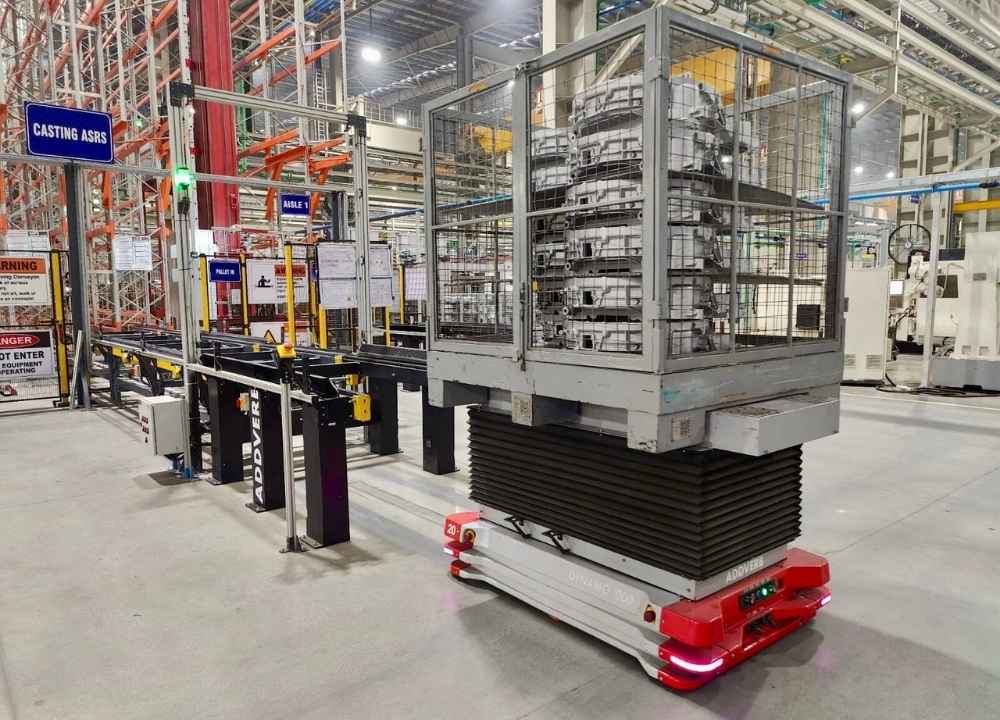
ASHWAA Engineering Pvt Ltd, based in Telangana, is an automation and robotics solutions company serving clients across automotive, medical, aerospace, warehouse, packaging, and pre- and post-process assembly industries. The company designs, develops, and deploys custom automation systems, building solutions from first principles rather than templates, with clients across India and international markets. Sumalini Jyothi is the CEO and Managing Director. Her husband and Co-founder leads engineering and product development. They started from scratch. That grounding, she says, is what defines ASHWAA today.
Three Master’s Degrees and a Mind That Would Not Stop
Sumalini’s academic record is unusual even by the standards of people who love learning. A BTech in Aeronautical Engineering, then a master’s in Aerospace Engineering from the University of Dayton, another in Project Management from Harrisburg University in the US, and now an MBA in finance and administration to strengthen, as she puts it, her business lens.
She often thinks back to her Harrisburg years, long workdays, followed by the quiet discipline of showing up again for her degree. Now, when she looks at that version of herself, it’s almost with disbelief at how much she carried, and a quiet, well-earned pat on the shoulder.
Each qualification served a distinct purpose. The aeronautical degree gave her the foundation in systems thinking and production technology. The move to the US for postgraduate study gave her exposure to a different quality of engineering education and a different way of thinking about high-performance environments. The project management degree translated engineering knowledge into something executable and scalable. The MBA is about building the commercial muscle to run the company she has co-founded.
She never believed learning had to pause for building to begin—and she still doesn’t. Even today, if she walks past an engineer working on something unfamiliar, she stops, asks questions, and learns. That instinctive curiosity isn’t something she turns on or off; it’s simply who she is.
The Quality Manager Who Said Trust Me, You Won’t Be Bored
When Sumalini walked into her first job in the United States, she applied for a manufacturing engineering role. A quality manager intercepted her, asked for her resume, and told her he wanted her in quality instead.
She told him it sounded boring. She wanted to be challenged, something new to learn every single day. He didn’t argue. He just said, “Trust me, you won’t be bored.” Then he made it simple: “Give it one month. If you see the quality, stay. If you don’t, I’ll personally recommend you to the engineering manager.” No pressure. Just conviction. They never spoke about the engineering role again.
Quality assurance in aerospace is not a checkbox function. Every part that goes through a quality process in that industry has a real-world consequence. There are components literally classified as life-critical. In those environments, failure is not a defect to be logged. It is an impact to be prevented. There is no approximation. Every system, every process, every decision has to hold up under pressure. She worked in that world for years, across aerospace, defence, and medical devices.
What that experience gave her was a permanent shift in how she asks questions. She stopped asking: does this work? She started asking: will this work every single time, under every condition? That question travels with her into every decision at ASHWAA.
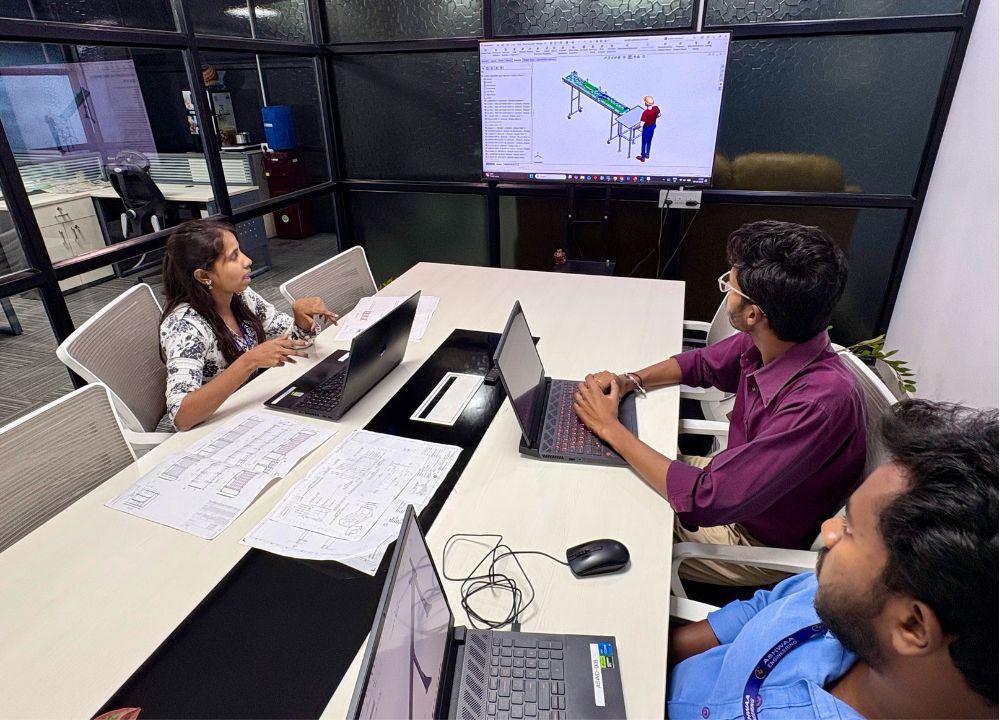
A Company Born from Ambition, Not a Business Plan
The 17-year-old on ASHWAA’s website is her husband. He visited an advanced machinery shop as a teenager and has been thinking about building his own manufacturing company ever since. When Sumalini met him in the summer of 2017, she quickly understood that small talk was not something he did. Every conversation was about ambition, about dreams, about building something that would matter.
Before they knew they would be life partners, they knew they would be business partners. They spent time mapping their complementary strengths, discussing where manufacturing was heading, and thinking about what kind of company they wanted to build. ASHWAA was not born from a sudden moment of inspiration. It grew from years of those conversations until the decision to start had become inevitable.
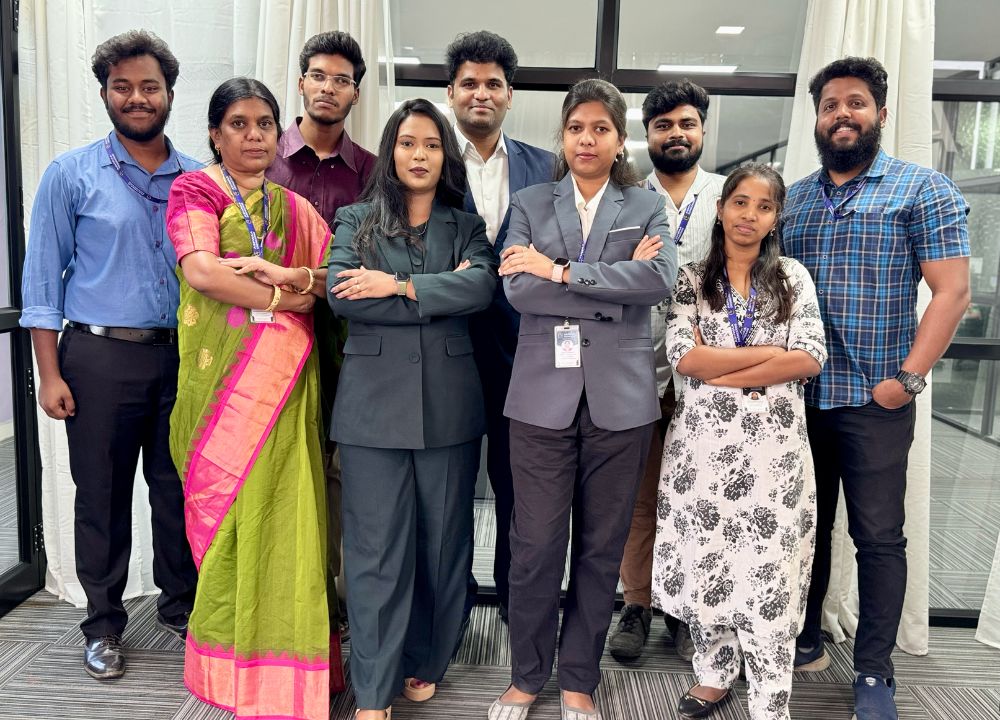
The first two years were about survival, research, and proving to themselves and their early clients who were also their colleagues who believed in them that they could deliver. They took on custom automation projects, built small integration lines, designed basic tooling. Every system they delivered was built with full engineering rigour, not to impress but to earn trust. The engineers who joined them in those years are still with them, and when they interview senior candidates today, they find it very often that ASHWAA’s team is ahead of who they are interviewing. That grounding, built in the hardest years, is the foundation.
Why They Refused to Specialise
Mentors told them they were wrong to work across multiple industries. Specialise early, they said. Pick one sector. It will not be as successful if you spread across too many domains.
Sumalini respectfully disagreed. Automation, she argues, is not industry-specific. It is problem-specific. Every industry around the globe is moving towards automation and AI. The real job of an engineer is not to follow predefined templates for a specific sector but to understand the real problem in front of them and build a solution for it. Restricting that thinking to one domain early would have limited both the company’s capabilities and its engineers’ minds.
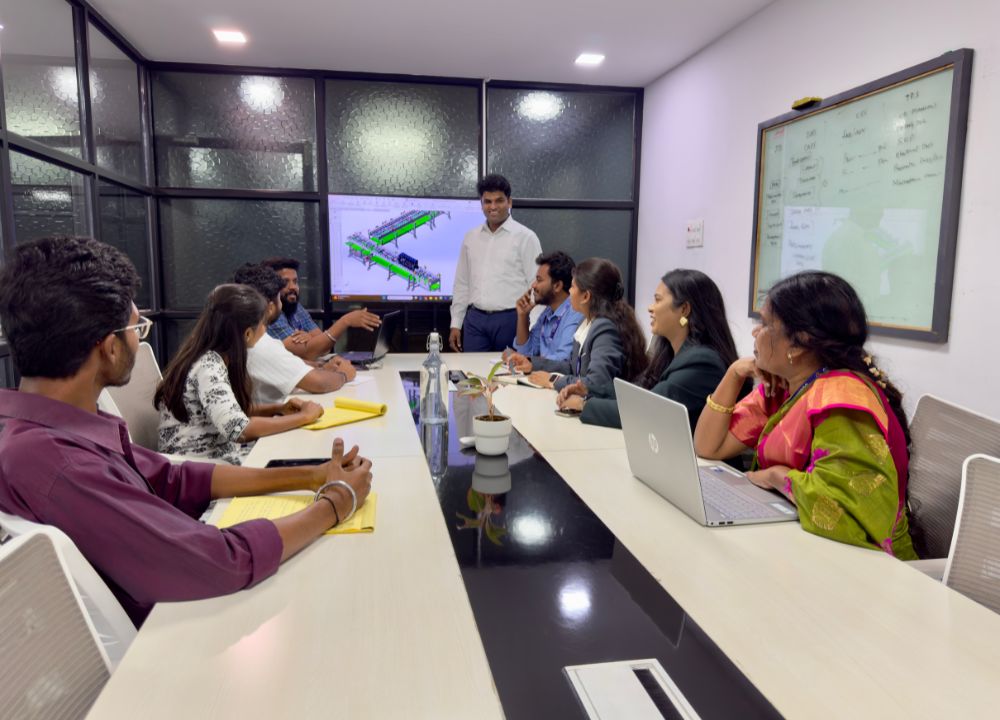
A customer once told them that eleven automation companies had bid for a project. ASHWAA stood out the most. The reason: their engineering considered every single aspect of the requirement, in a way the customer had not seen before. That compliment, Sumalini says, was particularly meaningful because it came while they were still a young company competing against established players.
The Auditor and the Founder Fight Every Day
Sumalini is a certified lead auditor for ISO 9001, IATF 16949, and medical device standards, and has worked as an internal auditor for AS 9100, the aerospace quality standard. She has audited systems and suppliers across industries and trained teams on regulatory compliance. That background sits in tension with being a founder every single day.
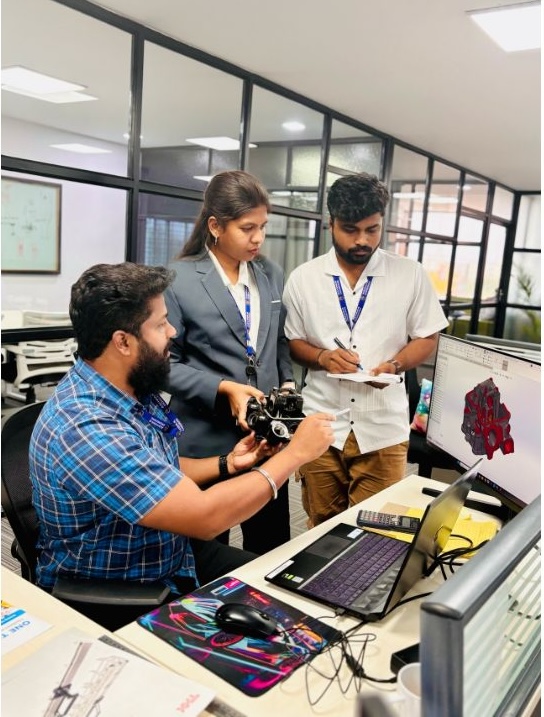
The auditor looks at what breaks. The founder has to move fast, make decisions with incomplete information, and take calculated risks. Structuring too early slows the company down. Moving too fast without enough discipline creates fragility. The balance between these two extremes is something she negotiates constantly.
What she has learned is that the timing of when to impose structure matters as much as the structure itself. In the early phases, intent and clarity are what matter most. As the company grows, structure becomes essential, but only if it strengthens the business rather than restricts it. Quality, for her, is not rigidity. It is the trust that a company builds with itself and with its customers.
On Women in Engineering and the Word She No Longer Uses
Sumalini is blunt about the gap between what the world says about women in engineering and what she has actually seen.
There are global campaigns encouraging women to enter engineering. She notices that there are no equivalent campaigns encouraging men to enter engineering. She asks: why does a woman need to be encouraged to do something she is entirely capable of doing? The narrative of encouragement comes from an era when roles were clearly defined by gender. That era is over, but the narrative lingers.
The real gap, she says, is not at the entry point. It is continuity. Are women in engineering trusted with decision-making roles? Are they seen as long-term leaders or as short-term participants? Do organisations create environments where women can voice their opinions with confidence? That is where the work needs to happen.
She is building something alongside ASHWAA, and she chose to call it POWERHANCE for a reason. When she looked up the word empower, it was defined as giving power to someone who does not have it. That never sat right with her. Because women are not lacking power. POWERHANCE is built on a different belief, not about giving power, but about enhancing what already exists.
She carries something from those early engineering rooms with her. Back then, whenever she spoke up on something technical, it was often met with surprise, “You know that?” as if competence had a gender. At first, it offended her. Then, it clarified something. She stopped shrinking what she knew to fit other people’s expectations. No disclaimers. No softening. No waiting for approval. She knew it. That was enough. And the moment she started standing in that certainty, the room adjusted, not the other way around.
The Daughter Who Is One and a Half Years Old and Already Changing Everything
On the difficult days at ASHWAA, when tariff uncertainties created noise, when customers hesitated, when the weight of building something from nothing felt heavier than usual, there were people who quietly held them up. Parents who stood by every decision without questioning it. Friends in the US who called across time zones just to say, “We know you’re going to do great.”
And then, there is their daughter. She is just one and a half. But she is their greatest source of encouragement. Because when Sumalini looks at her, she doesn’t just see a child, she sees every risk they’ve taken, and the responsibility to make it all mean something.

During one of those harder phases, she had written something to herself. She came across it again during the interview, and this time, she read it out loud: “When I look back, I see comfort. When I look at now, I see risk. When I look forward, I see something greater than comfort. So, I choose hope, today, and every day. And that makes the risk worth it.” And maybe that is what this journey really is. Not certainty. Not comfort. But the decision to keep choosing to hope anyway.
To every young woman standing at the edge of manufacturing and automation, wondering if there is space for her: there is. But there is no invitation coming. Step in. Take ownership. Build. Show through your work what you are capable of, not what the world expects you to be. Because the standards you’re trying to fit into, they’re not rules. They’re just perspectives. And you were never meant to fit into them.