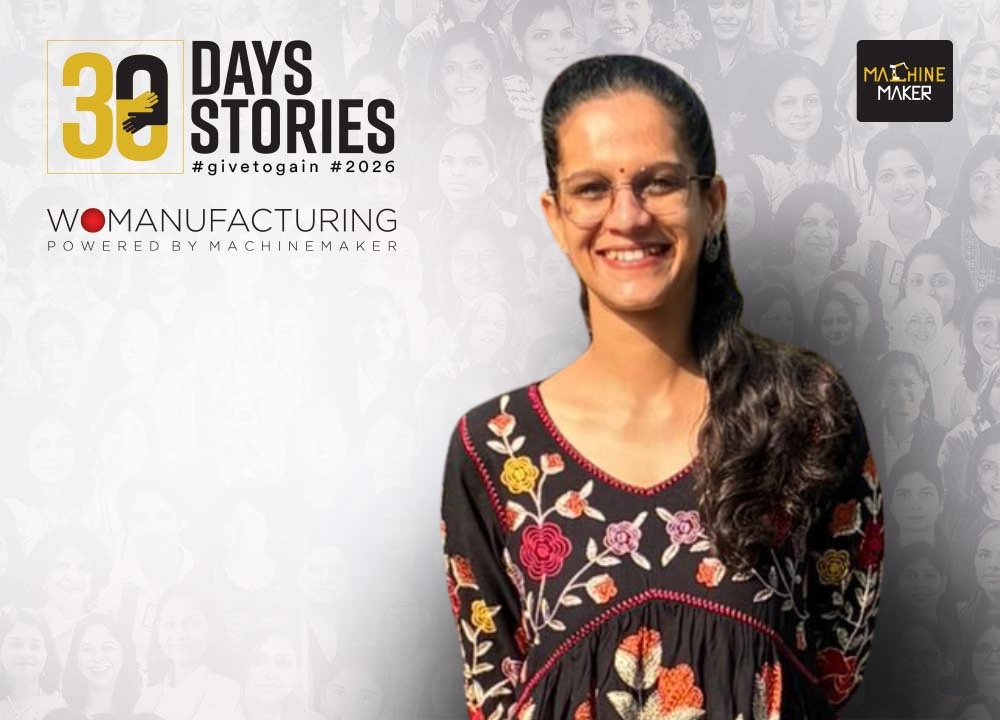
She went into interviews with gaps on her resume and came out with rejections. Some employers questioned the time away. Others wondered whether she would stay. Each no was hard. She kept going anyway. Some stories in our #Womanufacturing campaign are about women who never stopped. This one is about a woman who stopped, more than once, and came back every time.
Pranjali Ghanekar-Nene works is the Head of Marketing Communications at Fronius India, a company known for advanced welding technology and industrial energy solutions. Her path to get there went through interior design, an MBA, a relocation to Germany, motherhood, a pandemic, and a return to work at a salary that took her back to where she had started years earlier. She accepted that role without hesitation. She knew what she was doing.
She Did Not Plan to Be in Manufacturing
Pranjali grew up in Pune, in a home where both parents worked. Her father was an architect at a well-regarded firm in the city. Her mother worked in the Indian defence sector. Watching them manage careers and a household together, she picked up something without being taught it: that work does not belong to one gender.
“Watching my parents, I never once thought some work belongs to men and some to women. They shared everything. That’s what felt normal to me.”
She studied Interior Space Design Management, then did an MBA in Marketing, both in Pune. Her entry into the workforce came during a tight job market. Like many from her batch, she took the placement that came her way. It happened to be in manufacturing, as a marketing trainee at Aquarius Engineers Pvt Ltd. She learned how industrial products work, how engineering solutions get communicated to customers, and how marketing in a technical industry is a different skill from marketing in consumer goods.
She did not choose manufacturing. It chose her. And then she chose to stay.
Three Pauses. Three Restarts.
The first pause came when she married and relocated to Germany to support her husband’s work assignment. She stepped away from her career. When she returned to India, the second pause arrived: a baby. She stepped away again.
Then came COVID-19. She was trying to re-enter the workforce just as the world shut down. Employers were cautious. Industries were slow. And her resume, with its visible gaps, kept becoming the first conversation in every interview.
“I faced many rejections when I tried to restart my career. Many companies were not ready to trust someone with gaps in the resume. But I kept trying because I knew I had more to contribute.”
When she finally got back in, it was at a compensation level she had passed years earlier. She took it. Not because she had no choice, but because she understood what the moment required. The goal was not to pick up where she left off. The goal was to get back in the room.
She did. And she rebuilt from there.
Marketing in a Room Built for Engineers
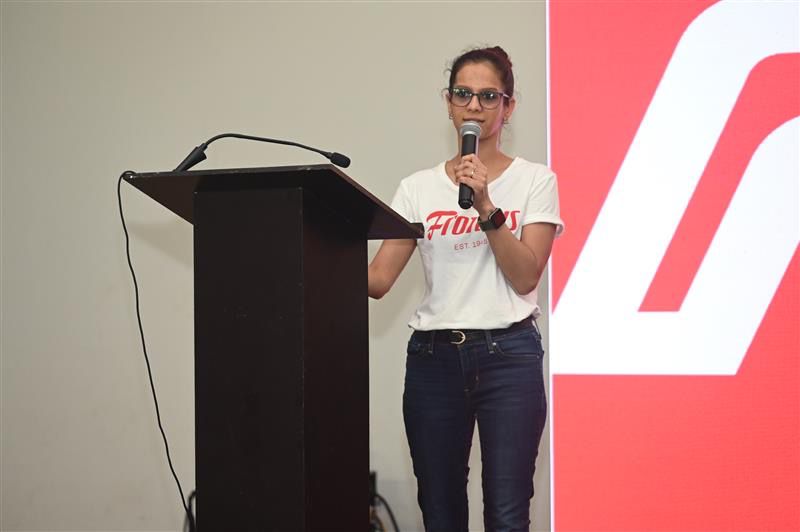
At Fronius India, Pranjali works on marketing and brand communication for advanced industrial technologies. It is not the same as marketing a consumer product. The audience is technical. The products are complex. The people she needs to reach think in specifications and applications, not in lifestyle or aspiration.
Her job, as she sees it, is translation. Taking what engineers have built and finding a way to tell the story of it so that the industries who need it can understand why it matters.
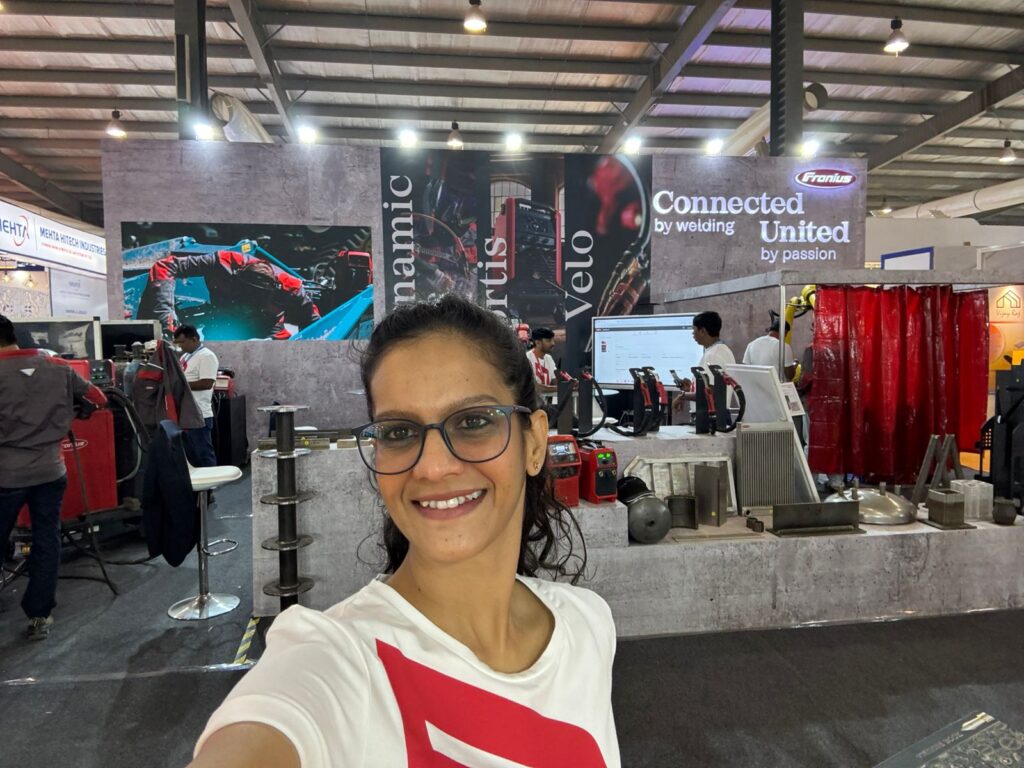
The results of this work are rarely immediate. Marketing in manufacturing does not show up in next-day sales figures. It shows up when someone at an industry event says they remember a campaign. Or when a potential customer reaches out because they have been seeing the company’s name for months. Those moments, small as they seem, are the proof that the work is landing.
For Pranjali, those are the moments that make it worthwhile.
Proving Yourself. Again. And Again.
Working in manufacturing as a woman means something specific, and Pranjali does not dress it up.
“Every time we step into this industry, we have to prove ourselves again and again. But the only way to overcome that is to stay confident and keep showing what we are capable of.”
She has seen this change, slowly. More women are entering roles in manufacturing that were not considered for them a decade ago. More organisations are beginning to notice that diversity in technical teams produces better thinking. The shift is real, even if it is not fast.
What she wants younger women to know is that manufacturing is worth the persistence. The industry is built on innovation. Things get made here, literally. And there is a specific satisfaction in working on the communication side of that, in helping the people who need a technology find out it exists.
The People Behind the Comeback
None of the restarts happened alone. Her husband supported each transition, including the move to Germany, the return to India, and the years of rebuilding. Managing a child and a career in a demanding industry is hard. Having someone at home who makes it possible to do both is not a small thing, and she does not pretend otherwise.
She also draws something from Indra Nooyi, whose career she has followed closely. Not in a vague, inspirational way. On hard days, she goes back to Nooyi’s interviews and speeches specifically. What she takes from them is not a quote or a framework. It is the reminder that careers do not have to be linear to be significant. Nooyi’s story is full of pivots, pressures, and trade-offs. That is what makes it useful.
What She Would Tell Someone Starting Over
Pranjali does not offer easy comfort to women thinking about restarting after a break. She knows how hard it is. She sat through those interviews. She took the lower salary. She proved herself to rooms that had already decided to be sceptical.
What she would say is this: the gap on your resume is not the problem. The problem is letting someone else decide what it means. You already know what you did during that time. You know what it cost you and what it gave you. Walk into that room and tell them.
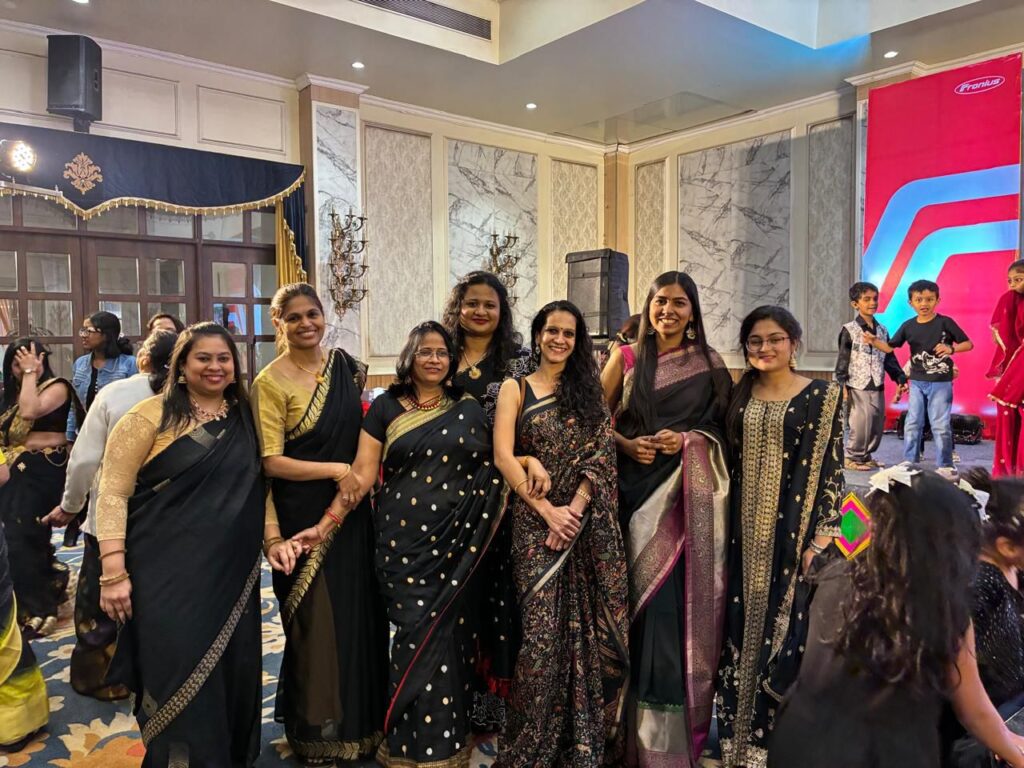
Manufacturing is a sector that rewards people who show up and do the work. The doors are opening, even if they open slowly. And for every woman who comes back after a pause, the next one has a slightly easier time walking through.
“I faced many rejections. But I kept trying because I knew I had more to contribute.”
She was right. And she is still proving it.