Bearings have shifted from invisible machine components to active enablers of smart manufacturing. As factories continue to modernise, invest in new technology, and adopt modern practices, purchasing high-end, high-tech, industry-specific bearings will no longer be a maintenance decision but a strategic one for the manufacturing business.
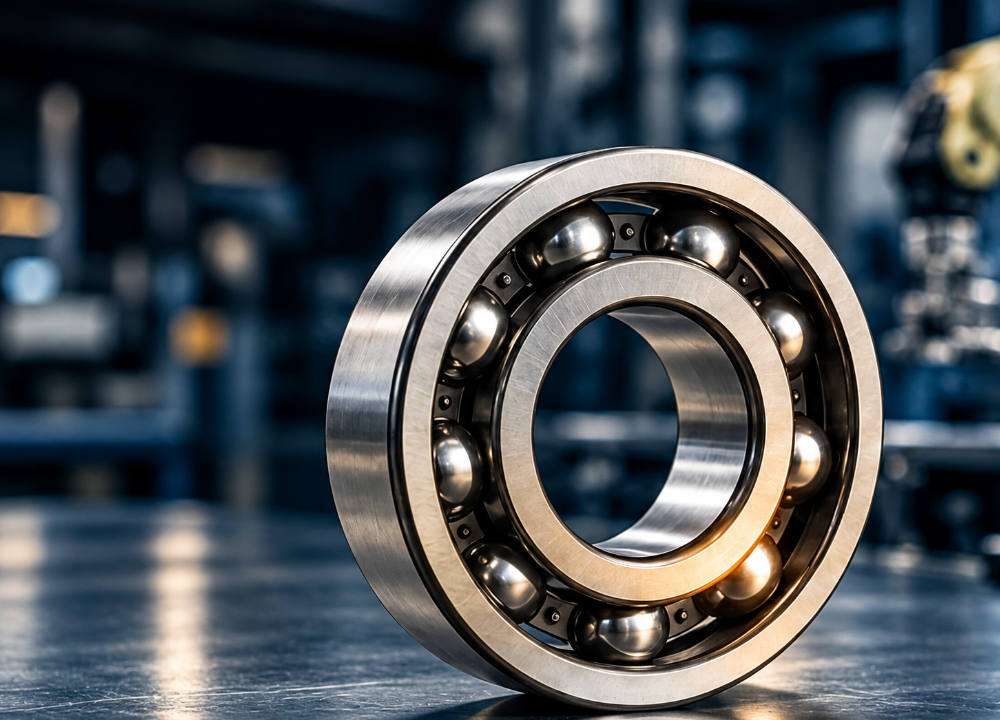
Industry 4.0 is often associated with AI, robotics, and digital twins. Yet because they are less visible in machines, bearings are the real agents of transformation. They are the active nodes in the intelligent setup. Instead of just reducing friction in machinery, modern bearings also generate information, enable prognostics, and support decision-making.
The digital evolution of industrial bearings
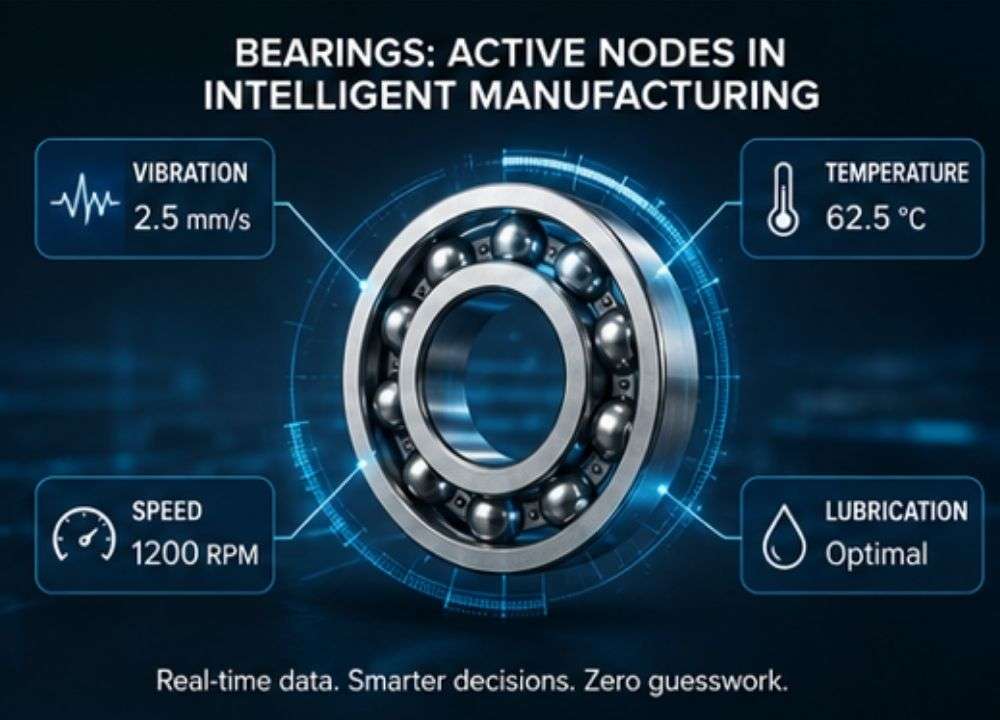
Industry 4.0 relies on continuous machine monitoring. Collecting process data helps forecast machinery failures. Bearings have become an essential source of this data. Advanced bearings enable monitoring of vibration, temperature, speed, and lubrication, providing earlier indications of wear than before equipment failure occurs. This way, the team doesn’t have to wait for strange sounds or breakdowns to get alerts about the equipment’s operating conditions. For example, a 0.5°C rise in inner ring temperature or a spike in vibration at 1200 RPM can trigger an alert 3 weeks before a breakdown.
How this data is subsequently interpreted is what really matters. Increased vibration can indicate a misaligned shaft. Higher operating temperature may point to lubrication problems. Changes in rotation frequency can indicate a lack of balance in the machinery. When evaluated together with AI-powered maintenance software, these changes can provide useful advice to avoid costly breakdowns.
How the Digital Twin Relates to Reality
A digital twin cannot function properly unless the physical entity provides information. The key to monitoring bearing elements lies where stress is highest: the shafts, spindles, and housings. Therefore, this component provides the most accurate information about how the machine is actually operating, rather than how it is supposed to operate according to the software.
Today, the industrial sector is using bearing data to adjust digital twins in automotive and aviation smart factories. If the digital twin shows the spindle is loading at 80%, the bearing sensor will indicate that, according to the vibration harmonics, the load is actually 92%. Therefore, the system is self-corrected.
Bearings still represent a small share of overall production cost in many factories, yet they cause a large percentage of equipment failures. Bearing-related problems account for 40-50% of rotating-equipment failures due to contamination, improper lubrication, incorrect installation, or poor bearing selection. This has significantly altered the purchasing strategies. The question now is about the lowest lifetime operating cost. With a better sealing system, improved internal design, and the latest lubrication technology, a premium bearing can decrease maintenance intervals, increase machine uptime, and help save energy over its lifetime.
In modern, highly automated plants, the failure of a single bearing can disrupt several linked production lines. The indirect costs of stopping production are usually several times higher than the cost of replacing the bearing.
Why smart bearings are essential for predictive maintenance and energy efficiency
Predictive maintenance is often thought of as a software capability, but it is totally dependent on the quality of machine data, with bearings now being one of its most important sources. Intelligent bearings equipped with sensors monitor vibrations, temperature, lubrication, and alignment. Maintenance teams can detect signs of wear before failure occurs. This allows manufacturers to shift from scheduled maintenance to condition-based maintenance, avoiding unnecessary repairs, shortening the time between failures, and increasing machinery uptime.
Apart from ensuring proper operation, smart bearings are becoming a crucial factor in achieving energy efficiency goals. Industry 4.0 is not only about automating production processes but also about ensuring sustainability. Friction wastes a significant share of energy at industrial sites, which advanced bearings with optimised lubrication systems and hybrid ceramic structures help reduce.
The future of manufacturing will no longer focus on bearings’ ability to bear weight or the number of revolutions. Evaluating bearings depends on how much information these components provide and on machine health, predictive maintenance, on-the-job efficiency, and uninterrupted operation. The most intelligent manufacturing factories are beginning to understand that modern Industry 4.0 isn’t supported only by robots, artificial intelligence, or cloud software. Instead, it relies on intelligent mechanical components that provide accurate, reliable data for operations.