TVS Supply Chain Solutions (TVS SCS) (NSE: TVSSCS, BSE: 543965), a global provider of end-to-end supply chain services and one of India’s fastest-growing integrated logistics companies, has entered into a Memorandum of Understanding with ALA Group, an Italy-headquartered aerospace and defence supply-chain integrator. The partnership is aimed at jointly pursuing opportunities in India’s expanding aerospace and defence ecosystem, a market estimated at around USD 28 billion and characterized by high entry barriers, complex regulations, and mission-critical logistics requirements.
The MoU sets out a strategic framework under which both organisations will collaborate on aerospace and defence programmes, with a strong emphasis on defence offset initiatives. While the initial focus will be on India, the two companies will also evaluate potential opportunities in other regions as the partnership evolves.
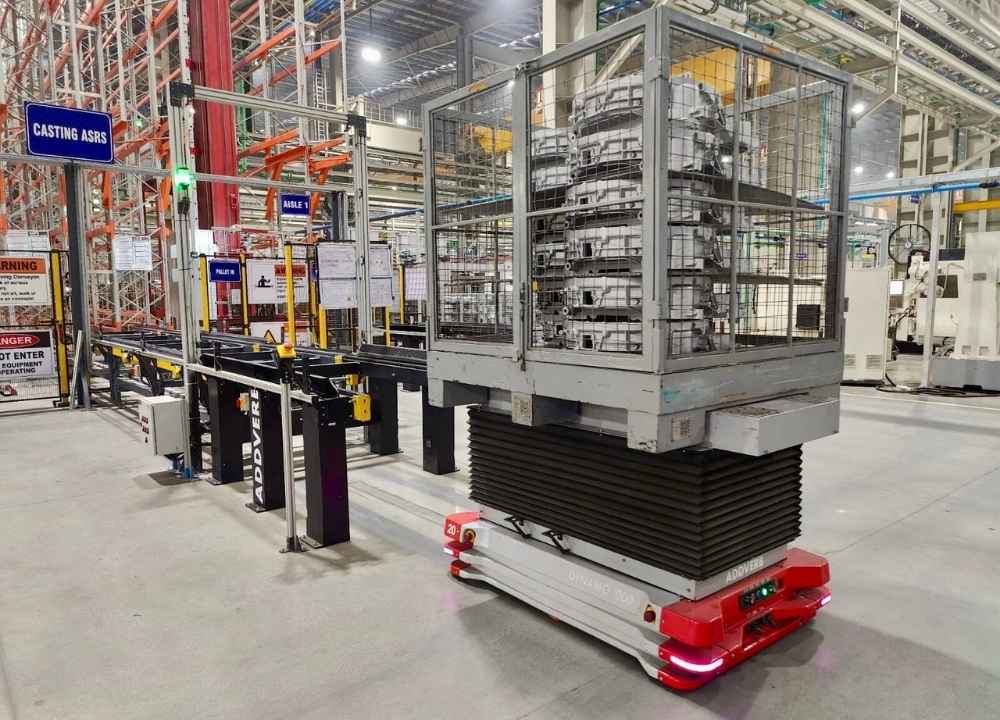
Under the proposed collaboration, TVS SCS and ALA Group will deliver integrated supply chain solutions covering both production and aftermarket phases of aerospace and defence programmes. TVS SCS will draw on its extensive experience in defence and utilities supply chains, particularly through its long-standing operations in the United Kingdom, alongside its strong on-ground presence in India. Its contribution will include procurement, regulatory and licensing support, government and stakeholder engagement, warehousing and logistics infrastructure, digital supply chain platforms, and local execution capabilities.
In addition, TVS SCS will leverage its established relationships with aerospace and power systems customers across the Asia-Pacific region to support India-focused opportunities, especially in aftermarket and in-service logistics. The company’s aerospace, defence, and utilities vertical currently generates close to USD 140 million in annual revenue, largely driven by defence and utility programmes in the UK.
ALA Group, which reported revenues of USD 345 million in 2024, will bring deep domain expertise in aerospace and defence supply chains, advanced technology platforms, and long-standing relationships with global OEMs and operators across Europe, the United States, and the United Kingdom. Its strengths in production supply chains and compliance-driven operations are expected to complement TVS SCS’s scale and regional reach, creating a differentiated and scalable offering for Indian aerospace and defence stakeholders.
Commenting on the development, R. Dinesh, Executive Chairman of TVS Supply Chain Solutions, said the collaboration aligns with the company’s long-term focus on building globally relevant capabilities in complex and highly regulated sectors. By combining domestic scale and digital platforms with ALA’s specialised aerospace and defence expertise, the partnership is positioned to play a meaningful role in the evolving global supply chain landscape.
Ravi Viswanathan, Managing Director, TVS Supply Chain Solutions, highlighted that India’s aerospace and defence sectors are at a turning point, driven by indigenisation and global supply chain realignment. He noted that the partnership brings together proven defence supply chain experience with international aerospace capabilities to create a credible platform for defence offset and aerospace programmes in India.
From ALA Group, CEO and Co-Founder Vittorio Genna said the collaboration reflects the company’s focus on technical depth, operational excellence, and long-term partnerships, while Mauro Romano, CEO of ALA MENA, described the agreement as a strategic step in strengthening ALA’s position as a global supply-chain system integrator with strong local execution.
Together, the partners will explore end-to-end aerospace and defence supply chain services, including production support, spare parts distribution, inventory optimisation, defence-grade logistics, logistics engineering, and aftermarket and MRO support. These capabilities are designed to support OEMs, MROs, operators, and government customers through resilient, compliant, and digitally enabled supply chain models across the full programme lifecycle.