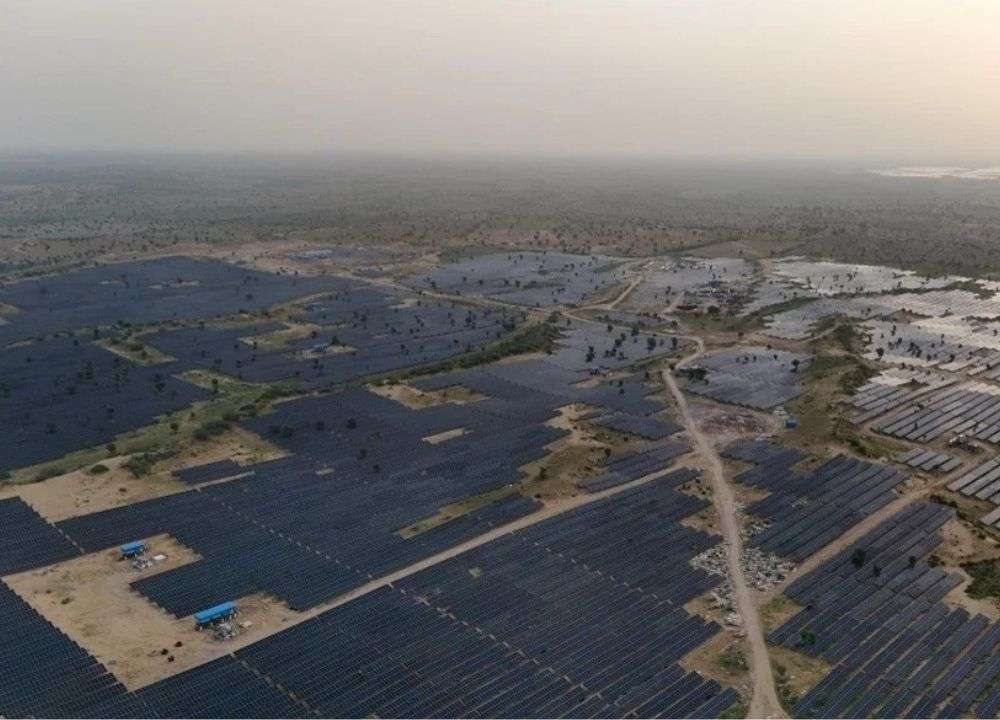
Tata Power Renewable Energy Limited (TPREL), a subsidiary of Tata Power, has commissioned a 190.5 MW solar Firm and Dispatchable Renewable Energy (FDRE) project at Kalasar in Bikaner, Rajasthan. The project forms part of the company’s contracted 460 MW FDRE project developed under SJVN FDRE Tranche-1.
The project will supply renewable power to Haryana Power Purchase Centre (HPPC), Maharashtra State Electricity Distribution Company Limited (MSEDCL) and Noida Power Company Limited (NPCL). It combines large-scale solar generation with energy storage and grid-support technologies to provide reliable and dispatchable clean power.
The commissioning marks another step in Tata Powerr’s efforts to expand renewable energy capacity while supporting India’s transition towards a low-carbon power system. The project uses technologies including a Battery Energy Storage System (BESS), Harmonic Filter Bank and Static Var Generator systems to improve grid stability and power quality.
Tata Powerr completed the project despite a number of execution challenges, including tight timelines and global supply chain disruptions affecting the availability of transmission line materials, module mounting structures and other critical equipment. The company completed the project switchyard in just three months, while the Harmonic Filter Bank was installed within one month. These milestones highlight the company’s focus on timely project delivery, engineering quality and efficient execution.
With the commissioning of the project, Tata Powerr’s total utility-scale renewable energy portfolio has reached 12.4 GW. Around 6.9 GW is operational, comprising approximately 5.6 GW of solar and 1.3 GW of wind capacity. Another 5.5 GW is currently under various stages of development and is expected to be commissioned in phases over the next 24 months. The company said its renewable energy expansion is aligned with India’s target of achieving 500 GW of non-fossil fuel capacity by 2030 and Tata Power’s long-term commitment to sustainable energy.
Tata Power has an overall operational and under-construction generation capacity of more than 26 GW, including around 17.7 GW of clean and green energy capacity and approximately 8.8 GW of thermal capacity. Its operations also span transmission and distribution, with more than 7,800 circuit kilometres of transmission lines and over 13 million customers across its distribution businesses.
Tata Powerr has also established 4.9 GW of integrated solar cell and module manufacturing capacity, signed 2.8 GW of pumped hydro storage projects and expanded its electric vehicle charging network to more than 7,000 public charging points across 717 cities and towns.
The Tata Power Company Limited, a vertically integrated power company and part of the Tata Group, has developed a diversified presence across the entire power value chain. The company has an operational and under-construction capacity of more than 26 GW, including around 17.7 GW of clean and green energy capacity and approximately 8.8 GW of thermal generation capacity, providing a balanced and resilient energy portfolio.
Tata Power also maintains a strong presence in transmission and distribution, with more than 7,800 circuit kilometres of transmission lines, including projects under development, and serves over 13 million customers through its distribution businesses. The company is further strengthening its position in emerging energy segments, with 4.9 GW of integrated solar cell and module manufacturing capacity, 2.8 GW of signed pumped hydro storage projects and an EV charging network of more than 7,000 public charging points across 717 cities and towns in India.
As a key player in India’s clean energy transition, Tata Power is committed to achieving Net Zero by 2045. The company continues to collaborate with public and private sector stakeholders to deliver reliable, sustainable and technology-driven energy solutions while supporting India’s evolving energy needs.