

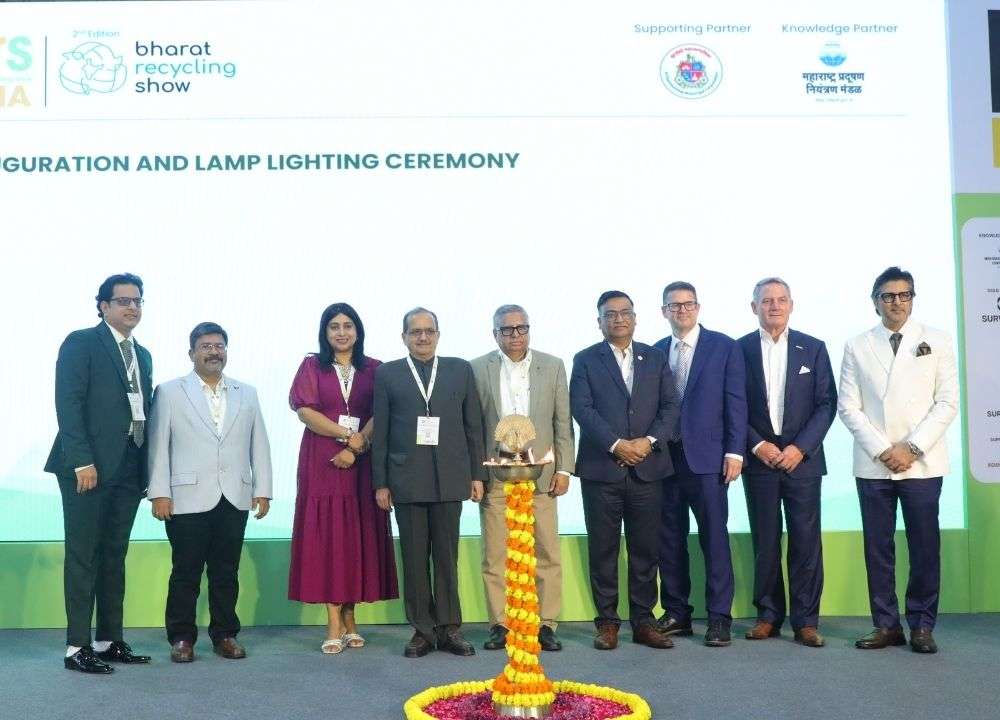
India’s recycling sector is entering a new phase of growth as regulation, technology and demand for recycled materials drive investment across plastics, metals, batteries and electronic waste. These developments are being highlighted at Plastics Recycling Show India (PRS India) 2026 and Bharat Recycling Show (BRS) 2026, which are being held together at the Bombay Exhibition Centre in Mumbai. Organised by Media Fusion and Crain Communications, the three-day exhibitions bring together recyclers, manufacturers, technology suppliers, policymakers and investors.
More than 150 exhibitors and 250 brands are participating in the 2026 edition, which is expected to draw more than 10,000 visitors. The event features machinery and processing technologies, live demonstrations, industry sessions and discussions on the future of resource recovery in India. BRS covers metal scrap, e-waste, batteries, end-of-life vehicles and tyres. Plastics Recycling Show India focuses on plastic recycling, EPR, sustainable packaging, digital traceability, artificial intelligence and circular economy solutions.
RV Sridhar, Senior Advisor, McKinsey & Company, said the next stage of recycling growth would depend on quality, traceability and technology. He pointed to the growing role of secondary metals, noting that scrap already meets nearly 38% of India’s current copper demand. He also highlighted sensor-based sorting technologies using XRF, LIBS and machine vision as important tools for improving material quality and recovery.
The plastic recycling market is expected to grow at around 9–11% CAGR over the next five to ten years. The recycled plastics market is estimated to grow from USD 6.57 billion in 2026 to USD 11.71 billion by 2031, at a CAGR of 8.6%. Rising demand from packaging and automotive industries, stronger collection systems and technology adoption are expected to support this growth.
The battery recycling industry is also gaining importance as electric vehicle adoption increases and demand for lithium, cobalt and other critical minerals rises. India imports around USD 2.5 billion worth of lithium and cobalt every year, creating a strong economic case for recovering these materials domestically.
Kiarah Ahuja, General Manager and Head – Business Development, Banyan Nation, said the industry now needs greater certified recycling capacity and stronger supply chains capable of delivering high-quality recycled materials at scale. Banyan Nation currently operates a 10,000-tonne annual recycling facility in Hyderabad and plans to expand capacity to 50,000 tonnes through a new Bengaluru facility over the next four years.
Prabodha Acharya, Chief Sustainability Officer, JSW Group, said recycling can help convert waste into valuable industrial inputs while reducing resource consumption and environmental impact. He highlighted the growing role of steel scrap recycling, renewable energy and resource efficiency in supporting a lower-carbon economy.
Taher Patrawala, Managing Director, Media Fusion, said the combined PRS India and BRS platform would help connect different parts of India’s resource recovery industry and support technology adoption, investment and cross-sector partnerships. With recycling markets expanding and industries seeking reliable sources of secondary raw materials, the shows underline the growing importance of recycling in India’s industrial and sustainability agenda.









