Continuous Composites has been selected by NASA under its Small Business Innovation Research (SBIR) program to develop advanced composite structures designed for space applications. The project will focus on the additive manufacturing of low Coefficient of Thermal Expansion (CTE) open isogrid structures using the company’s proprietary Continuous Fiber 3D Printing (CF3D) technology.
Space environments expose materials to extreme temperature fluctuations as objects move between sunlight and shadow. These rapid changes can cause expansion and contraction, leading to distortion in precision structures such as satellites and optical platforms. The development of low-CTE materials is therefore critical to maintaining structural integrity and performance in orbit.
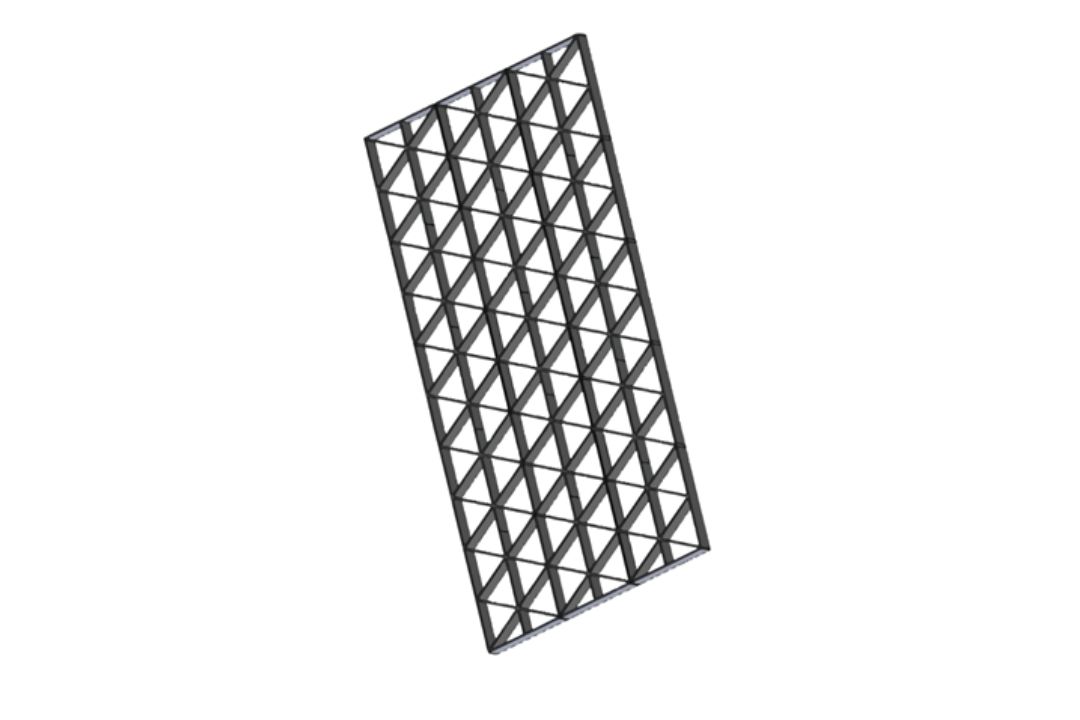
As part of the project, Continuous Composites will demonstrate its ability to manufacture a flat open isogrid rib structure measuring approximately 1.6 feet by 3.3 feet. Using advanced robotic systems, the company’s CF3D process precisely places continuous carbon fiber strands to create highly controlled composite structures. The resulting design aims to achieve minimal thermal expansion while maintaining strength and stiffness under demanding conditions.
The CF3D technology enables the production of complex geometries that are difficult or impractical to achieve through conventional manufacturing techniques. Open isogrid structures, known for their lightweight and high-strength properties, are widely used in aerospace applications. The ability to produce such structures efficiently through additive manufacturing offers potential reductions in both production time and cost.
In addition to space applications, the technology has broader implications for industries such as defense and commercial aerospace, where advanced composite materials play a critical role. The project builds on Continuous Composites’ previous work in these sectors, extending its capabilities into new areas of research and application.
The collaboration with NASA represents an important step in advancing next-generation manufacturing techniques for space systems. By combining continuous fiber reinforcement, rapid-curing materials, and automated fabrication processes, the initiative aims to create structures that meet the stringent requirements of space missions. The outcomes of this research are expected to contribute to the development of more resilient and efficient space components, supporting future missions that demand higher precision and durability in challenging environments.