India has spent the last ten years learning how to assemble. Phones, televisions and connected devices now leave Indian factories in huge numbers, and the country has earned its place on the global map. But trace almost any of those products back and you find that the valuable decisions were made elsewhere. The chip selection, board architecture, firmware and intellectual property mostly belong to companies abroad. India supplied the labour and the floor space, while the design thinking stayed overseas. For a long time that arrangement felt like progress, and in many ways it was.
Now the ground is shifting. Global brands want supply chains that do not depend on a single country, Design in India has become a policy priority, and semiconductor companies are looking for partners who can help them reach Indian customers. What is missing is a link between the product company with an idea and the chip company with the silicon. That link has to design, validate, certify and manufacture, ideally under one roof. Very few Indian companies can do all of that today, and that gap is where this story begins.
Twenty Years in Engineering, One Missing Piece
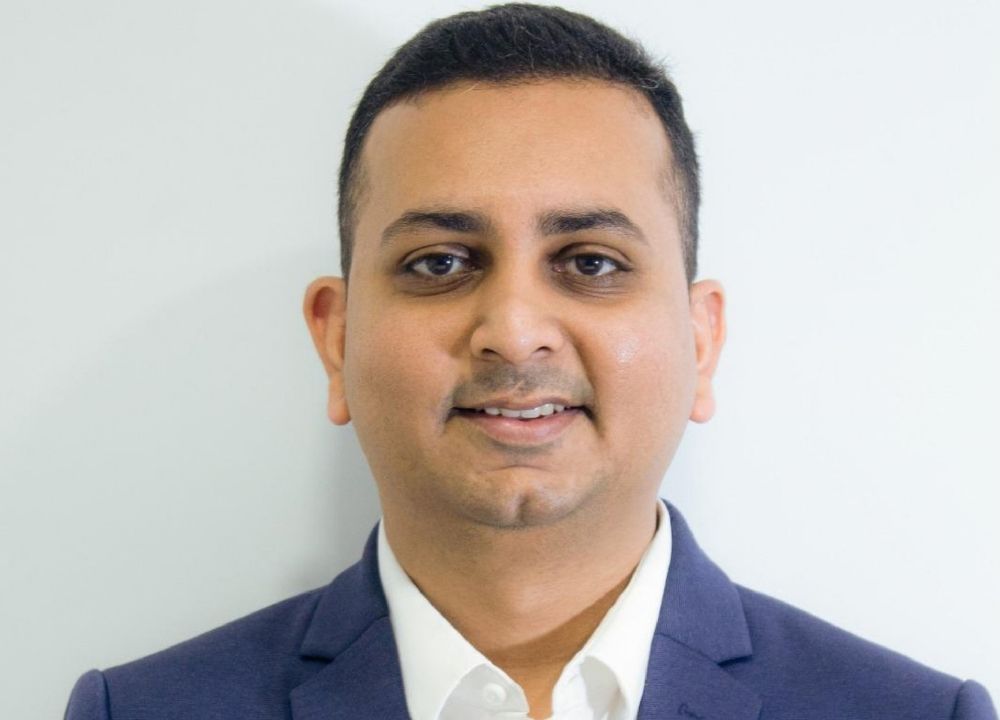
Brijesh Kamani, Founder & CEO, saw that gap from the inside. He studied Electronics and Communication at Gujarat University, earned an M.Tech in Software Systems at BITS Pilani, and later completed a finance and strategy programme at IIM Ahmedabad. His early career was in product engineering, serving customers in the US, Israel, Japan and Germany. There he worked through the whole lifecycle: hardware, firmware, EVT, DVT and PVT builds, certification and finally mass production. He noticed how much Indian talent was quietly building other countries’ products, and how rarely that work led to products carrying an Indian name.
That realisation pushed him to start his own design engineering company, which he ran for about ten years. The same obstacle kept coming back. In China, simulation experts, mechanical makers and electronics assemblers sit within a short drive of each other. In India, that network barely exists, which makes working as a design-and-manufacturing house painfully hard. Waiting for the ecosystem to appear was not an option, so he decided to build it himself. That decision became Rapidise, a company created to put design and manufacturing in the same building.
Design and Manufacturing Under One Roof
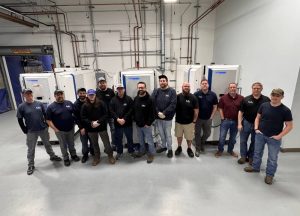
Doing it in-house meant doing a lot at once. Design centres opened in Ahmedabad, Parotra, Chennai, Pune, Mumbai, Gurgaon and Bangalore, so the company could hire strong engineers wherever they lived instead of asking them to relocate. On the manufacturing side, the first facility came up in Sector 3, Manesar, followed by a larger plant in Sector 8, designed to maximise throughput within a single facility, and a third planned for Greater Noida. Schematics, layout, simulation, thermal analysis, SMT, box build and industrial design now sit with in-house teams. That team includes more than 350 engineers, around 200 manufacturing staff and about 1,000 blue-collar workers, supported by four AI-first R&D centres.
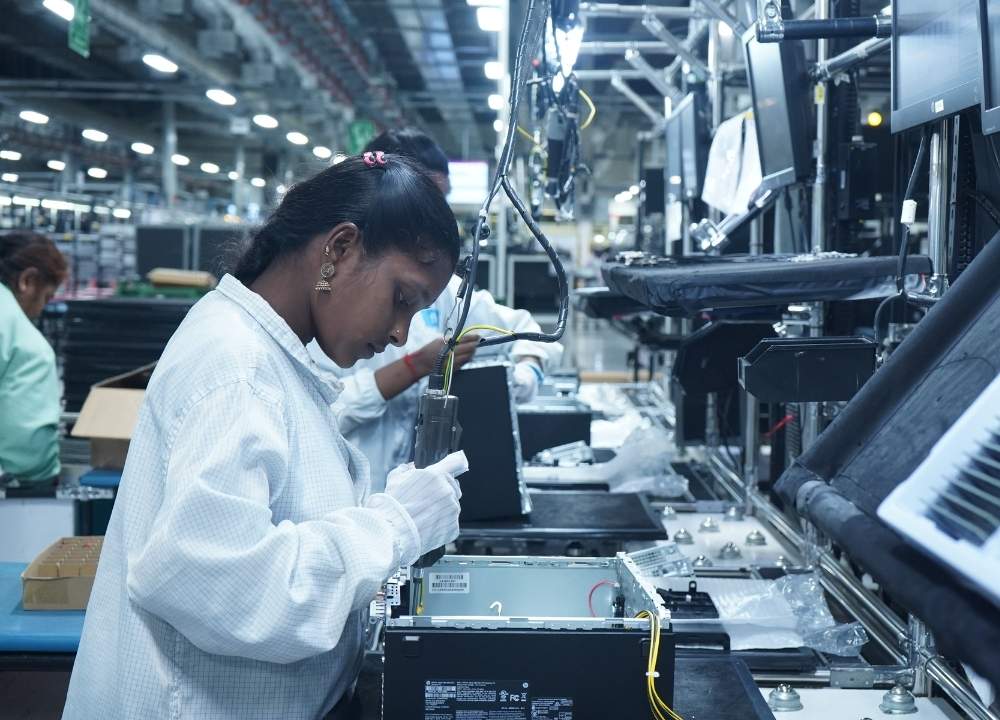
The results show up on the shop floor. Costs are under constant pressure, and Kamani believes the answer lies in using AI and robotics to improve efficiency and cut rejections. At every assembly station, an AI system built by the company’s own team watches whether the operator follows the SOP. If a step goes wrong, the unit is marked no-go and cannot move forward, and the record feeds straight into the MES software. The Manesar factory is highly automated, with multi-level quality checks along the way. Reusable IP blocks and proven reference designs have cut development time from two years to as little as three months. Rapidise has delivered over 135 products for more than 100 customers, and last year’s revenue of about Rs 513 crore was eleven times the year before.
Where Rapidise Is Headed Next
Rapidise first connected design and manufacturing in both directions, moving forward from design to the factory floor and backward from the factory to design. Now it is going deeper, and wherever work is still outsourced, the goal is to bring it in-house. It has brought in the teams of Sibrain Technologies, which builds chip and software IP for Android and Apple CarPlay, and MicroBin, which designs automotive instrument clusters. It now wants to manufacture camera modules and displays in India, especially for cars, and to bring mechanical manufacturing in-house. A team of VLSI engineers is also being built so the company can create its own fabless design IP, which opens the door to working closely with semiconductor firms arriving in India.
Alongside this, Rapidise is adding capacity, which is what turns that capability into scale. Ten new SMT lines, backed by an investment of Rs 150 crore, will raise current capacity six times and are expected to lift business by 250 to 300 percent this financial year. Kamani puts the purpose plainly: India needs EMS companies that act as a bridge between product makers and semiconductor firms, and he wants Rapidise to be among the fastest-growing bridges between semiconductor companies and the Indian enterprise and SME market. The aim is that every product leaving its factories shows India can design, engineer and build at a global standard. Rapidise will also be at India Mobile Congress this year, after a strong showing at the Electronica Expo in Bangalore.