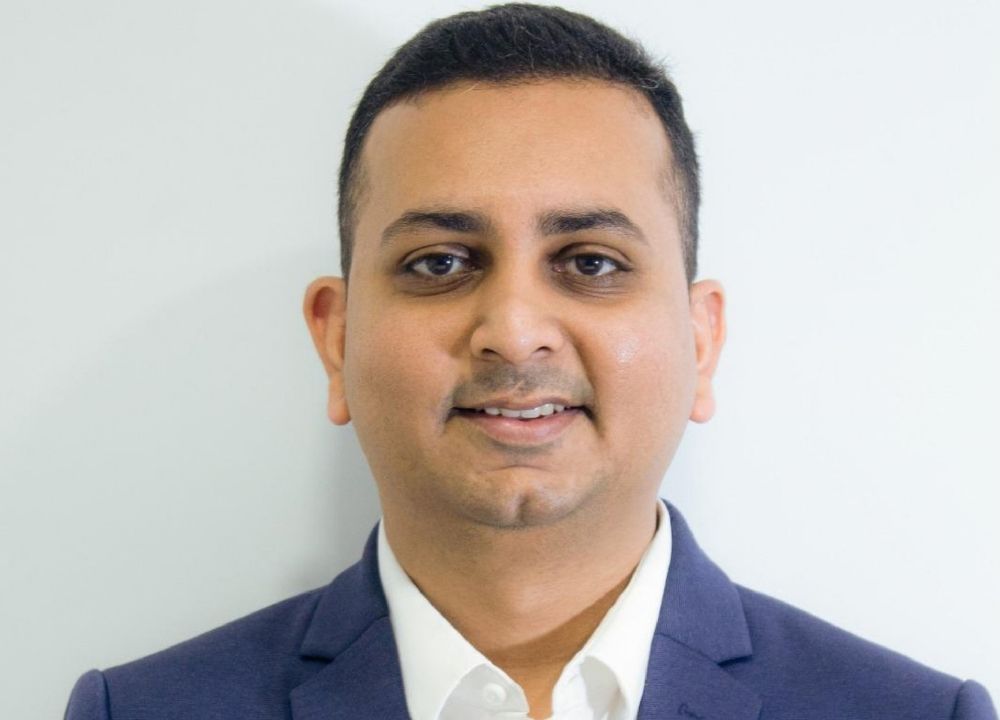
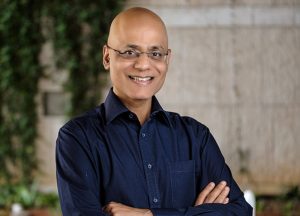
Most people who have spent 25 years across six organisations in five different industries would lead with the variety. Nidhi Khanna barely mentions it. What she talks about instead is the thread, the single consistent thing she has been doing at every stop, regardless of what the company around her was making. Brand management. Not products. People, processes, and the value that accumulates over time. That is what she has been building since her first job, and that is what she is still building now as Head of Communication and Branding at Spark Minda, one of India’s largest automotive component manufacturers.
Spark Minda, founded in 1958, is one of India’s largest automotive component manufacturers, supplying security systems, electrical components, sensors, acoustics, and connected vehicle solutions to major OEMs across India and globally. With over 11,000 employees and a presence in multiple countries, the company operates at the intersection of legacy manufacturing and next-generation mobility. Its 2030 goals are ambitious: significant scale, new technology verticals, and a brand story large enough to match them. Nidhi Khanna, Head of Communication and Branding, is the person responsible for telling that story.
Never About the Industry, Always About the Brand
When Nidhi looks back across 25 years, she does not think in terms of sectors. Groz, Gates, Freudenberg, Spark Minda: these are not chapters defined by what the company made. They are chapters defined by what she was building inside each one.
The common thread, in her own words, is brand management. Not just products. People, processes, and the brand value that accumulates over time. Looking at insights, creating relevant messaging, delivering experiences that lift both brand image and commercial value. That is the work she has done in every organisation she has joined, regardless of what that organisation makes.
The range of her experience is not accidental. International sales early in her career, then e-commerce platforms, distributor networks, experience centres, aftermarket expansion, media relations, rebranding, digital communications, expos, corporate communication. The function kept evolving. The focus did not. Present the brand clearly for what it stands for. Every time, every organisation.
Getting 11,000 People to Hear the Same Thing
Spark Minda has over 11,000 employees. Making communication land consistently across that many people, across multiple plants, functions, and geographies, is not a messaging challenge. It is a clarity challenge.
Nidhi’s approach is methodical. The vision is stated. Then it gets simplified for each function, each department, each employee. Delivered across channels. Repeated continuously until it is ingrained rather than just understood.
What has surprised her most in manufacturing, compared to other sectors she has worked in, is how receptive people are. The larger the audience, the more she has found that employees are hungry for clarity and alignment. Every employee, she says, has a need to feel they are part of something bigger than themselves. That the work means something. Manufacturing organisations are full of people waiting for someone to tell them what that something is.
Building a Brand That Engineers and Procurement Heads Will Trust
Spark Minda is a B2B company. The end customer buying the car does not know Spark Minda made the locking system inside it. The brand does not live in consumer advertising. It lives in OEM relationships, in technical credibility, in the quiet confidence that comes from 70 years of consistent delivery.
Nidhi is direct about this: Spark Minda’s buyers know what they are buying into. The brand has history. The challenge is not awareness. The challenge is continuity. People come and go. Procurement heads change. New engineers replace old ones. What keeps the relationship stable across those transitions is not any single person. It is the brand promise, the proposition, the accumulated trust that one network has built with another over decades. Her job is to make sure that trust stays visible, communicable, and tangible. Not just felt. Expressed.
Communication That Shapes Decisions, Not Just Supports Them
There is a version of communication in most organisations where the function arrives at the end of a decision and is asked to make it look good. Nidhi has spent 25 years making that version obsolete wherever she has worked.
Her view is simple: if communication comes in at the end, it can only support. If it is there from the beginning, it can help shape decisions. The difference between those two positions is the difference between a support function and a strategic one. She has consistently pushed for the second.
She has represented Spark Minda at the World Economic Forum and worked alongside senior leadership at the highest levels of the organisation. At those tables, the principle that drives her is an old Hindi saying she returns to often: jo dikhta hai, wo bikta hai. What is visible, sells. No brand, no matter how technically excellent, can afford to be invisible. The tactics change with the business environment. The need for visibility does not.
Telling a 70-Year Story to a Future That Does Not Exist Yet
Spark Minda was founded in 1958. That is nearly seven decades of history, relationships, product evolution, and institutional memory. For the person responsible for how that story gets told to the world, it is both a gift and a challenge.
The gift is the material. There is so much to say. The challenge is choosing what to say and when. Nidhi joined at a moment she describes as pivotal: Spark Minda’s 2030 ambitions are significant, and reaching them requires new stories. Stories that are true to the company’s past and honest about where it is going. The use-case scenarios are changing every day. Electric vehicles. Connected systems. New mobility architectures. The brand has to hold both the 70-year legacy and the next decade simultaneously. She is not daunted. Spark Minda’s track record, she says, gives her confidence they will come out shining on the other side.
What 25 Years in Manufacturing Actually Changed
Nidhi has watched manufacturing change from the inside across a quarter century. On the question of how women are treated in industrial organisations now compared to when she started, she is measured and specific.
The separation between male and female talent has largely disappeared, she says. On both the white-collar and blue-collar sides. What remains is a numbers problem, not an attitude problem. Women are underrepresented as a proportion of the total workforce, and she thinks the issue is on the supply side. More women need to enter the pipeline. Once they are in, the environment is largely receptive. That will get addressed too, gradually. It is a clear-eyed assessment. No drama, no complaint, no excessive optimism. Just an honest reading of where things stand.
Do Not Wait for Space to Be Given to You
A brand does not get built overnight. It is built through small, consistent steps. Nidhi has applied that principle to her career the same way she applies it to the organisations she works inside. No single dramatic moment. No turning point she can point to. Just 25 years of showing up, learning on the shop floor, staying close to the business, and making the work better than it was the day before.
Her advice to young women starting out in communications inside manufacturing is short and direct: fear not. Step in, explore, make mistakes, and learn fast. Stay close to the business. Keep learning, from the shop floor, from teams, from customers, from Gen Z. Be consistent. Bring clarity. And do not wait for space to be given to you.