India’s manufacturing ambitions will depend not only on how much investment the country attracts, but also on how quickly that investment can translate into operational factories, productive capacity and jobs. As global supply chains diversify and businesses look for new manufacturing destinations, the ability to establish and scale operations efficiently is becoming a key factor in competitiveness.
India has already made a lot of efforts to develop industrial corridors, increase the quality of its road network and create specialized manufacturing zones. The initiative of India’s government to build industrial parks with plug and play capabilities, such as BHAVYA, shows that India increasingly understands the importance of proactive industrial infrastructure development. The task now is to generalize this experience, make it accessible and flexible for companies of all sizes.
The gap between investment and production
Establishing a factory is about much more than just buying land. Businesses need to consider location, set up utilities, create infrastructure within, and get all the right approvals. Where there are problems in alignment of these factors, it becomes tough to forecast schedules and plan capital expenditure.
In cases where a manufacturer is large, this problem might lead to disruptions in the business’ expansion and supply chain strategy. In MSMEs, the problem can be even more acute, because they have smaller capital bases to work with for implementing their project. The question thus is not just to provide industrial land. The real issue is to provide usable land, dependable infrastructure, and a reliable factory setup process.
From industrial plots to ready-to-build ecosystems
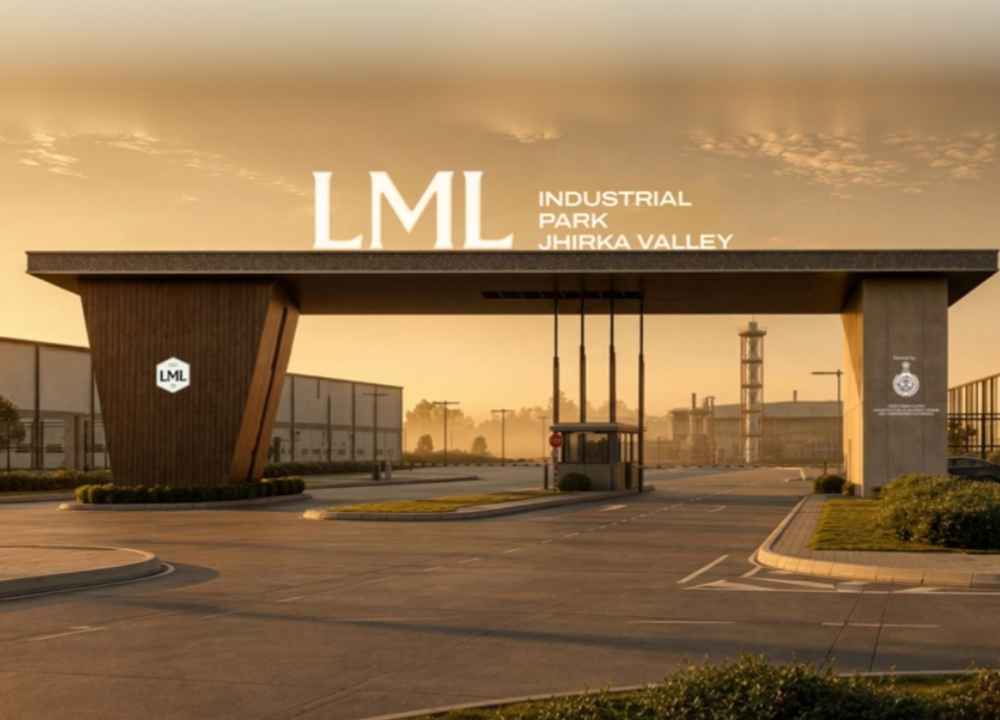
India needs to move to an ecosystem approach to industrial development. Industrial parks need to be planned around the actual requirements of the businesses that are going to be operating in them with the internal roads, power, water, drainage etc all developed as part of the same package.
This approach would reduce the onus on individual businesses to go out and build the basic infrastructure from scratch. It would allow them to concentrate their capital and their management effort on production, technology, people and market development.
The plug and play model is a significant step in that direction. How effective it is will be down to the extent to which it’s implemented. The infrastructure has to be there, the utilities have to be able to cope and the approval process has to be transparent. A factory ready proposition needs to be able to tell you what’s in, what’s still to be done and when you can actually get going.
There is also a requirement for greater flexibility in terms of industrial development. A large manufacturer establishing a dedicated production facility will have very different requirements to an MSME who is looking for a small industrial plot. The industrial park has to be able to cater for that spectrum of requirements through the provision of appropriate plot sizes, appropriate infrastructure and appropriate development models.
Speed must be supported by better planning
Accelerating factory development doesn’t mean cutting corners on planning or regulatory standards. Quite the reverse in fact. The faster you get the factory built the more important it is to have a good plan at the outset and the better the coordination at that planning stage.
Land use planning, infrastructure development, environmental compliance and utility provision all need to be considered in a holistic way rather than as a series of separate activities. Better coordination between the various government agencies, the infrastructure developers and the prospective occupiers will go a long way to identifying the bottlenecks early on and reducing the level of uncertainty that will be encountered during the course of the project.
Digital systems can go even further in terms of transparency by enabling businesses to access information on land availability, infrastructure readiness and the requirements for approval. The process can be made more efficient through the use of clear timelines, accountable parties and effective single window arrangements without in any way compromising the integrity of the regulatory process.
Industrial infrastructure must also be planned with long term operating costs in mind. The reliability of utilities, the quality of logistics access, the quality of water management and the ability to provide for future capacity all have a bearing on the long term viability of a manufacturing location. The aim is to create industrial ecosystems which are viable as the business grows.
The role of private industrial developers
Private developers have an important role in complementing public investment in industrial infrastructure. By understanding the requirements of businesses and developing industrial land in line with those needs, they can help bridge the gap between available land and investment-ready facilities.
This requires a shift from viewing industrial development primarily as a real estate activity to treating it as the creation of productive economic infrastructure. The value of an industrial park lies not just in the land it offers, but in how effectively it enables businesses to establish operations, connect with supply chains and expand capacity.
In emerging industrial locations, this also means considering the broader ecosystem around a factory. Workforce access, transport links, logistics services and supporting commercial infrastructure can influence a company’s decision to establish or expand operations in a particular region.
Public and private stakeholders must work together to ensure that industrial development is aligned with actual demand. Developing infrastructure in anticipation of future growth is important, but it must be supported by sound location assessment, realistic demand projections and a clear implementation plan.
Making manufacturing growth more inclusive
A faster factory building ecosystem can also create opportunities outside of the major industrial centres. Well planned industrial parks in the emerging regions can attract new business, enable the development of local supply chains and create jobs much closer to where the people live.
For MSMEs access to the right sized plots and reliable infrastructure can go some way to reducing the barriers to formalisation. For the larger manufacturers it can provide a more predictable development process which in turn enables better investment planning and a more effective response to shifting market conditions. In the longer term this can contribute to the strengthening of regional industrial clusters and the enhancement of domestic manufacturing capability.
India’s manufacturing aspirations will be judged in the end by the level of productive capacity it can achieve, the number of businesses it can foster and the number of jobs it can create. Industrial infrastructure is absolutely fundamental to delivering on all of those outcomes, but the extent to which it can do so is entirely down to how well it is executed.
The next stage in India’s industrial development has to be about reducing the time between the moment an investment is made and the moment that factory is actually up and running. That in turn requires better prepared industrial land, integrated infrastructure, streamlined approvals and much greater co-operation between the public and private sectors. India doesn’t have to pick between scale and speed. It needs an industrial development ecosystem that can deliver both.