ZF has won the 2026 MATERIALICA Award in the CO2-Efficiency category for a project demonstrating how recycled plastics from end-of-life automotive components can be used to manufacture new vehicle parts. The project was carried out in collaboration with BASF and Mercedes-Benz.
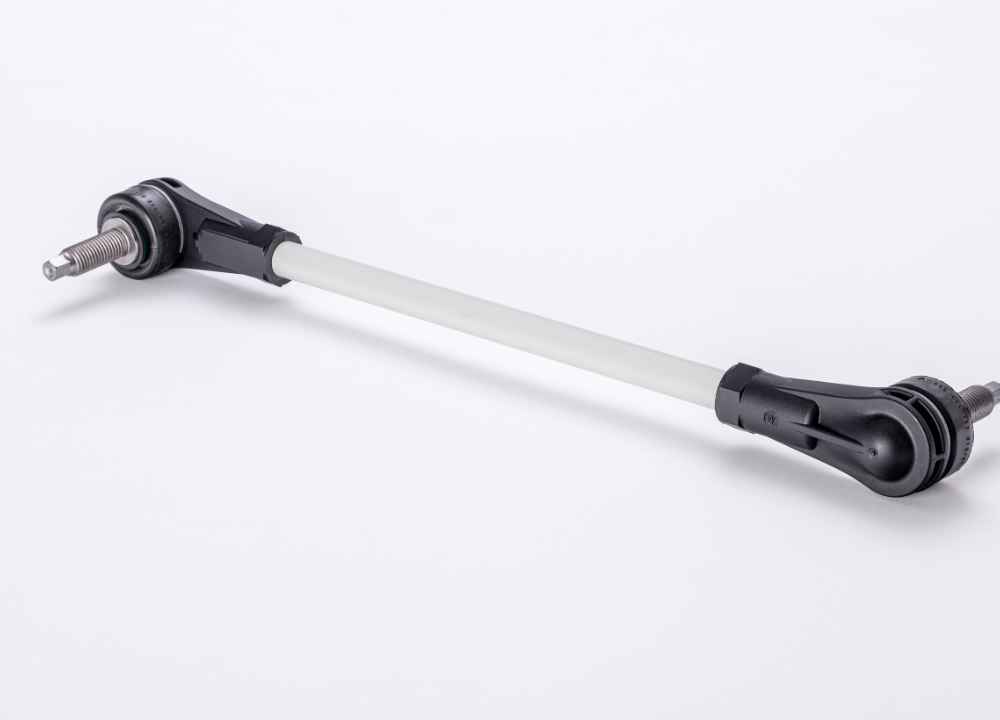
The team developed a stabilizer link, a chassis component, using polyamide 6 (PA6) recovered from end-of-life ZF transmission oil pans. The polymer content of the new component consists entirely of recycled material, demonstrating a potential route for reusing automotive plastics in technically demanding applications.
The project began with transmission oil pans removed from vehicles that had reached the end of their service life. These components were previously treated as contaminated waste. BASF processed the recovered parts through depolymerization, breaking the material down into its original building blocks, purifying them and converting them into high-quality plastic material.
ZF’s Plastics Technology Center in Dielingen worked with the company’s central Research and Development Materials Technology unit in Friedrichshafen to select the material system and design the demonstrator component. The team also conducted comparative manufacturing trials using test specimens made from the recycled material and BASF’s standard material.
Near-series testing on existing ZF production equipment confirmed that the recycled material could be processed using established manufacturing methods. The trials also supported the technical feasibility of using the material in a stabilizer link intended for Mercedes-Benz.
Dr Michael Lohrmann, Director of Materials Technology at ZF, said the project demonstrated that circular material use in automotive manufacturing was possible without compromising quality or performance. He added that the team had tested a material cycle linking an end-of-life ZF component with the production of a new chassis part.
The project involved distinct responsibilities for the three partners. ZF managed material selection, component design, manufacturing trials and near-series validation. BASF handled the depolymerization and processing of the recovered polyamide, while Mercedes-Benz evaluated the stabilizer link for potential automotive application. The partners developed and validated the recycled-material component at pilot scale, showing how recovered engineering plastics could be returned to automotive production rather than discarded after a vehicle’s service life.
The award recognises the project’s work on material recovery and the potential to reduce reliance on virgin plastics in vehicle manufacturing. It also highlights the role of cooperation between automotive manufacturers, component suppliers and chemical companies in developing practical recycling methods. ZF said the project provides a basis for further work on circular material systems for engineering plastics. The results demonstrate a possible approach to improving resource use by converting waste components into materials for new vehicle applications.