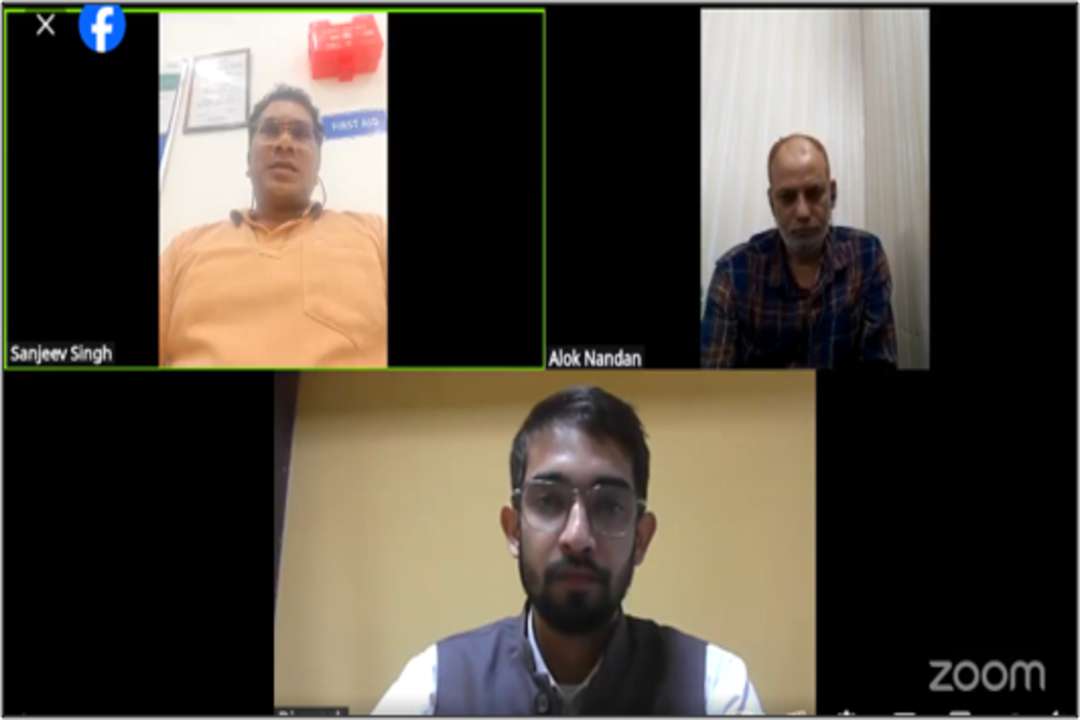
Leading policymakers, industry experts, and social advocates have urged the Odisha government to take swift and decisive steps to operationalize the state’s rich bauxite reserves, describing it as a key driver for India’s Atmanirbhar Bharat and Viksit Bharat ambitions. During a national webinar organized by AIDENT, a social welfare organization, in partnership with FIJEEHA, a development-focused forum, participants emphasized the need to move quickly from resource potential to active production. They highlighted that timely mine activation and downstream investment could position Odisha as a global aluminium hub, strengthen India’s critical mineral base, and generate inclusive economic growth.
The discussion followed the release of AIDENT’s White Paper, “Mining Odisha’s Potential: Powering India’s Journey to Atmanirbhar Bharat and Prosperity”, which identified bauxite, iron ore, and coal as strategic levers for industrialization. Experts noted that unlocking bauxite resources could create an estimated 2.4 million jobs and empower more than 10,000 MSMEs through local entrepreneurship, manufacturing, and green industrial clusters. They advocated for a shift from exporting raw material to fostering value-added production through Green Aluminium Parks and downstream clusters.
Dr Umesh Jena, Former Additional Director of Mines, Odisha, stressed the urgency of mine operationalization. “Delays in opening bauxite mines are denying local communities the socio-economic benefits from royalties, taxes, and development funds. Expanding mining capacity on a clear timeline will secure raw materials, reduce import dependence, and create employment in mineral-rich districts,” he said.
The session highlighted the Ministry of Mines’ Aluminium Vision, projecting demand to rise from 4.5 MTPA to 37 MTPA over two decades, requiring investments of nearly ₹20 lakh crore. Odisha’s vast bauxite reserves were identified as central to meeting this growth, ensuring self-sufficiency and strengthening India’s industrial resilience.
Dr Dukhabandhu Sahoo, Associate Professor of Economics, IIT Bhubaneswar, noted: “Despite holding the world’s largest bauxite resources, India imported roughly ₹11,000 crore worth over the past five years, losing local economic opportunities. Strategic interventions in mining and downstream processing could transform regional economies and advance Odisha toward a Viksit Odisha by 2036.”
Dr Kapila Khemundu, Central University of Odisha, Koraput, emphasized community engagement: “Mining can drive inclusive growth if paired with rehabilitation, social infrastructure, and local skill development. Communities must be partners, not observers. The state can facilitate Gram Sabhas and public hearings to accelerate mine expansions.”
Deba Mohanty, Vice President of the Society for the Study of Peace and Conflict, added: “Sustainable mining practices must underpin Odisha’s growth. Industrial expansion should balance economic, social, and environmental responsibilities to build public trust.” Sanjeev Kumar, Regional Director of AIDENT, concluded: “Odisha has the potential to become India’s aluminium capital. Achieving this requires collaboration between government, industry, and communities to ensure resource wealth translates into long-term prosperity.”
Odisha’s bauxite sector faces several key challenges that have slowed its potential impact on local and national development. Delays in environmental and mining approvals, coupled with pending Gram Sabhas, have hindered the timely operationalization of mines. At the same time, gaps in infrastructure and last-mile logistics make it difficult to efficiently transport raw materials and finished products. Policy uncertainty further discourages investment, while limited local skill development and community engagement restrict opportunities for nearby populations to benefit from mining activities.
To address these challenges, experts recommend a clear, time-bound roadmap for opening and expanding mines. Streamlining approval processes, including faster facilitation of Gram Sabhas, would accelerate production and improve investor confidence. Alongside this, establishing Green Aluminium Parks and downstream clusters would help retain value locally, turning raw resources into finished products while supporting industrial growth.
In addition, focused skill development programs linked to MSMEs in mining regions can empower local communities and build a capable workforce. Implementing transparent frameworks for community participation and equitable benefit-sharing would ensure that economic gains from bauxite mining reach the people directly affected, creating a sustainable model for inclusive growth and regional development.
FIJEEHA is a pan-India network of journalists, academics, and development professionals working to advance communication on energy, environment, education, health, and agriculture. Since 2011, it has promoted grassroots voices, policy dialogue, and informed public discourse. AIDENT Social Welfare Organisation (ASWO) is a non-profit dedicated to inclusive social development, focusing on education, health, livelihoods, sanitation, women’s empowerment, and child labor eradication across states including Odisha, Bihar, Uttar Pradesh, Haryana, Punjab, and Delhi.