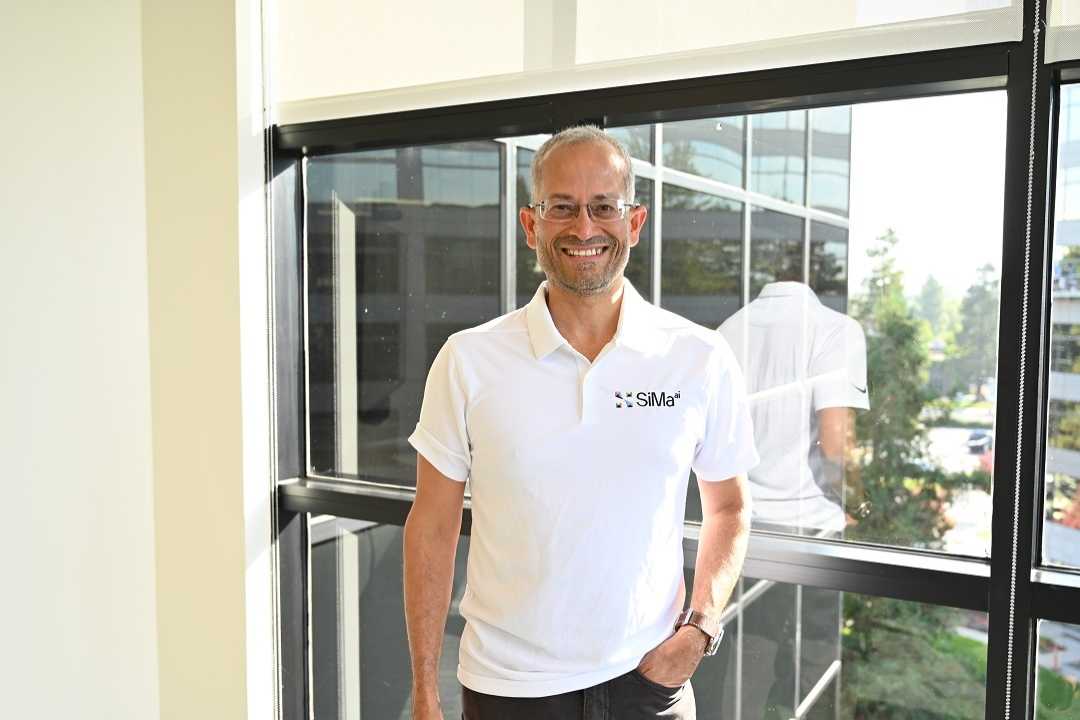
SiMa.ai, a leader in Physical AI computing platforms, has announced a strategic investment from Micron Technology, Inc (Nasdaq: MU), reinforcing its efforts to scale high-performance, power-efficient AI systems designed for real-world deployment. The investment strengthens an existing collaboration between the two companies focused on tightly integrated compute and memory architectures optimized for next-generation edge intelligence.
Physical AI refers to intelligent systems capable of perceiving, reasoning, and acting in real time within physical environments. These systems place significant demands on both compute and memory subsystems, particularly in applications such as robotics, autonomous vehicles, industrial automation, and smart infrastructure. Meeting these requirements necessitates architectures that can deliver high bandwidth while maintaining strict power efficiency constraints.
At the center of SiMa.ai’s platform is the Modalix™ MLSoC™, a purpose-built system designed to support complex workloads including large language models (LLMs) and vision-language models (VLMs) at the edge. The platform incorporates a multi-layered memory hierarchy engineered to balance performance and efficiency for real-time AI processing.
As part of the expanded collaboration, SiMa.ai has integrated Micron’s LPDDR5X memory technology into the Modalix MLSoC platform. This combination is designed to deliver improved bandwidth efficiency and reduced power consumption, enabling more capable AI performance in constrained edge environments. The integration is particularly relevant for applications requiring continuous inference and low-latency decision-making.
The companies highlighted that scaling Physical AI from prototype to production requires deep hardware-software co-optimization. By aligning memory performance with compute architecture and software frameworks, the collaboration aims to reduce development complexity while accelerating deployment timelines for customers across multiple industries.
SiMa.ai is also offering system-on-modules (SoMs) featuring Micron memory, enabling customers to begin development immediately. These modules are designed for seamless integration into existing robotics, industrial automation, and autonomous systems platforms, providing a direct path from prototyping to production deployment without major redesigns.
According to SiMa.ai, the combination of its Modalix MLSoC platform and Micron’s memory technology delivers a balance of performance and energy efficiency that is critical for edge AI adoption. The company’s Palette™ software stack further simplifies deployment by allowing developers to adapt and scale AI workloads across diverse hardware environments.
Krishna Rangasayee, CEO and founder of SiMa.ai, noted that memory architecture plays a defining role in enabling advanced Physical AI systems. He emphasized that integrating Micron’s LPDDR5X technology enhances the platform’s ability to handle demanding AI workloads while maintaining low power consumption, enabling broader adoption of intelligent edge systems.
From Micron’s perspective, Physical AI represents a shift in how memory systems must be designed and optimized. Andrew Byrnes, Director of Venture Capital at Micron, highlighted that future AI workloads require memory solutions capable of delivering both high bandwidth and energy efficiency. He added that SiMa.ai’s purpose-built approach positions it strongly within the emerging Physical AI landscape.
The investment also strengthens SiMa.ai’s broader ecosystem of technology partners, which includes Arm, Synopsys, TSMC, Wind River, Cerence AI, and L&T Technology Services. The addition of Micron further reinforces the Modalix platform’s position within a validated semiconductor and AI development ecosystem.
Headquartered in San Jose, California, SiMa.ai continues to focus on scaling Physical AI across robotics, automotive, aerospace and defense, industrial automation, healthcare, and smart vision applications. The company aims to enable widespread adoption of intelligent systems that operate efficiently in real-world environments.