SiMa.ai has announced the first integrated capability resulting from its collaboration with Synopsys, aimed at accelerating the development of AI-enabled automotive system-on-chip (SoC) platforms. The joint solution provides a framework for early architecture exploration and pre-silicon software development for automotive SoCs used in applications such as advanced driver assistance systems (ADAS) and in-vehicle infotainment (IVI).
Through the collaboration, the companies are addressing the need for power-efficient, machine-learning-optimized SoC designs required for software-defined vehicles. The integrated blueprint allows customers to begin SoC design and software validation earlier in the development cycle, helping reduce cost, lower risk ahead of production, and shorten time to market.
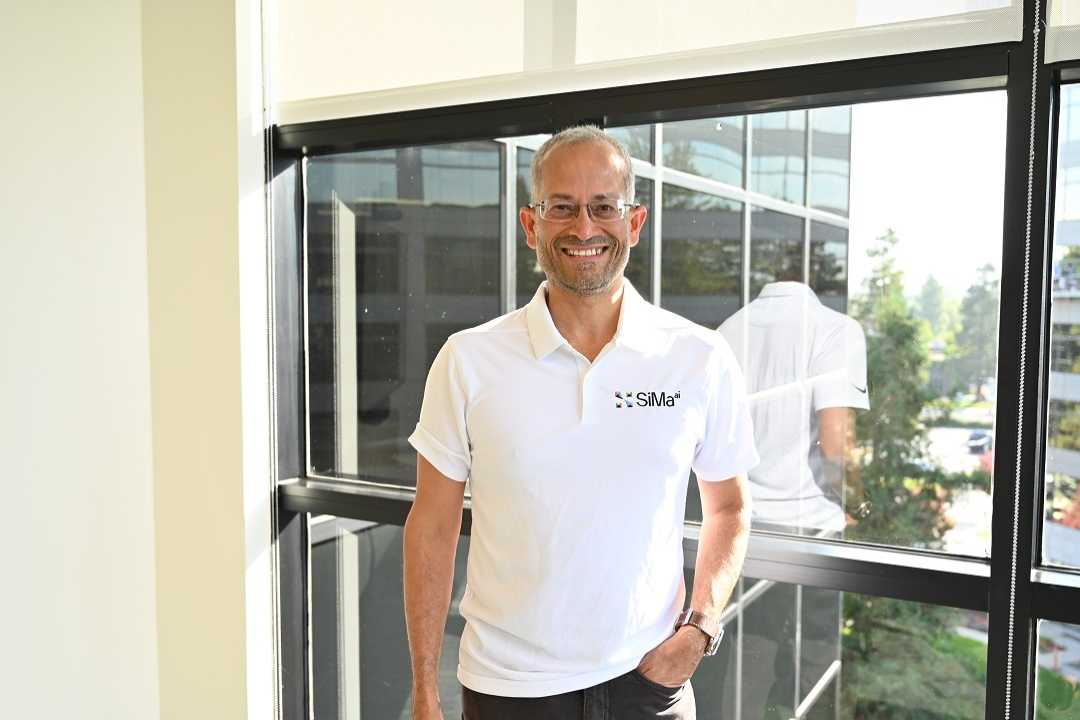
Krishna Rangasayee, Founder and CEO of SiMa.ai, said the collaboration brings together SiMa.ai’s machine learning platform with Synopsys’ automotive-grade IP and design tools to support innovation in autonomous driving and in-cabin systems.
Ravi Subramanian, Chief Product Management Officer at Synopsys, said automotive manufacturers need early validation and power optimization to accelerate delivery of AI-enabled vehicles. He added that the integrated toolchain enables faster development of next-generation ADAS and IVI features.
The solution includes pre-integrated virtual SoC models and a combined workflow using technologies from both companies. These include tools for early performance and power estimation, system-level modeling, virtual prototyping for early software development, machine learning deployment for edge AI workloads, and pre-silicon hardware and software validation.
SiMa.ai is a semiconductor and software company focused on delivering energy-efficient machine learning acceleration for edge computing. Its flagship MLSoC™ (Machine Learning System on Chip) platform integrates specialized hardware with a unified software stack to run computer vision, generative AI, and multimodal workloads directly on edge devices such as cameras, industrial systems, robotics, and automotive platforms. By prioritizing high performance per watt, flexibility, and ease of deployment, SiMa.ai aims to enable real-time AI inference at the edge while reducing latency, power consumption, and dependence on cloud infrastructure.