Researchers at MIT World Peace University (MIT-WPU) have developed advanced artificial intelligence and machine learning models aimed at improving oil recovery from mature reservoirs and enhancing production forecasting accuracy. The development comes at a time when global energy markets are facing uncertainty due to geopolitical factors and supply disruptions.
With India’s energy demand continuing to rise, oil and gas remain a critical component of the country’s energy mix, accounting for a significant share of consumption. Strengthening domestic production from existing oil fields has therefore become increasingly important to reduce reliance on imports and improve energy security.
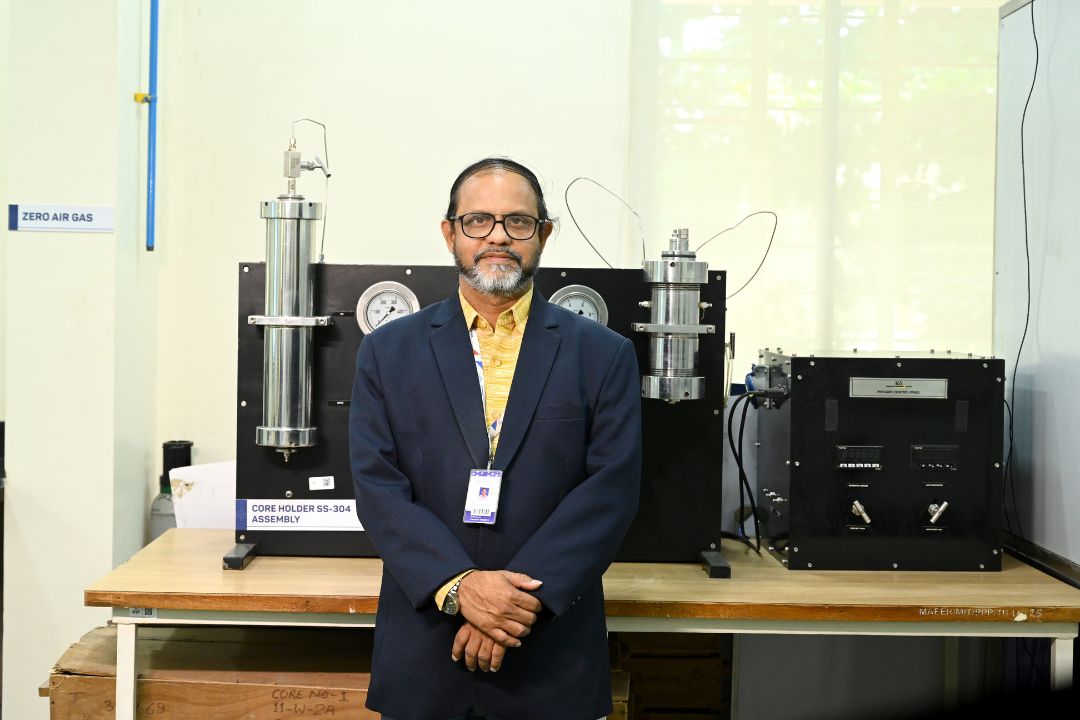
The research, led by Dr Rajib Kumar Sinharay from the Department of Petroleum Engineering at MIT-WPU, focuses on applying data-driven methods to complex reservoir challenges. In collaboration with his doctoral student Dr Hrishikesh Chavan, the team has developed a machine learning model capable of identifying the most suitable enhanced oil recovery (EOR) techniques for different reservoir conditions. The model has demonstrated an accuracy of over 90 percent and significantly reduces the time required for evaluation compared to traditional methods.
In a separate study, another research team led by Prof Samarth Patwardhan developed a deep learning model to identify carbonate reservoir rocks with high precision. These formations are commonly found in major oil-producing regions, and accurate identification plays a key role in optimizing extraction strategies.
The researchers have also created a predictive model for forecasting oil production in mature fields, achieving high accuracy when tested using real-world data from Indian reservoirs. Reliable forecasting is essential for planning investments, managing resources and ensuring long-term supply stability.
Additionally, the team has introduced an AI-based approach to optimize oil production tubing design, improving efficiency in extraction processes. This innovation has been presented at international forums and has received patent protection. Ongoing research efforts include identifying high-potential zones in unconventional reservoirs and developing sustainable drilling solutions for challenging environments.
These advancements highlight the growing role of artificial intelligence in modernizing the oil and gas sector. By enabling faster decision-making and improving operational efficiency, the research supports efforts to enhance domestic production and address evolving energy challenges.