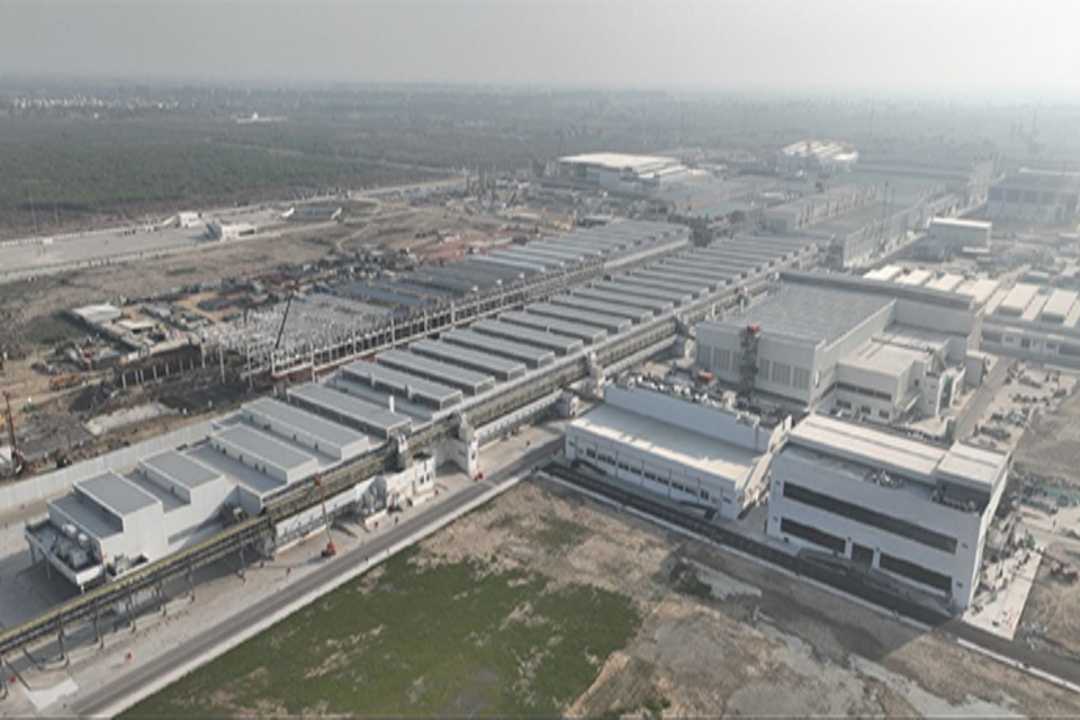
Maruti Suzuki India has announced the commencement of commercial production at the second manufacturing plant within its Kharkhoda facility in Haryana, marking another major milestone in the company’s ongoing production capacity expansion strategy. The newly operational second plant adds an annual production capacity of 2.5 lakh units, taking the total production capacity of the Kharkhoda facility to 5 lakh vehicles per year. With this expansion, Maruti Suzuki’s combined annual production capacity across its manufacturing locations in Gurugram, Manesar, Kharkhoda, and Hansalpur has increased to 26.5 lakh units.
The company stated that once all planned phases are completed, the Kharkhoda facility is expected to become one of Suzuki Motor Corporation’s largest four-wheeler manufacturing hubs globally, with the capability to produce up to one million vehicles annually. The commencement of production at the second plant aligns with Maruti Suzuki’s previously announced plan to add five lakh units of annual production capacity during FY 2026–27 as the company prepares to meet growing domestic and export demand.
Currently, the Kharkhoda facility manufactures the compact SUV Brezza along with the mid-size SUV Victoris. The expanded production capacity is expected to support the company’s efforts to strengthen its presence in the fast-growing SUV segment while improving operational flexibility and supply efficiency.
The Kharkhoda manufacturing project represents one of the largest automotive manufacturing investments in Haryana and plays an important role in strengthening India’s automotive production ecosystem. The foundation stone for the facility was laid in August 2022 by Prime Minister Narendra Modi, highlighting the strategic importance of the project for the country’s manufacturing sector.
Maruti Suzuki has been steadily increasing investments in production capacity, automation, and supply chain capabilities to support rising vehicle demand and maintain its leadership position in India’s passenger vehicle market. The company continues to focus on expanding manufacturing infrastructure while integrating advanced production technologies aimed at improving efficiency, quality, and sustainability.
Industry analysts view the Kharkhoda expansion as a significant development for India’s automotive manufacturing landscape, particularly at a time when vehicle demand in segments such as compact SUVs and utility vehicles continues to grow rapidly. The new capacity is also expected to strengthen Maruti Suzuki’s export operations by supporting higher production volumes for global markets.
The facility has been developed with modern manufacturing systems and infrastructure designed to support large-scale vehicle production while maintaining high standards of safety, quality, and operational efficiency. The expansion is also expected to generate substantial employment opportunities directly and indirectly through the automotive supplier ecosystem in the region.
Maruti Suzuki continues to maintain one of the largest automotive manufacturing networks in India, supported by extensive vendor partnerships and localized production capabilities. The company has also been increasing its focus on sustainable manufacturing practices, energy efficiency, and future mobility technologies as part of its long-term growth strategy.
With the second plant at Kharkhoda now operational, Maruti Suzuki is further strengthening its manufacturing footprint in India while positioning itself to address increasing market demand, support export growth, and expand its product portfolio across multiple vehicle segments. The company remains focused on enhancing production scalability and operational resilience as India continues to emerge as one of the world’s largest and fastest-growing automotive markets.