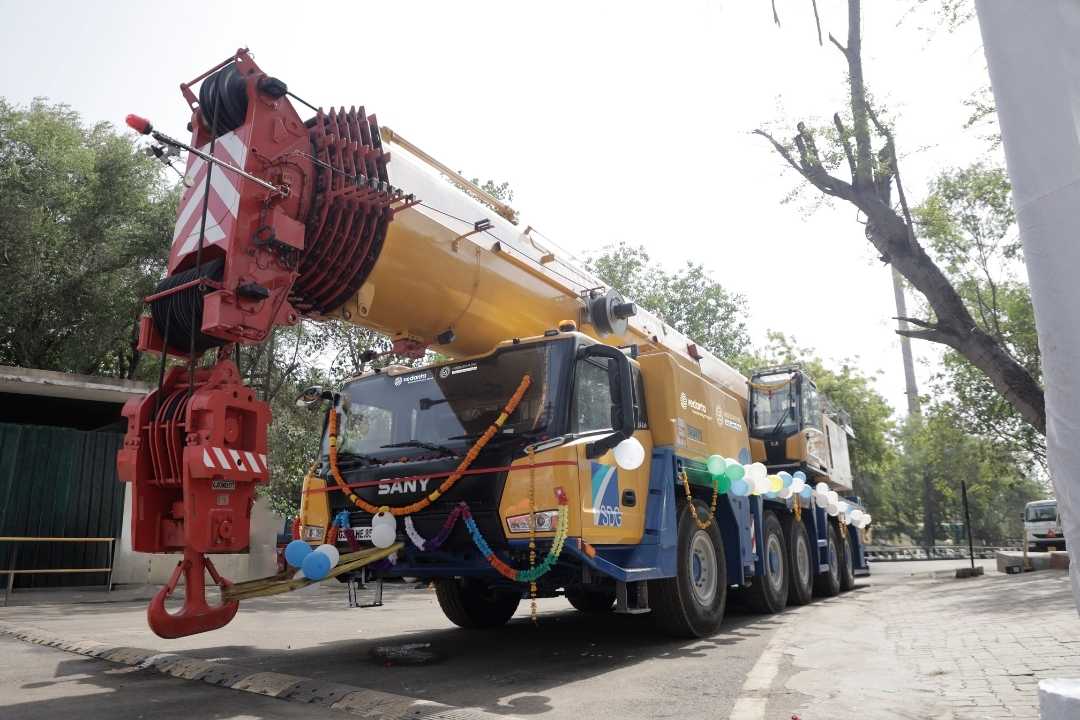
Hindustan Zinc Limited has introduced India’s first 250-metric-tonne hybrid electric crane at its Zinc Smelter in Debari, Rajasthan, marking another milestone in the company’s drive to reduce carbon emissions and modernize industrial operations with cleaner technologies.The newly commissioned crane operates on both electricity and diesel, enabling greater operational flexibility while significantly lowering fossil fuel consumption. The deployment forms part of Hindustan Zinc’s broader sustainability strategy, which focuses on decarbonizing heavy industrial processes and achieving net-zero carbon emissions by 2050 or earlier.
The hybrid crane is expected to replace a conventional diesel-powered machine that consumed nearly 93,600 litres of fuel annually. By shifting to electric operation wherever feasible, the company estimates an annual reduction of approximately 250 tonnes of carbon dioxide equivalent emissions. The initiative also highlights the growing potential of hybrid equipment in heavy industries traditionally considered difficult to decarbonize.
Arun Misra, Chief Executive Officer of Hindustan Zinc, said the company continues to integrate sustainability into every aspect of its business, from mining and manufacturing to logistics and employee mobility. He noted that the introduction of India’s first 250-tonne electric crane demonstrates the company’s commitment to adopting innovative technologies that improve operational efficiency while reducing environmental impact.
The latest deployment adds to a series of clean mobility initiatives implemented by Hindustan Zinc across its operations. Over the past three years, the company has steadily expanded the use of electric and alternative-fuel vehicles throughout its mining and manufacturing network.
Among its key initiatives, Hindustan Zinc became the first company in India to introduce underground battery electric vehicles at the Sindesar Khurd Mine. It has also established Rajasthan’s largest electric bulk logistics fleet through a partnership with GreenLine Mobility, operating 40 electric bulkers for material transportation. The company recently added electric buses for employee transportation and introduced electric loaders at its Rampura Agucha Mine to further reduce emissions across mining activities.
In industrial logistics, more than 250 LNG-powered trucks now transport mineral concentrate between mining sites and smelting facilities, making Hindustan Zinc one of the largest industrial users of LNG-based freight transport in Rajasthan. Deepak Garg, Managing Director of SANY India, said the deployment reflects a shared commitment to advancing sustainable industrial technologies through innovative equipment designed to improve efficiency while lowering emissions.
Hindustan Zinc has also accelerated renewable energy adoption across its operations, with nearly 18 percent of its electricity requirements now met through renewable sources. The company has commissioned over 530 MW of round-the-clock renewable energy capacity and continues to work toward reducing Scope 1 and Scope 2 emissions by 50 percent and Scope 3 emissions by 25 percent from its 2020 baseline. The latest deployment reinforces Hindustan Zinc’s position as a leader in sustainable mining and metals production, combining advanced engineering, clean energy adoption and responsible industrial practices to support India’s transition toward a low-carbon economy.