Record global investments in semiconductor manufacturing equipment are expected to create significant opportunities for India’s rapidly expanding semiconductor industry, as worldwide spending continues to rise on the back of growing demand for artificial intelligence (AI), advanced computing and next-generation electronics. According to SEMI‘s Mid-Year Total Semiconductor Equipment Forecast, global semiconductor manufacturing equipment sales are projected to reach a record US$165.9 billion in 2026, representing a 23.2% increase over the previous year. The market is expected to maintain its growth momentum and reach US$229.5 billion by 2028, marking five consecutive years of expansion driven by investments in advanced logic chips, high-bandwidth memory (HBM), advanced packaging and AI-enabled semiconductor technologies.
The forecast points to robust growth across wafer fabrication equipment, semiconductor test systems and assembly and packaging equipment as chipmakers worldwide expand production capacity to support AI workloads, hyperscale data centres, automotive electronics and intelligent edge devices. Wafer fabrication equipment is expected to account for the largest share at US$143.9 billion in 2026, while semiconductor test equipment is projected to grow 31% to US$15.3 billion.
Commenting on the outlook, Ajit Manocha, President and CEO of SEMI, said the rapid expansion of AI applications is driving demand for increasingly powerful and efficient semiconductor devices, prompting manufacturers to accelerate investments in advanced fabrication, memory, testing and packaging technologies required for the next phase of industry growth.
The global investment cycle comes at a strategically important time for India, which is steadily strengthening its domestic semiconductor ecosystem. The country has approved 12 semiconductor manufacturing projects covering fabrication plants, assembly, testing, marking and packaging (ATMP/OSAT) facilities, compound semiconductors and display manufacturing, representing investments exceeding US$20 billion. These projects are supported by government initiatives including the SEMICON India Programme, Production Linked Incentive (PLI) scheme, Electronics Components Manufacturing Scheme (ECMS), Electronics Manufacturing Clusters (EMC), Research, Development and Innovation (RDI) initiatives and the India AI Mission.
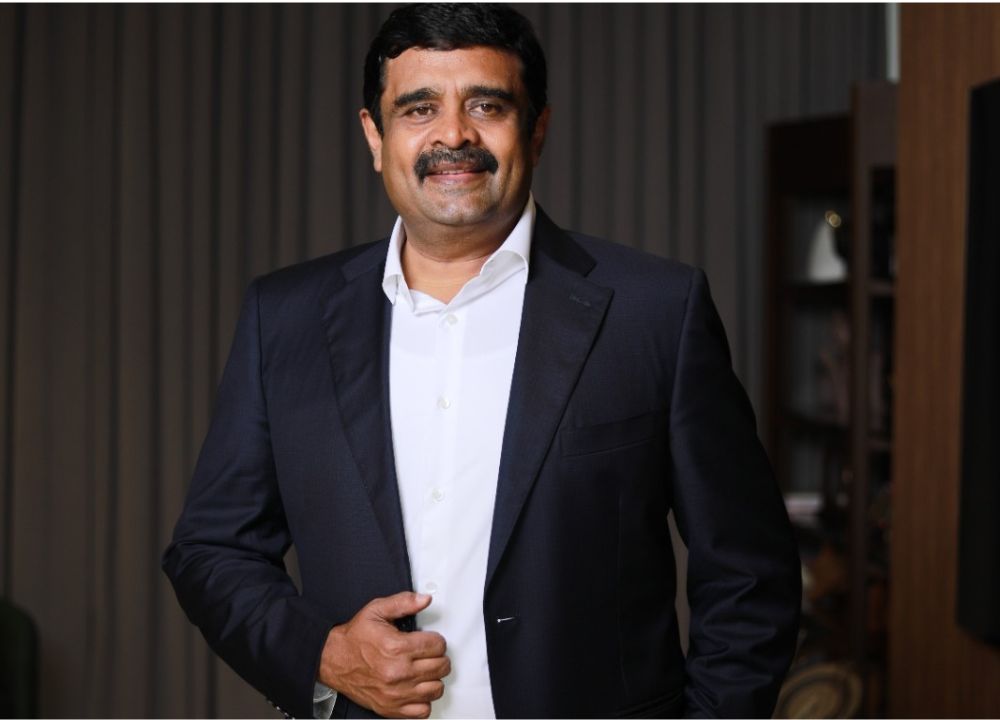
Ashok Chandak, President of SEMI India, said the strong global investment cycle aligns with India’s long-term semiconductor strategy and positions the country as an attractive destination for manufacturing, supply chain development and technology innovation. He noted that India’s expanding ecosystem offers opportunities not only for chip production but also for equipment manufacturers, materials suppliers, automation companies, precision engineering firms and component manufacturers seeking to diversify global supply chains.
The report also highlights sustained investments in advanced memory technologies, including HBM, DRAM and NAND, alongside continued demand for mature and specialty semiconductor technologies serving automotive, industrial, communications, power electronics and consumer markets. With a growing manufacturing base and strong design capabilities, India is well placed to strengthen its role in the global semiconductor value chain while supporting long-term innovation, skilled employment and industrial growth.