Fronius continues to advance accuracy in robotic welding by enhancing its patented WireSense assistance system. Already proven in automotive manufacturing, WireSense is now being extended to new industries including construction equipment, agricultural machinery, commercial vehicles, and general metal fabrication.
With expanded functionality, the system now delivers highly precise results across a wide variety of joint types and materials, ranging from steel structures and container fabrication to chrome-nickel components. Even in modern, highly controlled robotic welding environments, positional deviations can arise due to clamping tolerances or inconsistencies from upstream processes. WireSense addresses these challenges by enabling robots to automatically detect and compensate for such variations, significantly minimizing rework and scrap.
At the core of WireSense lies a novel principle: transforming the welding wire into a highly accurate measurement tool. Rather than relying on external sensors, the system uses high-frequency forward and reverse wire movements to identify seam positions, edges, height differences, and gaps with exceptional precision.
This contact-based measurement method operates through a weld-free short circuit and performs reliably even on reflective materials like aluminum—applications where camera-based systems often encounter limitations. According to Philipp Schlor, Strategic Product Manager at Fronius International, the welding power source—either iWave or TPS/i—captures these measurements and transmits them directly to the robot controller, which then adjusts the tool center point in real time to ensure the weld is placed exactly as programmed.
The latest version of WireSense significantly broadens its range of use. It now supports all common joint configurations, including fillet welds, butt joints, flange seams, and complex curved geometries. The system works equally well with steel, stainless steel, aluminum, and CrNi alloys, offering particular advantages to manufacturers handling variable material thicknesses and intricate designs. Detection capabilities have also been improved for thicker materials, enabling consistent performance on components measuring 4 mm or more.
For system integrators and manufacturers, WireSense represents a major step toward smarter, more autonomous production. The system enables precise component location even in hard-to-access areas, ensures repeatable weld quality, and enhances overall process reliability. Additional benefits include the ability to detect sheet thicknesses starting from 0.5 mm, evaluate weld gaps for automatic parameter selection, and drastically reduce scrap and post-weld corrections. Since no additional hardware such as cameras is required, setup, calibration, and maintenance efforts are also minimized.
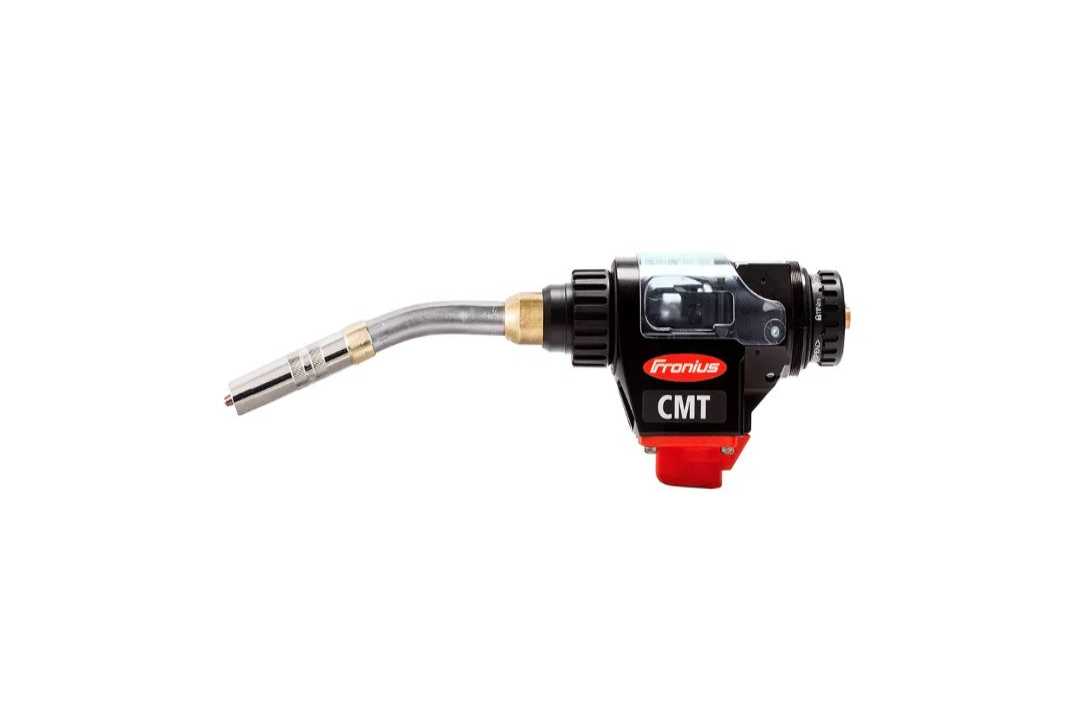
WireSense operates using the precision of Fronius CMT technology and requires a CMT-ready configuration, including the Robacta Drive CMT unit, a compatible wire buffer, and the WireSense software package. Sensor data is transmitted via the Fronius welding machine directly to the robot controller with minimal delay, and close collaboration with robot manufacturers ensures compatibility with the most commonly used robotic platforms.
Existing users will benefit as well, as all new functionalities will be available through a complimentary software update starting mid-2026. Robot updates may also be required, and customers are encouraged to consult their robot suppliers. As Schlor points out, many users already have the necessary hardware in place but are not yet leveraging WireSense. Since it is a software-based feature, activation requires no additional components—allowing companies to unlock greater value from their current investments.