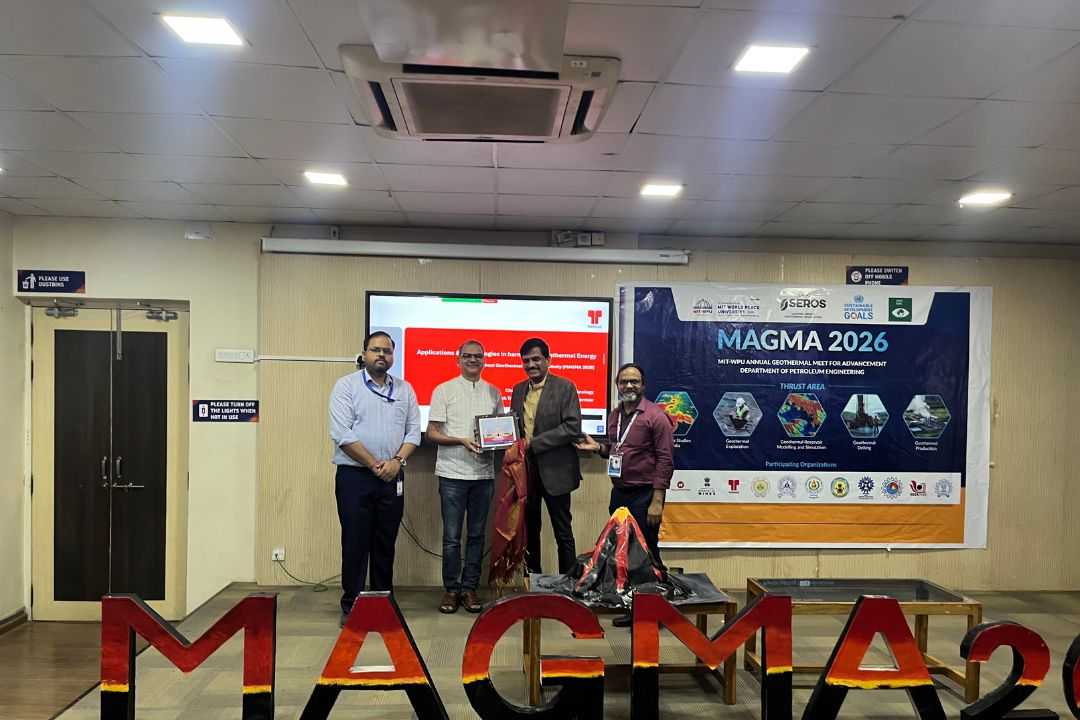
Experts at MAGMA 2026, hosted by MIT World Peace University, highlighted the urgent need for India to expand its energy mix by investing in emerging resources such as geothermal energy and natural hydrogen. The discussions underscored the importance of reducing dependence on imported fuels amid ongoing global uncertainties and supply disruptions.
The five-day workshop on geothermal energy exploration and production brought together participants from over 16 organisations, including Geological Survey of India, leading academic institutions, research laboratories, and global industry players. Companies such as Halliburton, Thermax Limited, and SEROS Energy contributed to discussions on advancing geothermal capabilities in India.
Speakers emphasised that while solar and wind energy continue to scale, the country must also focus on stable, round-the-clock energy sources. Geothermal energy, with an estimated potential exceeding 10 GW in India, was identified as a reliable base-load option capable of supporting long-term energy security.
The event was inaugurated by Dr Ashish Agarwal, Managing Director and CEO of SEROS Energy, who highlighted the importance of geothermal development for national energy resilience. Dr Prakash Kumar, Director of National Geophysical Research Institute, spoke on advancements in geophysical technologies, noting that integrated geological and geophysical methods can significantly improve the accuracy of identifying geothermal resources.
Experts noted that geothermal development in India is progressing through a phased approach due to high exploration costs and site-specific challenges. Pilot projects and policy support are helping build a foundation for long-term commercial viability.
At the valedictory session, Dr Shalivahan, Director of Indian Institute of Petroleum and Energy, stated that geothermal energy would play a complementary role within a diversified energy portfolio. He stressed the importance of balancing multiple energy sources to reduce import dependency and strengthen resilience.
The discussions also highlighted the role of advanced technologies such as artificial intelligence and data analytics in improving exploration success rates and reducing project risks. Experts pointed out that these tools can accelerate decision-making and enhance the economic feasibility of emerging energy projects.
In addition to geothermal energy, natural hydrogen was identified as a promising resource with the potential to transform the clean energy landscape. Unlike conventional hydrogen production, naturally occurring hydrogen can be extracted at lower costs, offering new opportunities for sustainable energy development. Participants concluded that India must adopt a long-term, mission-driven approach to energy planning, combining innovation, research, and collaboration across academia, industry, and policymakers to build a resilient and self-reliant energy ecosystem.