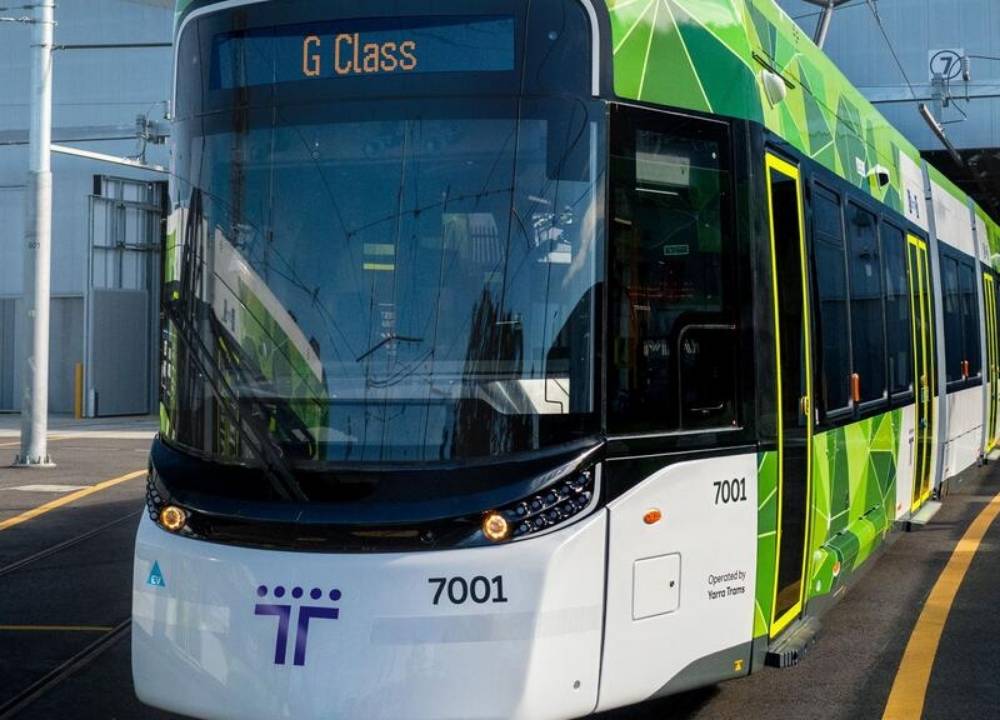
Alstom has placed the first of 100 Next Generation G Class (NGT) trams into passenger service in Melbourne, marking a major milestone in the company’s €700 million contract awarded by the Victorian Government in 2022. The rollout begins the phased introduction of a new fleet designed to improve accessibility, passenger comfort and operational efficiency across Melbourne’s extensive tram network.
Under the contract, Alstom will manufacture the new trams at its Dandenong facility in Victoria and provide long-term maintenance through a purpose-built depot in Maidstone, reinforcing its long-standing commitment to Australia’s public transport sector.The G Class program has been developed with a strong focus on local manufacturing. Around 65 percent of the tram’s content has been sourced locally, making it one of Australia’s largest rail manufacturing programs. The project has supported more than 2,000 direct and indirect jobs while strengthening the country’s rail supply chain. Alstom has also invested more than AUD 40 million in upgrading its Dandenong manufacturing facility to enhance production capability and support future transport projects.
Ling Fang, President of Alstom Asia Pacific, said the entry of the first G Class tram into passenger service represents the company’s ability to combine global expertise with local manufacturing capabilities. “The launch of the G Class tram reflects our commitment to delivering modern mobility solutions built in Australia for Australian communities. By combining proven global technology with local engineering and manufacturing, we are helping strengthen the country’s rail industry while delivering a new generation of accessible and reliable public transport,” Mr Fang said.
The new tram has been developed from Alstom’s proven Flexity 2 platform and adapted specifically for Melbourne following extensive consultation with more than 1,000 stakeholders. The consultation process included disability advocacy groups, tram drivers, passenger representatives and the Public Transport Users Association to ensure the vehicle meets the needs of a wide range of passengers.
The G Class tram features a fully low-floor design for easier boarding, regenerative braking technology, wider aisles, additional doors and space for more than 150 passengers. These features improve accessibility, reduce travel times and enhance passenger comfort, making it one of the most accessible trams to operate on Melbourne’s network.
The new fleet will be introduced in stages across the city, where Alstom-built trams already account for more than 80 percent of vehicles operating on Melbourne’s tram network. The company will also maintain the fleet from its advanced Maidstone maintenance facility, providing ongoing support throughout the trams’ operational life.
Guillaume Tritter, Managing Director of Alstom Australia and New Zealand, credited the strong partnership with the Victorian Government for the successful delivery of the project. “The introduction of the G Class fleet demonstrates what can be achieved through close collaboration and long-term investment in local manufacturing. This project highlights Australia’s capability to design, build and maintain world-class rail vehicles while creating skilled jobs and strengthening domestic industrial capability,” Mr Tritter said.
The launch follows several major milestones for Alstom in Australia during 2026, including the introduction of the first X’Trapolis 2.0 train in Victoria and the first Australind train in Western Australia, further expanding the company’s contribution to Australia’s growing rail infrastructure.
Alstom is a global leader in smart and sustainable mobility, providing integrated transport solutions that include high-speed trains, metros, trams, regional trains, signalling systems, infrastructure, digital mobility and maintenance services. Operating in more than 60 countries with a workforce of over 80,000 employees, the company is committed to developing innovative and environmentally sustainable transport technologies. In Australia, Alstom has been supporting the rail industry for more than 70 years through local manufacturing, engineering, maintenance and signalling projects, helping deliver modern public transport systems across the country.