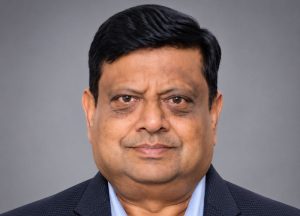
For Indian precision manufacturers, consistency is becoming less of a quality metric and more of a business imperative. As tolerances tighten and applications become more demanding, the choice of tooling can have a direct impact on surface finish, dimensional accuracy, productivity and, ultimately, the total cost of manufacturing. Yet, as Shriniwas Karande, who has spent 25 years in the cutting tools business, observes, tooling decisions in India still tend to revolve around one immediate question: What does the tool cost?
Shriniwas Karande, a partner at SharpEdge Technologies, which represents Swiss and German precision tooling companies in India, has seen this across hundreds of machine shops. His experience spans micromechanics, Swiss sliding head machining on Citizen and Tornos machines, as well as aerospace, medical and automotive applications. “Majority of the customers do have a consistency issue when it comes to finish machining,” he says. “But to solve the problem, the customer is not ready to pay the right price.”
The challenge is that the visible cost of a tooling decision is rarely the real cost. Machine stoppages for inspection, frequent dressing, rejected components and additional finishing operations can quietly add to the manufacturing cost. Because these expenses are absorbed into the process, they are seldom connected back to the original tooling choice. This is where Diametal’s approach to precision abrasives becomes relevant.
Looking Beyond the Price of the Wheel
A cheaper grinding wheel may reduce the value on a purchase order. It does not necessarily reduce the cost of manufacturing. In a precision environment, what matters is how consistently the wheel performs throughout the process. Grinding is particularly sensitive because it is often one of the final operations in a manufacturing sequence. By this stage, a component has already accumulated the cost of machining and other processes, meaning any variation in the grinding operation can have a disproportionate impact.
Wheel specification, abrasive grain, bond system, geometry, spindle speed, coolant delivery and dressing frequency all influence the final result. Treating the wheel as a catalogue item, rather than as a component of the manufacturing process, can make consistency difficult to achieve. This is one of the areas where Diametal distinguishes itself through application-driven abrasive solutions. Rather than approaching grinding wheels as standard products, Diametal develops solutions around the requirements of the application, selecting the appropriate abrasive characteristics and bond formulation according to the material, machine and desired outcome.
A key part of this capability comes from Diametal’s control over its own abrasive raw materials and bonds, giving the company greater flexibility in developing and adapting wheel specifications for demanding applications. More importantly, Diametal’s knowledge of grinding is built into its own manufacturing environment. The company uses its grinding wheels to manufacture Swiss cutting tools in-house, exposing its abrasive solutions to real production conditions, materials and precision requirements. That creates a direct connection between abrasive development, tool manufacturing and application performance. As Shriniwas Karande puts it, “So you need something that works consistently, gives predictable tolerances, and achieves what has been decided by the manufacturer.”
From Tooling Cost to Process Cost
The economics of precision manufacturing become clearer when the entire process is considered. A purchase department may evaluate a wheel based on its price per piece, while a production engineer may evaluate the same wheel based on dressing intervals, wheel life, surface finish, rejection rates, cycle time and productivity. These are two very different ways of looking at the same product.
Shriniwas Karande describes this as a recurring tension within Indian manufacturing organisations. “These are two clashes that are always happening at any customer end,” he says, “and whoever is stronger of both of them drives the decision making.” For precision manufacturers, the shift therefore needs to be from tool price to process economics. This is precisely where Diametal’s application-focused approach can add value: by looking at the grinding wheel as part of a complete manufacturing process rather than as an isolated consumable.
Where Diametal Is Taking the Conversation
In India, SharpEdge Technologies is currently working with Diametal across the solid carbide tool manufacturing segment, particularly manufacturers using 5-axis grinding machines to produce drills and end mills. The focus is on measurable improvements: longer wheel edge retention between dressing cycles, better surface finish and higher material removal rates. These parameters directly influence manufacturing productivity. A wheel that maintains its performance for longer can reduce interruptions, better surface finish can minimise additional operations, and higher material removal rates can improve throughput.
The opportunity becomes even more significant as manufacturers move into difficult-to-machine materials and high-speed grinding applications. One example is Nitinol, a nickel-titanium alloy widely used in medical devices, where grinding presents significant technical challenges. Diametal already has abrasive solutions developed for demanding applications of this nature, giving Indian manufacturers access to expertise built around difficult grinding conditions.
The Consistency Question
Indian manufacturers are increasingly competing for global work in aerospace, medical, automotive and other high-precision sectors. With those opportunities come tighter tolerances and greater expectations around repeatability. The question, then, is no longer simply whether a grinding wheel can achieve the required specification once. It is whether it can achieve that specification consistently, predictably and economically across production.
That is the larger proposition behind Diametal’s approach to precision abrasives: combining control over abrasive technology with application knowledge and practical manufacturing experience to help manufacturers achieve micron-level precision with greater consistency and predictability.
As Shriniwas Karande puts it, “Cheaper tools actually do not reduce the total cost of manufacturing. Whereas process consistency and productivity improvement contribute to a very significant cost reduction.”
The challenge for Indian manufacturers is to start measuring that difference. Because in precision manufacturing, the real cost of a tool is not what it costs to buy. It is what it costs when it fails to deliver consistency.
The Micron Question is an initiative by Machine Maker in association with Diametal, exploring how Indian precision manufacturers think about consistency, tooling and process performance.