There is a particular kind of ambition that does not announce itself loudly. Kohinoor Industries, the tool room and die casting company founded in 2014, is a good example. It does not claim to be the biggest. It does not chase noise. What it does chase is something more specific: the moment a customer walks in with a requirement and leaves with a complete solution, satisfied enough to come back and bring others. “Once the customer enters Kohinoor,” says Paris Jagtap, Director, “we want them to leave with the feeling that Kohinoor gave them a quality solution. That is the standard we hold ourselves to.” That standard is what Kohinoor Industries is bringing to TAGMA Die & Mould India 2026.
A Tool Room That Grew Into a Foundry
Kohinoor Industries was established in 2014, though actual manufacturing operations got underway in 2016. The company started as a tool and die maker with a focus on die casting dies: high pressure die casting (HPDC), low pressure die casting (LPDC), and gravity die casting (GDC). The scope was always broader than just making tools, however. The intent from the beginning was to offer customers a complete solution, from design through to finished component.
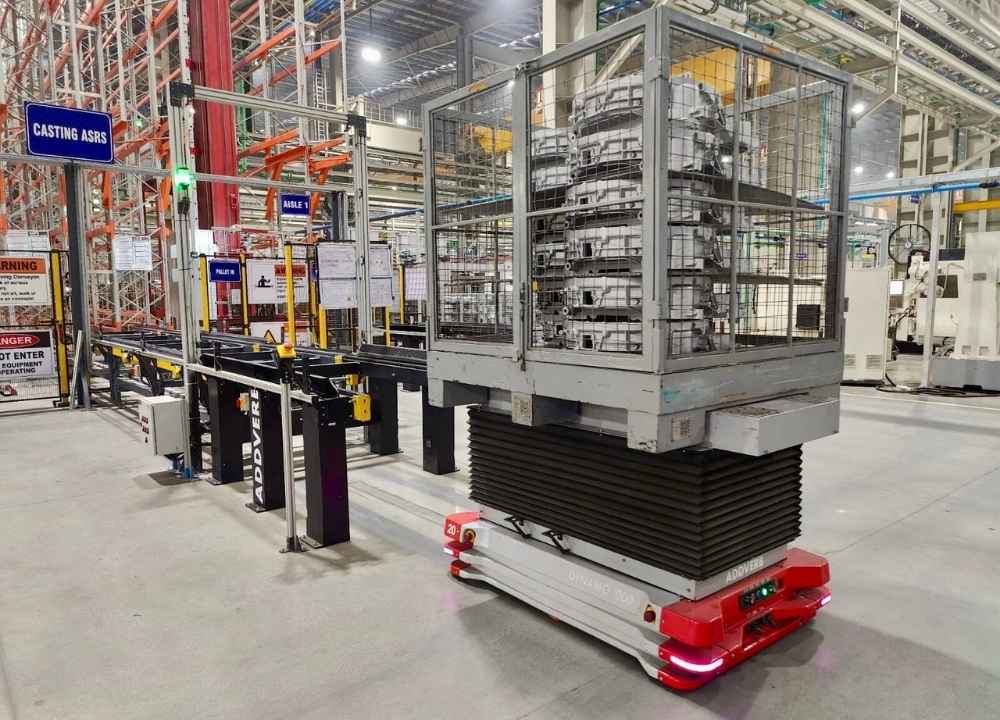
That intent has now taken physical form in a second plant. Alongside the tool room, Kohinoor operates a foundry that handles complete casting production. This means the company can walk a customer from the initial design and feasibility stage all the way through simulation, tooling, and actual casting output, without the customer needing to coordinate between multiple vendors.
For Paris Jagtap, this end-to-end capability is not just a selling point. It is the answer to a problem he has watched customers deal with for years: the cost and friction of managing a fragmented supply chain for a process that really should flow as one.
How a Tool Gets Made at Kohinoor
The process Kohinoor follows is methodical, and Jagtap is clear that the structure exists for a reason. When a new requirement comes in, the team first conducts a feasibility study. This is followed by a detailed conversation with the customer to understand exactly what they need, not just what they have asked for. From there, the company moves into simulation, where design decisions are validated against the requirements of the casting process before a single piece of metal is cut. Simulation, Jagtap explains, is where quality is effectively decided. Getting it right at that stage prevents expensive corrections later.
After simulation, a complete design is produced and reviewed with the customer before manufacturing begins. It is a process that treats each project as a collaboration rather than a transaction, and it reflects how seriously Kohinoor takes the gap between what a customer asks for and what they actually need.
The Market They Are Going After
Kohinoor’s customer base today spans automotive and non-automotive sectors. Within automotive, the company works across conventional and EV segments. The shift towards electric vehicles has opened up new component requirements, and Kohinoor has been deliberate about positioning itself to serve that demand, both in tooling and in casting.
Beyond automotive, the company works on products in LED lighting, consumer goods, and other industries where die casting produces critical components. The unifying thread is not the sector but the requirement: wherever a customer needs a well-designed tool and reliable casting output, Kohinoor wants to be the answer.
TAGMA is part of a broader push for Paris Jagtap. The exhibition gives Kohinoor visibility with OEMs and Tier 1 suppliers it might not otherwise reach quickly, and it opens up conversations about export opportunities that the company is actively working towards. The goal is not just to be known across India, but eventually to supply internationally.
The Challenges That Nobody Talks About Enough
Paris Jagtap is candid about what makes running a tool room hard right now. Finding and retaining skilled manpower is one of the most persistent problems in the industry. A foundry can manage with a different kind of workforce, but tool making requires people who understand the craft. That pool is not growing as fast as the demand for it.
Material availability is another pressure. Steel and alloy prices have been climbing, and supply is not always predictable. For a business where material cost is a major component of every job, this creates ongoing uncertainty that is difficult to plan around.
And then there is the challenge of consistency: maintaining quality standards across every job, every time, while also managing customer relationships and keeping the business viable in a competitive market. These are not dramatic problems. They are the grinding daily reality of running a manufacturing business, and Jagtap speaks about them without complaint, more as context for why discipline in process matters so much.
“The tool room always has challenges,” he says. “The key is to maintain consistency in quality and in your relationship with the customer. Those two things together are what keep you in the market.”
Why TAGMA, Why Now?
Kohinoor has participated in industry platforms before, but TAGMA Die & Mould India 2026 represents a more deliberate step. At the exhibition, the company will showcase its HPDC and GDC tooling alongside its foundry casting capabilities. The stall is designed to communicate the full picture: not just that Kohinoor makes dies, but that it can take a customer from concept to component under one roof.
The target conversations are with OEMs, Tier 1 suppliers, and buyers in the EV and non-automotive space who are looking for a supplier that understands both sides of the process. Branding is also part of the objective. Kohinoor is a company that has done solid work since 2016 and is now ready for a wider audience to know it.
“We want to visualise our product, understand what customers want, and see where the new technology is going,” Jagtap says. “TAGMA gives us that platform.”