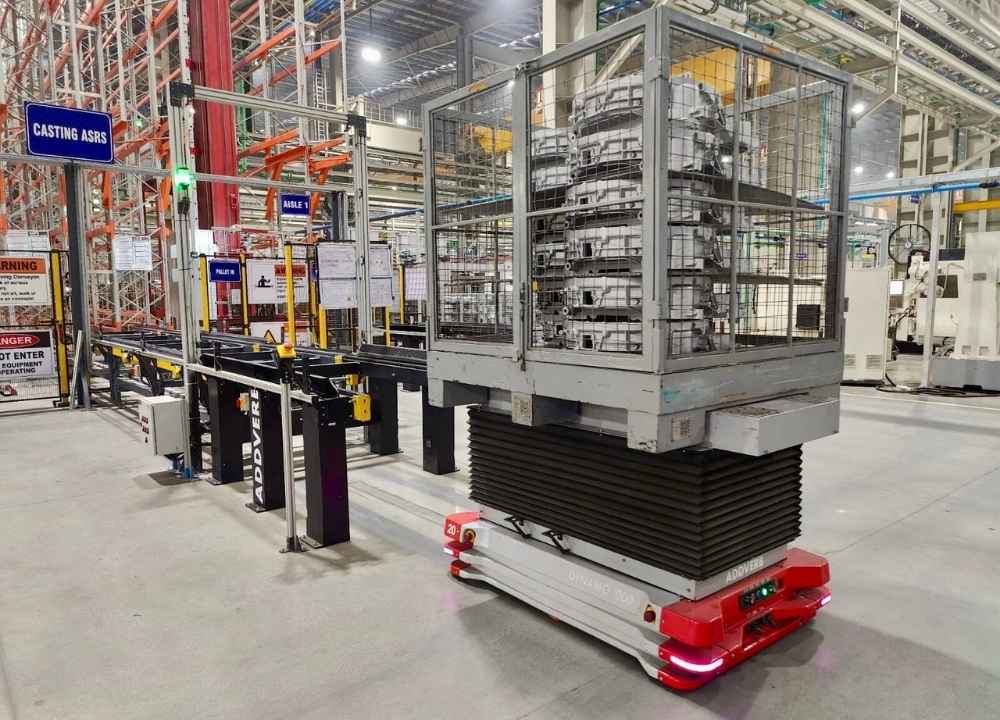

In warehousing and material handling, few conversations generate more emotion than those about automation and its impact on employment. The conventional narrative that automation inevitably eliminates jobs persists despite rising evidence to the contrary. A more nuanced understanding reveals that well-implemented automation fundamentally transforms roles, creates new opportunities, and often leads to more fulfilling and sustainable careers.
Beyond the Replacement Myth
The apprehension surrounding automation is understandable. When warehouse managers first see a conveyor system effortlessly moving packages that once required multiple handlers or witness a vertical reciprocating conveyor replacing manual lifting operations, concerns about workforce reduction naturally arise. However, this perspective overlooks a critical reality: automation primarily eliminates tasks, not jobs.
In practice, organisations implementing automation report a fascinating trend: total employment often remains stable or even increases, while the nature of work undergoes a profound transformation.
From Manual Handler to System Operator
Consider the evolution of the traditional warehouse worker. Before automation, employees might spend their days performing repetitive, physically demanding tasks, lifting heavy packages, manually sorting items, or pushing carts across vast warehouse floors. These activities took a physical toll, resulting in workplace musculoskeletal disorders from manual lifting.
Post-automation, these same employees often transition into system operators, monitoring dashboards, managing exceptions, and ensuring smooth operations. Many former manual handlers now manage entire conveyor systems, making real-time decisions that affect the entire operation. This represents a significant elevation in responsibility and strategic importance.
This transformation represents a fundamental elevation in responsibility, skill utilisation, and career potential. System operators typically receive higher compensation than manual handlers, reflecting the increased value they bring to operations.
Skill Development as a Competitive Advantage
Automation creates a virtuous cycle of skill development within organisations. As basic tasks become automated, companies invest in training employees for higher-value roles requiring critical thinking, problem-solving, and technical knowledge. This investment benefits both the organisation and the individual.
For employees, automation-driven skill development provides:
- Increased marketability: Technical skills related to automated systems are transferable and increasingly valuable across industries.
- Career resilience: Specialised knowledge of automation systems provides greater job security than easily replaceable manual skills.
- Growth pathways: Expertise in automated operations opens doors to supervisory, maintenance, and even engineering roles previously inaccessible to warehouse workers.
For organisations, this upskilling creates competitive advantages through:
- Institutional knowledge retention: Employees who understand both operational needs and technical systems become invaluable assets.
- Higher retention: Workers receiving training and advancement opportunities demonstrate higher retention rates.
- Innovation capacity: Employees with frontline experience and technical knowledge often identify optimisation opportunities invisible to outside experts.
Health, Safety, and Satisfaction
Perhaps the most overlooked benefit of automation is its impact on worker well-being. The physical toll of manual material handling is substantial; heavy lifting, repetitive motions, and constant standing lead to injury rates significantly higher than national workplace averages.
Automation dramatically improves this picture. Warehouses implementing automated material handling systems report:
- Reduction in reportable workplace injuries
- Decrease in back-related medical claims
- Improvement in employee satisfaction scores
- Reduction in turnover among long-term employees
Many employees report significant improvements in their quality of life after automation implementation. Where they once experienced physical exhaustion and pain after shifts, they now finish work with energy for family activities. Their roles have become more intellectually engaging, less physically taxing, and better compensated.
The Inclusive Automated Warehouse
Automation also creates more inclusive warehouse environments. Physical limitations that might have prevented individuals from warehouse employment, age, previous injuries, or disabilities, become less relevant in automated facilities where cognitive skills matter more than physical capabilities.
This expanded talent pool benefits organisations facing labour shortages while creating opportunities for segments of the workforce previously excluded from these industries. Several companies report successfully recruiting retired professionals, differently-abled workers, and career-changers who bring diverse perspectives to warehouse operations.
The Path Forward: Partnership, Not Replacement
The most successful automation implementations approach the transition as a partnership with employees rather than a replacement strategy. This involves:
- Early engagement: Involving frontline workers in automation planning to capture their operational insights.
- Transparent communication: Clearly articulating how roles will evolve and providing pathways for skill development.
- Proactive training: Beginning technical training well before implementation rather than waiting until systems are operational.
- Recognition of expertise: Acknowledging that employees with years of operational experience bring invaluable context to automation decisions.
- Continuous development: Establishing ongoing learning paths that allow employees to grow alongside technological advancements.
A Human-Centred Automation Future
The evidence is clear: automation, when thoughtfully implemented, enhances human potential rather than diminishing it. It elevates warehouse work from physically demanding, repetitive labour to knowledge-based careers with greater compensation, safety, and advancement opportunities.
The question for forward-thinking organisations now is how to automate in ways that maximise both operational efficiency and human potential. Those who approach automation as a tool for workforce enhancement rather than replacement will find themselves with both more efficient operations and more engaged, capable employees. In this light, warehouse automation can be stated as the beginning of better careers.