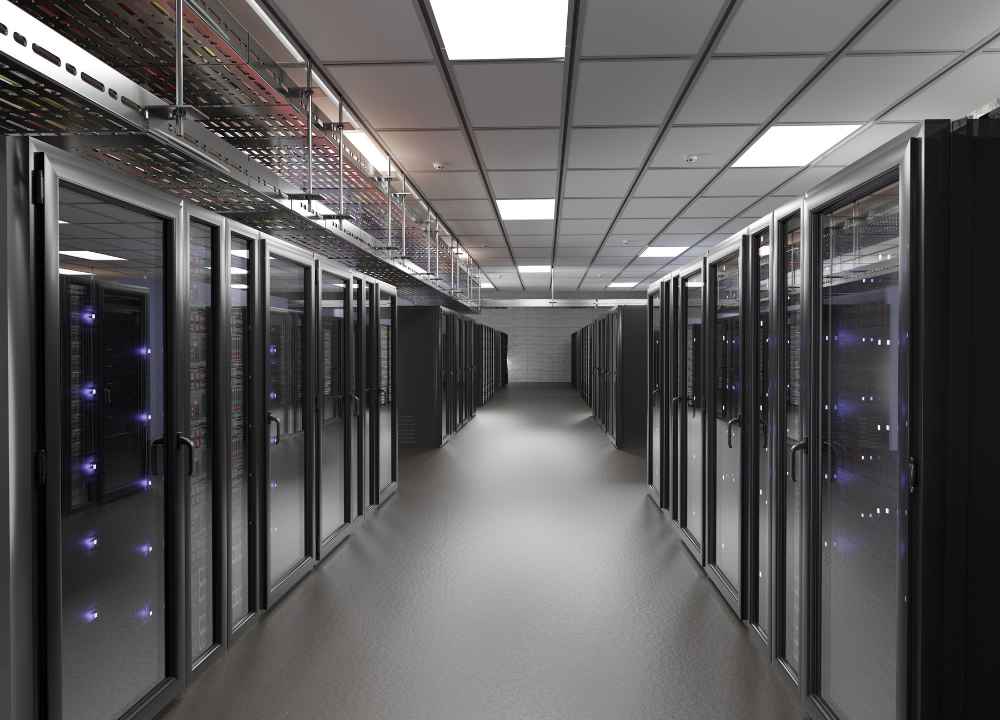
The pace of data centre evolution has accelerated with growing demand. The industry is focused on computing power, increasing demand for data processing, and growing capabilities. But there’s one crucial physical side of this which often remains under the bushes – the infrastructure that supports it. As data centres evolve, infrastructure needs to keep pace with these demands.
This calls for a shift in approach for the developers, operators, consultants and manufacturers. A data centre can no longer be considered a collection of independently specified systems, brought together at the construction stage. Instead, it is an interconnected system encompassing interdependent components like power distribution, structural support, cable trays, cooling, and so on. Even a small decision made in one part can have severe consequences in other parts, long after the construction is done.
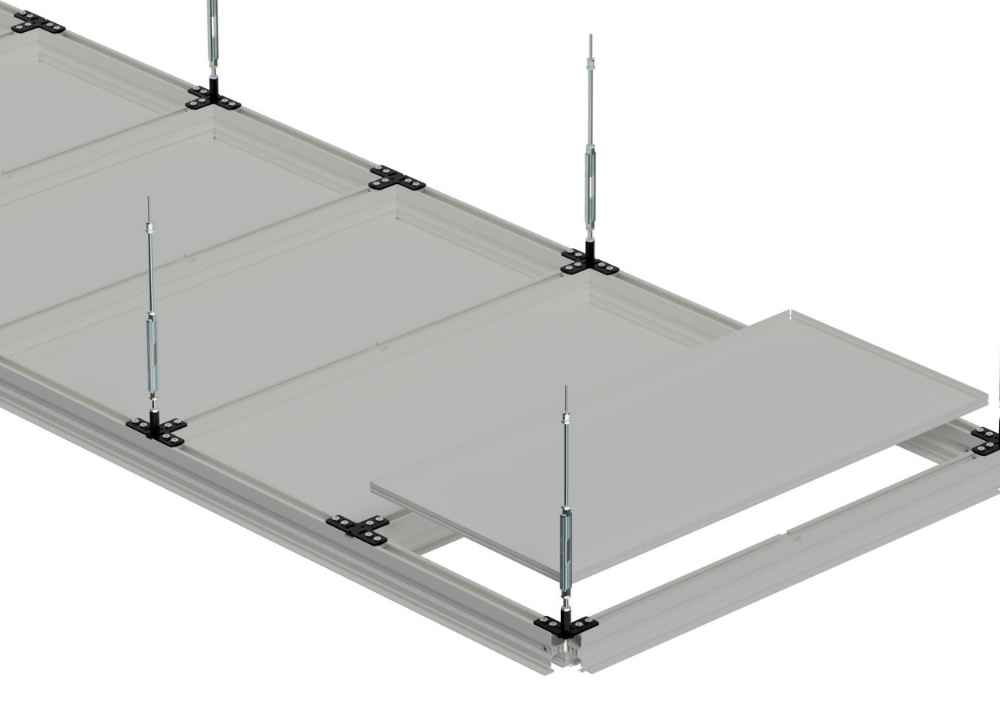
When we talk about a data hall, we must consider the space above and below together. On one hand, the Raised Access Floors provide accessible routes for services beneath the equipment. On the other hand, the engineered structural ceilings organise approved overhead services and containment. It is the distribution of these services inside the data hall that determines its equipment layout, cooling strategy and operational load. These decisions, when considered together at the design stage, makes it easy for one to build and manage the hall.
The decisions become more relevant in the present time as the computing loads are increasing drastically. Higher density racks require a dense electrical distribution, heavier cable pathways, and complex liquid-cooling infrastructure. This results in the challenge of finding room for additional equipment.
This also changes how we assess engineering performance. For example, a structural ceiling system can not be assessed on the load capacity alone. Design reviews need to consider actual load paths, allowable deflection, service configurations, and project-specific requirements. In a data centre, where continuity of operations is critical, reliability is fundamental to the business model.
Next, adaptability must become a design requirement rather than a promise made at the end of a specification. While it’s true that not all data centres will move from air cooling to liquid cooling, designers must leave a room for change as the requirement of operators differs based on the requirement. Thus, by considering factors such as accessible service routes and coordinated overhead grids, we can design a hall ready for future loads and clear boundaries between systems.
The manufacturing sector has an important role to play in supporting the growth of data-centre infrastructure. As projects become larger and more complex, the need for consistent quality, timely execution and reliable performance becomes even more important. This is where Indian manufacturers have an opportunity to contribute beyond simply supplying products.
In raised access flooring, for instance, precision in manufacturing and consistency in product quality have a direct bearing on how efficiently a system can be installed and perform over time. Factory-controlled production and modular components can help reduce on-site adjustments and improve installation timelines. But prefabrication alone does not guarantee efficiency. The flooring system must be considered alongside the building structure, equipment layouts, cooling requirements, and the extensive network of services running beneath it. These decisions are best made early, with all project stakeholders working together.
I believe this is an important area where Indian manufacturers can add greater value. With data-centre investments growing across markets, there is an opportunity for Indian companies to bring together manufacturing scale, engineering capabilities and an understanding of project-specific requirements. This also means going beyond manufacturing capacity to invest in product testing, technical expertise and closer engagement with consultants, contractors and developers.
At Unitile, our experience in raised access flooring has shown us that a floor in a data centre is much more than a walking or equipment-supporting surface. It plays an important role in managing underfloor services, enabling accessibility and allowing facilities to adapt as their operational requirements evolve. The system must work as part of the larger infrastructure, not in isolation.
Every data centre has its own requirements, and there is no single flooring solution that works for all. Our role as manufacturers is to understand these differences and work with project teams to arrive at solutions that are technically appropriate, practical to install, and dependable over the long term.
A data centre is a long-term investment. One can’t judge its performance based on how efficiently it was constructed or how smoothly it got handed over. Rather, one must measure the performance by how the facility will perform five or ten years down the line. It is the adaptability of the data centre as the technologies change, equipment upgrades, and services reconfigure. The strength of a data centre depends not just on the technology installed within it, but also on how thoughtfully the infrastructure around that technology has been designed.