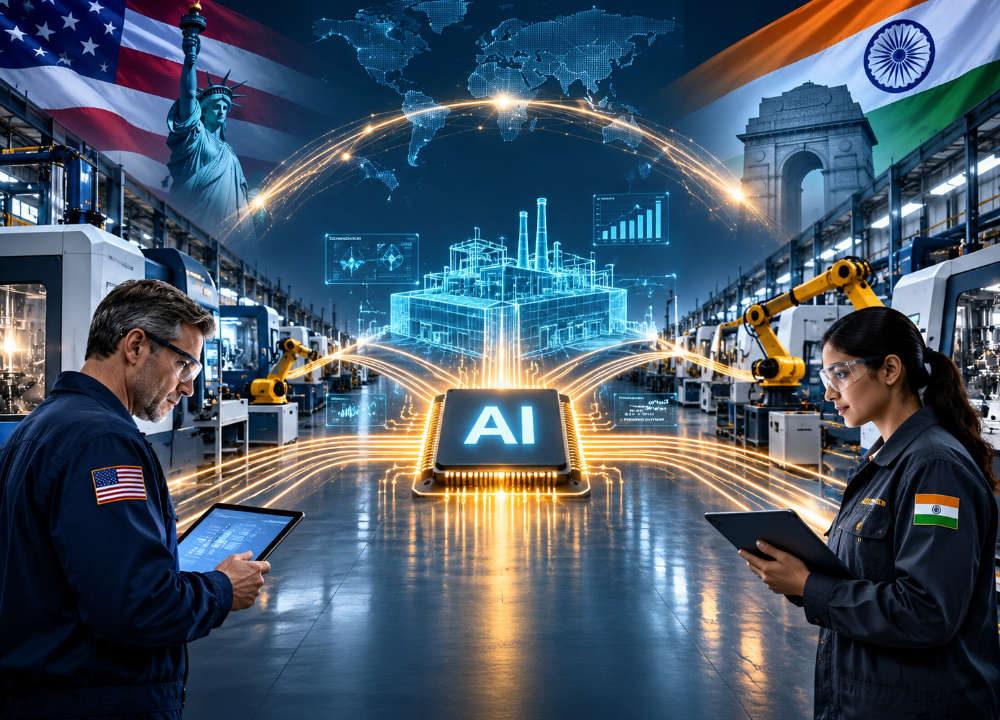
The US-India manufacturing story is usually told through tariffs and trade targets, and on those terms it is noisy: friction in 2025, an interim framework easing tariffs in early 2026, a stated ambition of $500 billion in bilateral trade by 2030. But underneath the policy weather, a quieter and more durable structure is forming, and it is a technology structure, not a trade one. America holds the world’s largest installed base of aging industrial assets and a thinning bench of people to run them. India holds the world’s largest pipeline of industrial engineers and a greenfield manufacturing buildout unburdened by forty years of automation legacy. Industrial AI, machine health intelligence, prescriptive reliability, and the operating models behind autonomous plants, is the layer that converts these two incomplete halves into one system. This article maps the complementarity, the leapfrog opportunity on the Indian side, the renewal problem on the American side, and the practical architecture of the bridge.
Two Incomplete Halves
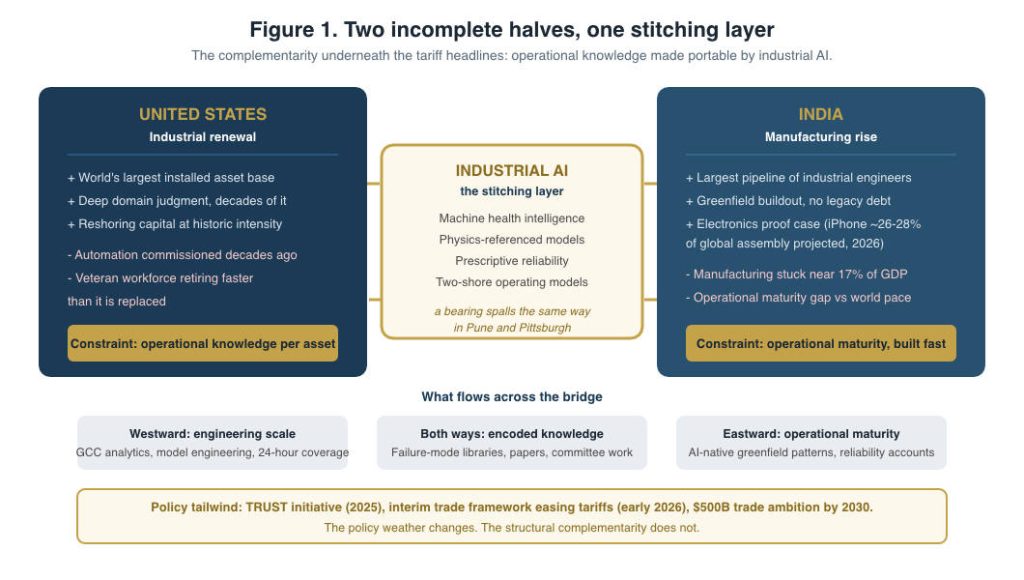
Start with the honest version of each side’s position. India’s paradox. Manufacturing has hovered around 16 to 17 percent of India’s GDP for over a decade, stubbornly short of the 25 percent ambition, even as headline growth stayed strong. Yet inside that flat aggregate, something structural changed. Electronics became the proof case: smartphones rose to India’s top export category, with iPhone exports alone reaching roughly $23 billion in 2025 and India’s share of global iPhone assembly projected by industry analysts at 26 to 28 percent in 2026, up from low single digits five years earlier. The lesson of the electronics breakout is not about phones. It is that when anchor demand, policy support, and process discipline align, Indian manufacturing scales at world pace. The question is whether steel, chemicals, pharma, autos, and machinery can repeat it, and the binding constraint there is not labor cost or capital. It is operational maturity: the reliability, quality consistency, and process control that separate a plant that runs from a plant that competes.
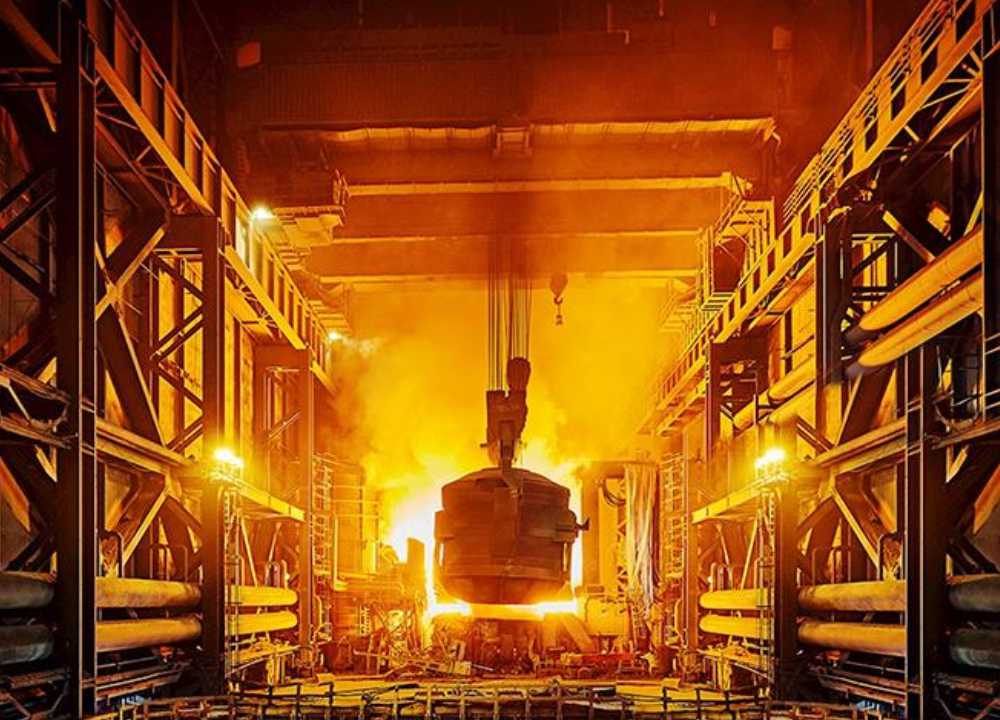
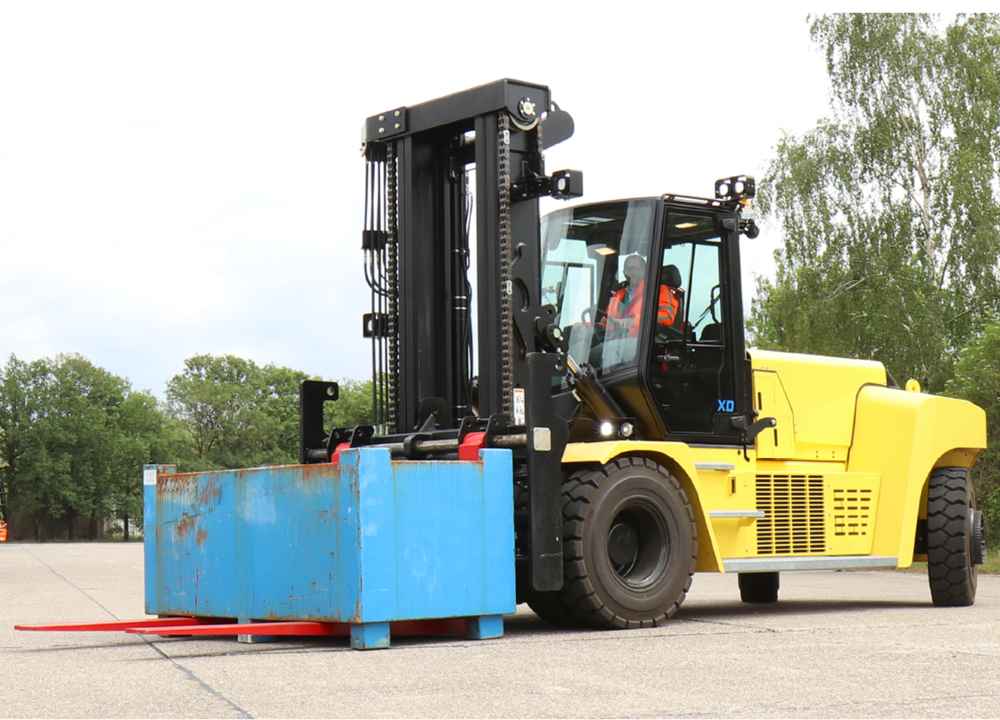
America’s renewal problem. The United States is reshoring strategic capacity with historic capital intensity, semiconductors, batteries, pharmaceuticals, defense industrial base, while the installed base that must carry current production ages. Much of the US process industry runs on automation commissioned decades ago, and the workforce that understood that iron, the instrument techs, the vibration analysts, the control engineers who knew why a loop was tuned the way it was, is retiring faster than it is being replaced. New plants can be built with capital. The judgment layer, the people who keep complex machinery healthy and processes stable, cannot be hired at any wage in the quantities required. American manufacturing’s constraint is not demand and not capital; it is operational knowledge per asset.
Set side by side, the asymmetry is almost perfectly complementary. (Figure 1.) One country must build operational maturity into new plants quickly; the other must preserve and scale operational knowledge across old plants urgently. Both problems have the same technical answer.
The Stitching Layer: What Industrial AI Actually Transfers
Industrial AI is often described as software. It is more usefully described as a mechanism for making operational knowledge portable: extracting what the machine’s physics and the veteran engineer jointly know, encoding it, and applying it anywhere the same physics operates. A bearing spalls the same way in Pune and Pittsburgh. Gear mesh sidebands do not care about jurisdiction. That universality is what makes machine health intelligence the natural first span of the bridge.
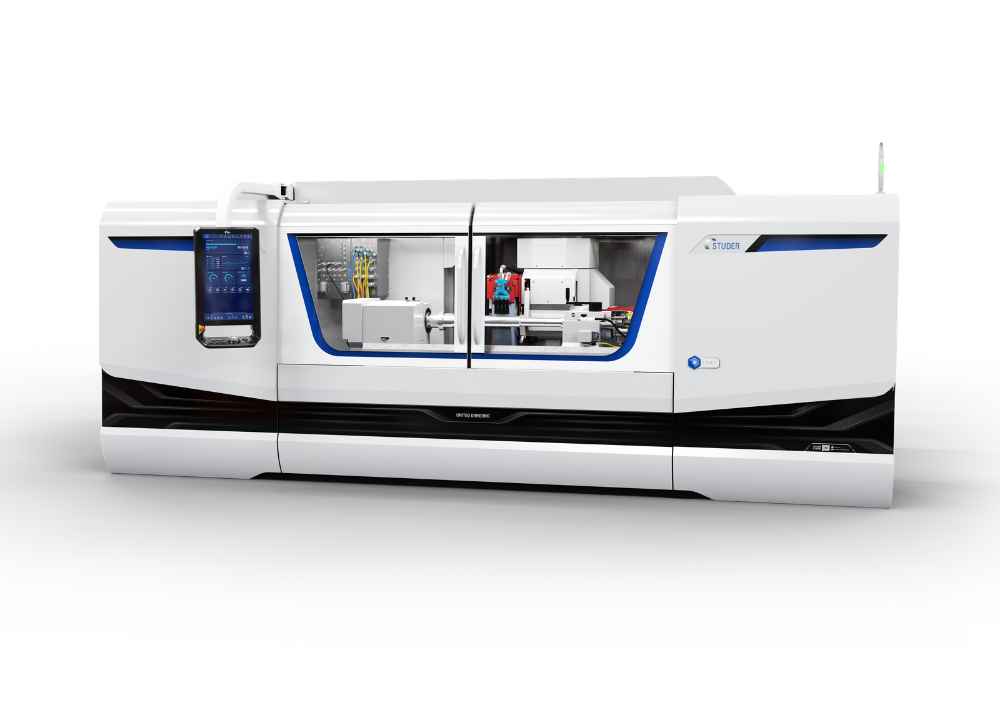
For India, the transfer enables a leapfrog. (Figure 2.) Greenfield Indian plants have no obligation to repeat the West’s automation archaeology: decades of route-based vibration rounds, paper work orders, bolt-on historians, and dashboard sprawl. They can go directly to wireless high-frequency sensing, edge analytics, physics-referenced machine health models, and prescriptive maintenance integrated into the CMMS from day one, the same pattern by which India skipped landlines for mobile and branch banking for UPI. A plant that is AI-native from commissioning accumulates a complete digital history of its own assets from hour zero, something almost no Western plant possesses, and that history compounds into faster ramp, steadier quality, and credible reliability accounts for global customers auditing their supply chains. For Indian manufacturers chasing the operational-maturity gap, this is the rare case where arriving late is an advantage, but only if they resist importing the legacy pattern along with the equipment.
For the United States, the transfer runs through people as much as software. India’s engineering depth is already embedded in the US industrial economy through a channel the trade statistics barely capture: global capability centers. India hosts roughly half of the world’s GCC operations, an economic contribution approaching $68 billion, and the newest generation of these centers has moved well past IT support into core engineering: reliability analytics, control systems, digital twins, and industrial AI model development for US plants. The practical pattern is a two-shore operating model: domain judgment, customer intimacy, and deployment at the US plant; model engineering, 24-hour monitoring, and analytics scale in India. Done honestly, this is not labor arbitrage. It is the only arithmetic that covers thousands of US plants with reliability intelligence when the domestic bench cannot.
Policy is finally pointed the same direction. The TRUST initiative launched in 2025 placed critical and emerging technology cooperation, AI explicitly included, at the center of the bilateral agenda, and the early-2026 interim trade framework reduced the tariff friction that had made 2025 turbulent, with both governments reaffirming the $500 billion trade ambition. Policy weather will keep changing. The structural complementarity underneath it does not.
The Architecture of the Bridge: What Leaders on Both Sides Should Build
The bridge is built plant by plant and team by team, and the execution patterns differ by direction. For Indian manufacturers and conglomerates: specify AI-native operations in the greenfield contract, not as a retrofit line item; demand that every major rotating train be delivered with continuous sensing, computed defect frequencies, and data contracts into the historian and CMMS, the way structural steel is delivered with mill certificates. Build the reliability operating model alongside the plant: decision rights, escalation paths, and validated-save accounting from commissioning. And treat the resulting asset health history as a commercial asset: global customers, insurers, and lenders increasingly differentiate suppliers that can prove operational discipline from those that assert it.
For US operators: stop treating the talent gap as a hiring problem and architect the two-shore model deliberately: define which judgments must stay at the plant (safety, final work-order release, policy ownership) and which scale remotely (waveform analytics, model maintenance, monitoring coverage through the night shift). Vet partners on OT security architecture and on whether their remote engineering carries real rotating-machinery competence rather than generic data science; a team that cannot distinguish a misalignment harmonic from a bearing defect frequency will drown the plant in false positives from any distance.
For both: the standards bodies and professional societies are the quiet load-bearing members of this bridge. Joint technical work, conference papers, committee participation, and shared failure-mode libraries move operational knowledge across borders faster than any trade clause, and they build the peer trust that two-shore reliability operations ultimately run on. The engineers who publish together deploy together.
Project the pattern forward ten years. Indian plants commissioned AI-native through the late 2020s will carry the deepest per-asset data histories in global manufacturing. US plants, modernized under reshoring capital and covered by two-shore reliability operations, will have converted their veteran knowledge into models before that knowledge retired. The likely end state is not two national manufacturing systems trading goods, but one increasingly continuous reliability fabric: the same physics-referenced models, the same prescriptive operating patterns, the same evidence standards for machine health, running across both installed bases, with engineering effort flowing to wherever the next problem is. Companies positioned inside that fabric, with teams, credibility, and committee seats on both shores, will set its standards. Companies that treated the relationship as a procurement arbitrage will buy those standards later, at margin. The stitching is happening now, mostly out of sight of the tariff headlines, one instrumented machine and one cross-border engineering team at a time.
India’s manufacturing ambition and America’s industrial renewal are not competing stories; they are two halves of one system whose joining layer is industrial AI. Indian leaders should build AI-native plants and refuse the legacy automation pattern; the operational data history is the moat. US leaders should architect two-shore reliability deliberately, keeping judgment at the plant and scaling analytics where the engineers are. Both should invest in the technical institutions, societies, committees, joint papers, where the trust that carries operational knowledge across borders is actually manufactured. The trade numbers will follow the engineering, as they usually do.