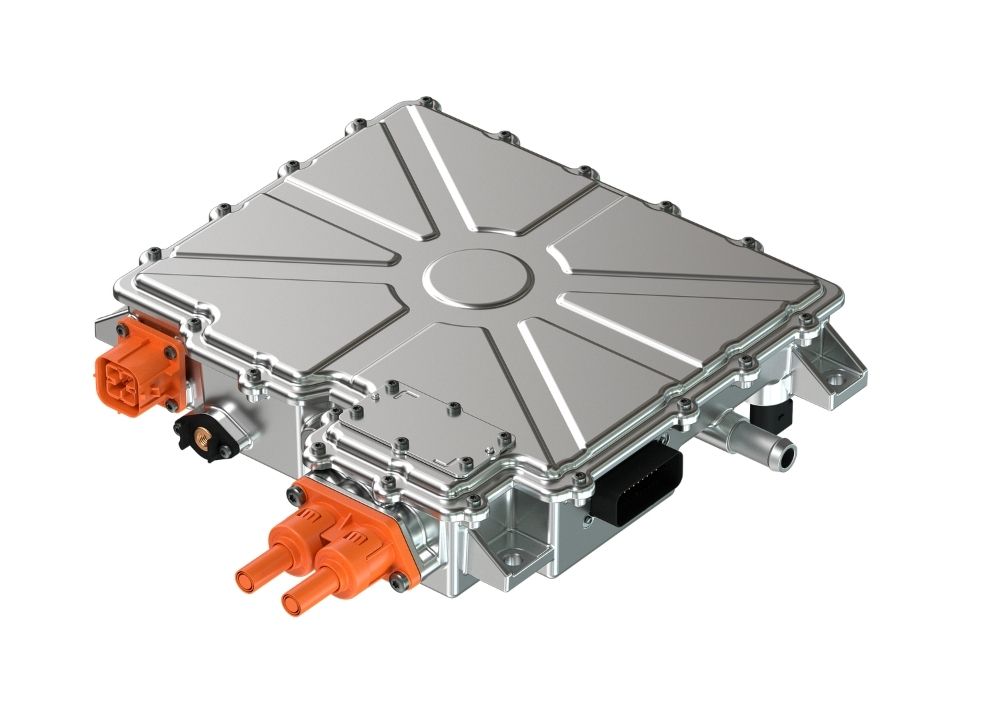
Valeo will develop and industrialise automotive-grade high-performance computing platforms based on NVIDIA Hyperion, combining its vehicle integration expertise with NVIDIA’s computing architecture to support the development of autonomous and software-defined vehicles. The initiative focuses on the growing demand for centralised computing systems capable of processing large volumes of data required for advanced driver assistance and autonomous driving. The platforms will be designed for automakers seeking scalable systems that meet automotive safety and production requirements.
NVIDIA Hyperion is a reference sensor and computing architecture for Level 4 autonomous vehicles and robotaxis. Valeo will use the architecture, together with NVIDIA Halos, the company’s safety system, to develop production-ready platforms tailored to vehicle manufacturers’ requirements.
The platforms will build on NVIDIA DRIVE AGX Thor in a dual-compute architecture. This configuration is designed to provide the artificial intelligence processing performance and redundancy needed for Level 4 autonomous driving applications. The systems are intended to support a range of vehicles, including passenger cars, autonomous trucks and robotaxis.
Valeo will contribute its experience in automotive system integration, functional safety and industrialisation to adapt the architecture for large-scale vehicle production. The companies expect the approach to help automakers simplify system integration, reduce complexity and bring new vehicle technologies to market more efficiently.
Marc Vrecko, CEO of Valeo Brain Division, said the collaboration supports the company’s work to make autonomous driving safer and more scalable. He said the integration of NVIDIA’s computing technology into Valeo’s platforms would provide automakers with centralised computing capabilities for future vehicle applications.
Rishi Dhall, Vice President of Automotive at NVIDIA, said Valeo’s experience in high-performance computing, vehicle integration and automotive manufacturing would support the adoption of NVIDIA Hyperion and NVIDIA Halos in production vehicles. He said the collaboration would address the computing performance, safety and scalability requirements of Level 4 autonomous vehicles and robotaxis.
The development comes as automakers increasingly move towards software-defined vehicle architectures, in which vehicle functions can be updated and expanded through software. Centralised computing platforms are expected to play an important role in integrating sensors, processing data and coordinating vehicle functions.
Valeo is a global automotive technology company with businesses spanning powertrain and electrification, advanced driver assistance systems, lighting and software. Its operations include the POWER, BRAIN and LIGHT divisions and Valeo Service. The company reported sales of €20.9 billion in 2025 and had around 100,000 employees, 149 production plants and 59 research and development centres across 29 countries as of February 2026. Valeo is listed on the Paris Stock Exchange.