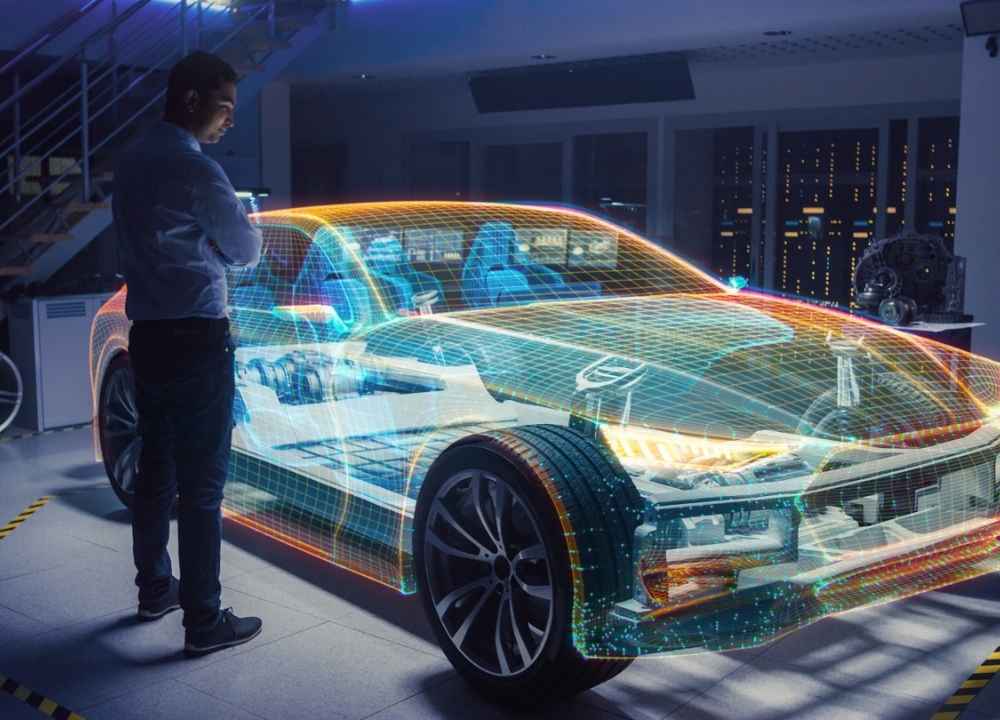
Siemens has announced the latest release of its Simcenter software portfolio, introducing new simulation and artificial intelligence capabilities designed to help engineers evaluate more design options, shorten development cycles and make decisions earlier in the product development process. The release marks the first time Siemens and Altair simulation technologies have been brought together within a unified portfolio. By combining the technologies through connected workflows, Siemens aims to make simulation easier to deploy across engineering teams and reduce complexity across different engineering disciplines.
Sam Mahalingam, Executive Vice President, Simulation, Siemens Digital Industries Software, said the latest release brings together advanced simulation technologies across multiple physics domains and connects them through common workflows. He added that the portfolio enables engineers to assess more concepts at an earlier stage and accelerate innovation.
A major addition is Simcenter PhysicsAI, Siemens’ geometric deep learning technology, which uses simulation data to create high-fidelity predictive models. The technology can help engineers evaluate design concepts and make decisions up to 1,000 times faster than conventional solver-based simulations.
PhysicsAI is now available across more Simcenter products and can also be used with Siemens’ Intelligence Center X industrial AI orchestration software. When combined with Simcenter Inspire, the technology supports applications ranging from structural analysis to casting, molding, die stamping and extrusion.
The PhysicsAI capabilities in Simcenter HyperMesh have also been enhanced to improve training efficiency and confidence in results. In Simcenter STAR-CCM+, multi-GPU support enables significantly faster AI model training from computational fluid dynamics simulations, with speed improvements of 10 times or more in suitable applications.
Siemens has also introduced Simcenter PhysicsAI Generate, which allows engineers to create new design concepts using existing engineering data, target dimensions, performance requirements and historical simulation results. The physics-based generative AI capability is intended to broaden design exploration and help teams identify promising concepts more quickly.
The latest release also brings simulation closer to the design stage through the integration of Simcenter SimSolid with Siemens Designcenter. Engineers can transfer CAD geometry directly into SimSolid, apply loads and constraints and run simulations without preparing a traditional mesh, allowing product performance to be assessed within minutes.
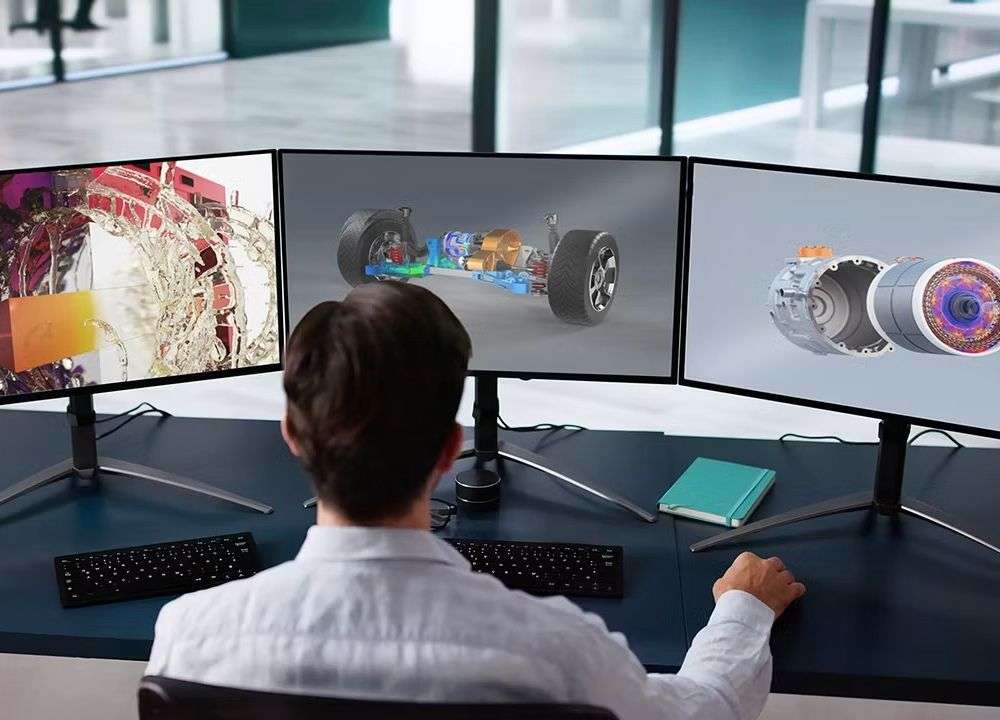
The portfolio has also been expanded for multiphysics engineering. New capabilities connect electromagnetic, thermal and system-level simulations to support applications such as electric powertrains. Motor models from Simcenter Flux can be exported to system and 3D simulation environments, while improved multiphysics capabilities in Simcenter STAR-CCM+ support analysis of motor cooling and battery thermal performance.
Together, the enhancements create a more connected simulation environment spanning design, validation and operation. Siemens said the unified Simcenter portfolio is designed to help organisations increase engineering productivity, reduce development risk and improve product performance.
Siemens Digital Industries Software is a global provider of industrial software, hardware, and digital services that helps organizations accelerate digital transformation. As part of the Siemens Xcelerator business platform, the company provides solutions that enable businesses to connect the digital and physical worlds.
Its portfolio includes advanced technologies such as digital twins, product lifecycle management (PLM), electronic design automation (EDA), manufacturing software, simulation, and industrial automation solutions. These technologies help organizations improve product design, engineering, manufacturing, and operational processes.
Siemens Digital Industries Software serves companies of different sizes across a wide range of industries, from semiconductors and electronics to automotive, aerospace, industrial machinery, healthcare, and consumer products. Its solutions enable businesses to develop products faster, improve efficiency, reduce costs, and make more sustainable decisions.
At the heart of its approach is the comprehensive digital twin, which allows organizations to create virtual representations of products, processes, and systems. By using data and simulation throughout the product lifecycle, companies can identify issues earlier, optimize performance, and accelerate innovation.::