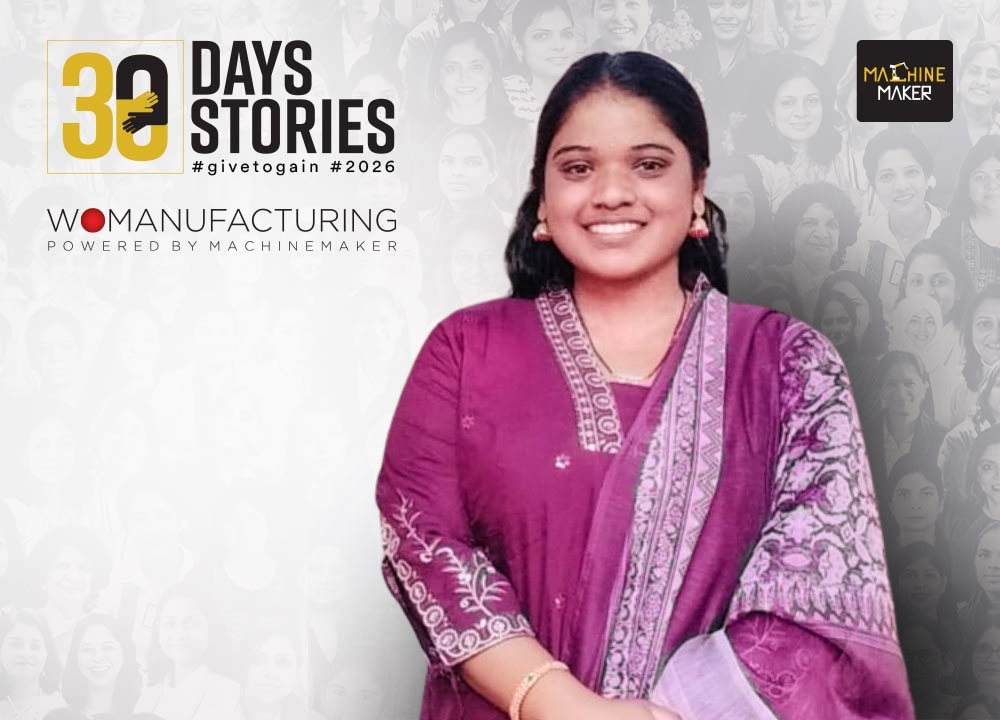
Sonakshi cried on the shop floor. Not once, but repeatedly. The welding torch felt heavier than it should. The heat was harsh, the sparks intimidating, and the voice in her head kept saying the same thing: “You can’t do this.” But she stayed. Some stories in our #Womanufacturing series are about women who always knew where they were headed. This one is about a young woman who stepped into something unfamiliar, fought resistance both within and around her, and stayed long enough to become someone she hadn’t imagined yet. Sonakshi Chavan is 20. Today, she works as a Quality Engineer at SKF India. Her journey into welding and manufacturing didn’t begin with clarity. It began with hesitation, pressure, and a decision to try, without fully knowing what that “try” would demand of her.
A Beginning Without a Plan
Born in Hyderabad and raised in Pune, Sonakshi grew up in a household where roles were clearly defined. Her father, Ramu Chavan, worked in small-scale construction, taking on local projects. Her mother, Reshma Chavan, managed the home. Stability mattered in her house, and so did the traditional beliefs. Within this environment, expectations were clear. Education was encouraged, but career ambitions for daughters were not always part of the larger conversation. The idea of entering a technical field like manufacturing did not naturally fit into that framework.
After completing her diploma in metallurgy from GPP Pune, Sonakshi found herself at a point where she had theoretical knowledge but limited exposure to practical work. The pandemic had disrupted hands-on learning. Workshops had not functioned the way they should have. Welding, as a skill, remained distant. When a friend mentioned a welding training programme at Fronius, the decision to join was not driven by long-term planning. It came from a simple choice to explore an opportunity that had presented itself. “I didn’t know what welding really was. I just went because my friend was going.” That decision marked the beginning of a journey she could not have anticipated.
From Fear to Confidence: The Shift That Changed Everything
The first day at the training centre did not bring excitement. It brought discomfort. Holding the welding gun for the first time, Sonakshi felt unprepared. The weight of the equipment, the intensity of the heat, and the unfamiliar environment made the experience overwhelming. The reaction was immediate. “I was scared of even holding the welding gun. I cried and told my trainers I couldn’t do it. At that moment, I genuinely believed I wasn’t made for this.”
The initial days were difficult. The heat caused visible rashes on her skin. Her hands struggled to maintain control. Even holding the torch steady required effort. For nearly a week, progress felt slow and uncertain. During this phase, the role of her mentors at FACT became crucial. Vijay Sir and Anand Sir guided her through each step with patience. They addressed her doubts, corrected her mistakes, and encouraged her to continue even when she felt like stepping back.
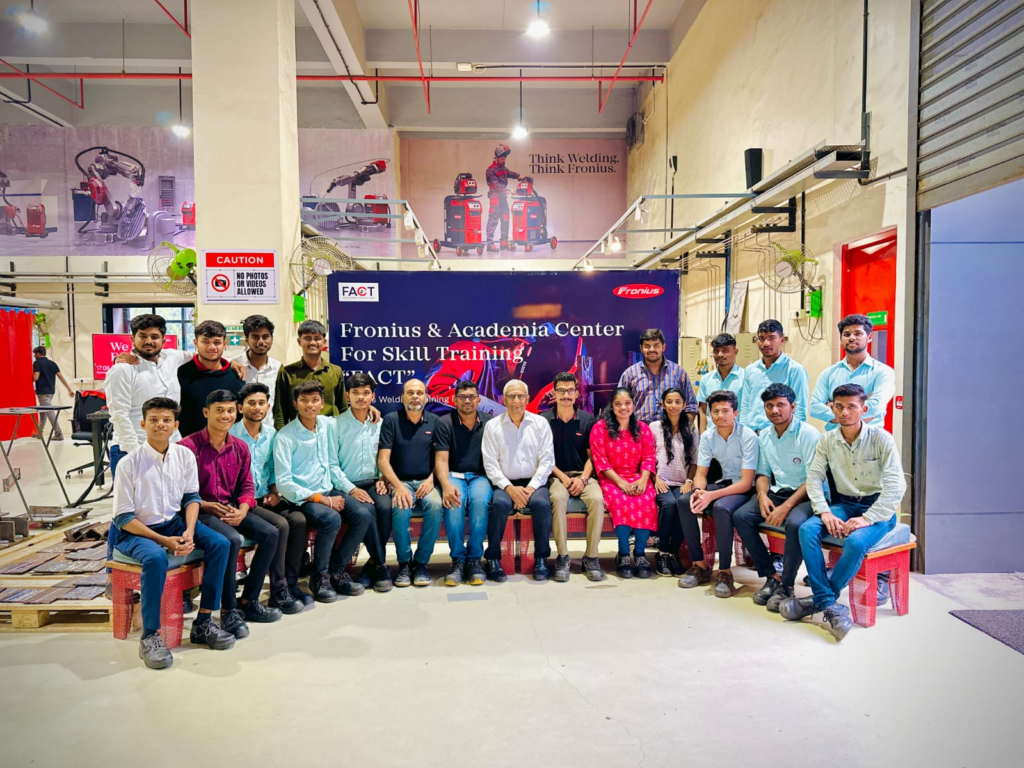
Their approach extended beyond technical instruction. They paid attention to how she approached the task, how she reacted to challenges, and how she carried herself in the learning environment. “They didn’t let me give up on myself. Even when I was ready to quit, they kept telling me, just try one more time.” Over time, her interaction with the process began to change. Repetition brought familiarity. Familiarity brought a sense of control. Her welds improved gradually, and with each improvement, her confidence grew.
“On the first day, I couldn’t even hold the torch without fear. The day my trainer said, ‘This is a good weld,’ I felt like I had proven something to myself. It changed everything for me.” That moment stayed with her. It marked a transition in how she saw her own capability. Before this experience, she often held herself back. She describes herself as someone who would hesitate before attempting something new. The training helped her move past that hesitation. It introduced her to the idea that confidence could be developed through effort. “Now I don’t stop myself before trying. Mistakes don’t scare me anymore. Not trying does.” This change in mindset became the foundation for her next steps.
I Had to Fight for It: The Battle at Home
While the shop floor gave her space to learn, the real resistance came from home. Her family held strong views about gender roles. The expectation was that men would step out and work, while women would remain within defined boundaries. Choosing to pursue a career in manufacturing meant stepping outside those expectations. “The biggest fight wasn’t outside. It was at home. I had to cry, argue, and still stand my ground to be here.”
Even after completing her diploma, she wasn’t immediately accepted into a job. Every step forward came with conversations, resistance, and the need to prove that she was serious about her choices. These were not one-time conversations. They were ongoing discussions that required persistence. Each step forward came with the need to explain, convince, and sometimes simply continue despite resistance. Her brothers played an important role during this phase, offering support and encouragement when she needed it the most. Their belief in her helped her continue at a time when she was still building belief in herself.
Around the same time, her life entered another significant phase. She got married. Marriage often brings a shift in priorities and expectations, especially for young women at the beginning of their careers. For Sonakshi, this phase unfolded differently. As she stepped into a new family, the question of whether she would continue working became important. It could have been another pause. Another limitation. Instead, it became a moment of unexpected support. Her husband, Vinod Rathod, a civil engineer, along with her in-laws, chose to stand by her ambitions.
“My husband never stops me. After everything I had to fight for, having him say ‘do what you want, I’m with you’ made all the difference.” Working in manufacturing often means handling shifts, long hours, and physically demanding environments. Having a support system at home made it possible for her to focus on her work without constantly having to justify it. The same space that once questioned her decisions now enabled them.
Finding Her Place, Learning to Be Fearless
Sonakshi’s current role in quality checking allows her to apply what she learned during her training in a practical setting. She inspects components, identifies defects, and engages with processes that require attention to detail and technical understanding. Her exposure to welding during training continues to influence how she approaches her work. “Now, when I see a defect, I don’t just see a problem. I understand where it comes from because I’ve been on the other side of the process.”
She is also planning to pursue a degree in metallurgy alongside her job, building on her existing knowledge and opening up opportunities for growth within the industry. Her journey remains a work in progress. She is still learning, still exploring, and still shaping her path. When she speaks about what lies ahead, her message reflects the mindset she has developed through her experiences.
“Be fearless. Everyone makes mistakes. But if you don’t try, you will never know what you are capable of.” She encourages more women to consider careers in manufacturing and skill-based roles. Her perspective is grounded in her own journey, one that began with uncertainty and developed through persistence. “Girls can do anything. We don’t need permission to try. We just need to stop believing that we can’t.”
Her story began with hesitation. In moments where uncertainty felt stronger than clarity, and resistance came from both within and around her. There was discomfort in showing up each day, in choosing to continue despite doubt and fear. Still, she stayed with the process. She kept going when it would have been easier to step back. That decision, to remain present through the hardest phase, became the turning point and shaped everything that followed.