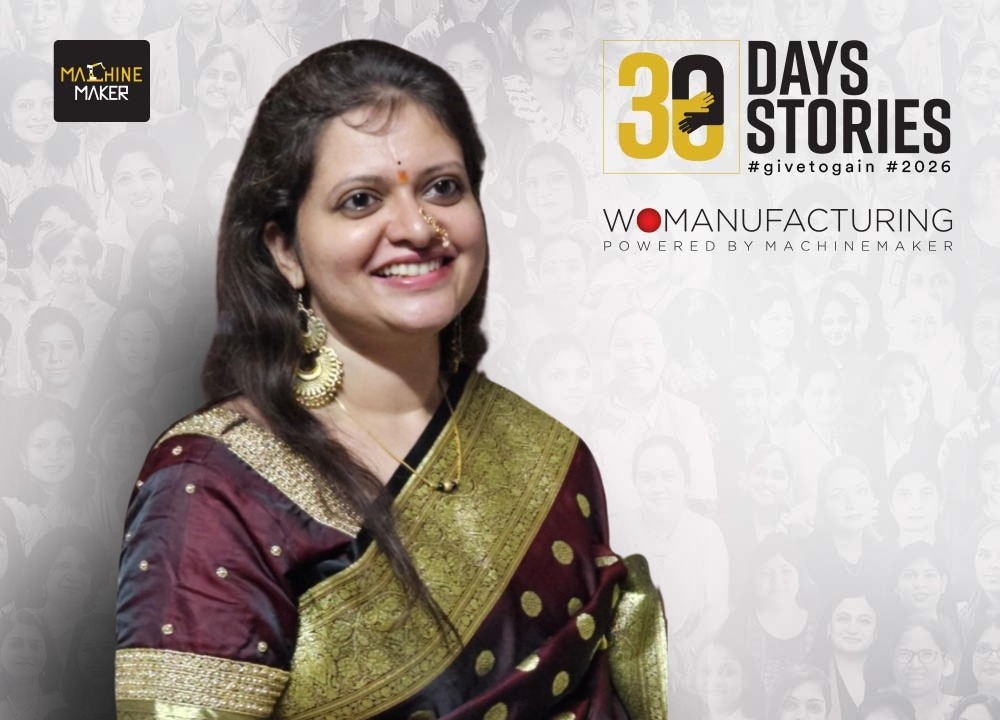
Pandharpur is known for one thing: faith. People come from across Maharashtra to visit its temples. Industries do not come here. With no factories nearby and just one engineering campus down the road, the town offered no clear route into a manufacturing career. Pooja Purandare grew up here. She was curious, she had a friend in Pune who told her about the manufacturing world, and one professor during her mechanical engineering degree who made quality click. A mandatory plant visit during third year of Engineering to Bharat Forge sealed it. She walked onto that factory floor, watched quality assurance at work, and decided that was where she belonged.
Fourteen years later, she is Assistant Manager of Quality at Freudenberg Filtration Technologies India, overseeing quality across two verticals whose products go into car cabins, pharmaceutical clean rooms, paint shops, and gas turbines. Her work, in the most direct sense, affects the air people breathe.
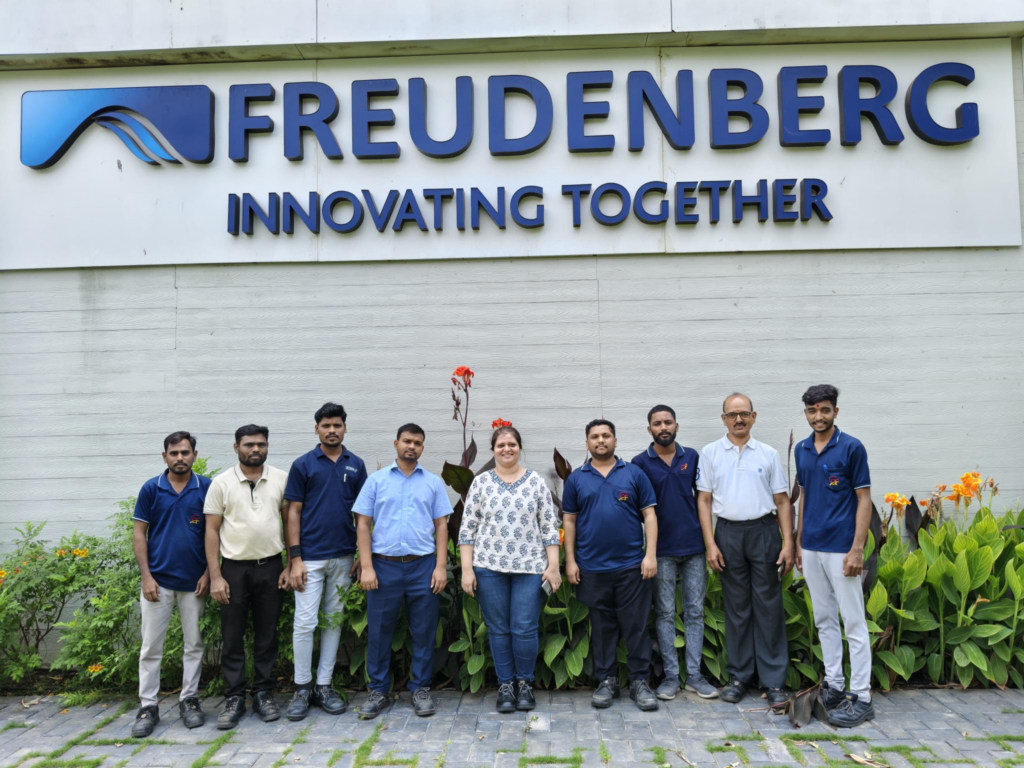
Freudenberg Filtration Technologies (FFT) is the filtration division of the Freudenberg Group, a 176-year-old global technology company with 12 business entities operating in India across diversified sectors. FFT operates across two core verticals: automotive filtration, which supplies cabin air filters to major OEMs and holds significant market share among India’s leading car manufacturers; and industrial filtration, which serves pharmaceuticals requiring clean room environments, surface treatment and automotive paint shops, and turbo machinery across fertilizers, chemicals, and power. The company is among a select few globally that manufactures its own filter media in-house, from HEPA filters used in pharmaceutical clean rooms to pocket filters and cabin air filters embedded in every major car on Indian roads. FFT is also expanding into new segments including data centres, solar, EV battery manufacturing, and semiconductors. Pooja Purandare works across both automotive and industrial filtration verticals.
The Plant Visit That Changed Everything
It was not one moment. It was a sequence. A friend in Pune. A professor who introduced basic manufacturing concepts in a way that made them interesting. And then, during her mechanical engineering degree, a mandatory industrial visit to Bharat Forge.
Pooja walked through that factory and watched the quality department at work. She saw that quality held the final clearance on every product that left the line. Quality was the function that communicated directly with the customer. Quality was the one department that understood every stage of production and was accountable for all of it.
She had not planned to go into quality. She had not imagined, growing up in Pandharpur, that she would one day work in a manufacturing facility at all. But something about that visit made the decision feel inevitable. This department has ownership of the final call. “That is where I want to be,” Pooja decided.
She joined a pump manufacturing company first, working alone as the only woman in the quality department. Then she moved to Freudenberg, stepping into automotive quality for the first time, a field entirely new to her after years in non-automotive industry.
What Fourteen Years in One Function Actually Looks Like
People sometimes ask whether staying in quality for fourteen years was a choice or a default. Pooja is clear: it was a choice, made again and again. There were moments when she considered moving. Operations. General management. Something broader. The thought came, as it does for anyone who spends long enough in one place.
What pulled her back every time was a quality improvement project. A new problem to root-cause. A defect recurring at a supplier that required her to sit with different teams, internal and external, and hold the conversation calmly until a real corrective action was in place. Each of those problems taught her something she could not have learned by moving sideways into another function.
Quality gives you everything, she says. You understand production. You understand design. You understand what the customer actually needs and why. You are accountable for the outcome at every stage. It is not a narrow function. It is the most complete view of the manufacturing process there is.
The Hardest Days Taught Her to Stay Calm
The moment that tested her most was not at Freudenberg. It was at her previous company, when a supplier defect kept recurring and kept reaching the customer. She had to keep calling the same meetings. Keep explaining the same problem to the same people. Keep pushing for a corrective action that was not sticking.
What made it hard was not the technical complexity. It was the patience required. Explaining the same thing again without letting frustration show. Staying focused when the process felt circular. Holding her position with suppliers and colleagues using data, not emotion, because that is what a quality professional has to do.
She came out of that period with something she has carried since: the ability to stand firm in front of a supplier or a customer with nothing but her data and her analysis. Year by year, she has built the habit of staying calm under pressure. It is, she says, one of the things quality teaches you that other functions do not.
Ten Girls in a Class of Three Hundred
When Pooja was studying mechanical engineering, there were 10 girls in a class of 300. She knew then that the ratio would follow her into industry. She was right. In her first company, she was the only woman in the quality department. In meetings, on the shop floor, she was frequently the only woman in the room. She decided early that she would not let that fact become a distraction. She would let her work do the talking.
At Freudenberg the environment is different. Around 40 women work on the shop floor in a single shift. There is infrastructure, there is representation, and there is a culture of collaboration that she had not seen at the same scale before. When she joined, the team was open, willing to share knowledge and experience, and genuinely supportive during the steep learning curve of entering automotive quality for the first time.
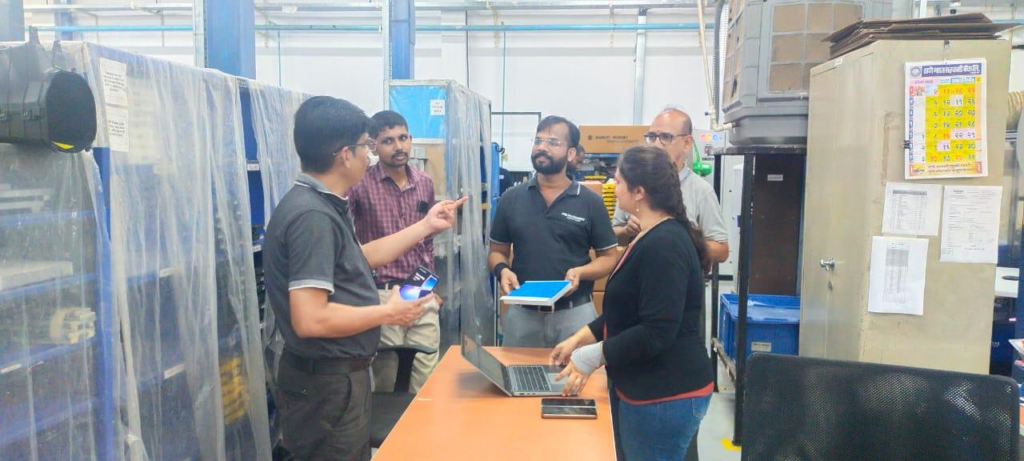
Over time, as her experience grew, the dynamic in every room she entered shifted. People stopped responding to her gender. They started responding to her ideas. Her suggestions are taken seriously. Her advice is acted on. The work, eventually, spoke for itself.
The Weight of What a Filter Actually Does
People rarely think about filters. They are invisible components inside systems that most people never open. But Pooja thinks about them every day, because she is responsible for whether they work.
Freudenberg’s filters go into pharmaceutical clean rooms where medicines are manufactured. They go into car cabins, where the air quality inside a sealed vehicle is, without a functioning filter, significantly worse than the air outside. They go into industrial paint shops and gas turbines powering fertilizer plants and power generation facilities.
Every check she signs off on. Every deviation she handles. Every corrective action she drives. These are not abstract quality metrics. They are decisions that affect whether a clean room stays clean, whether a car cabin is safe to breathe in, whether a turbine keeps running.
That sense of purpose is what has kept her in quality for fourteen years. It is not paperwork or bureaucracy. It is the knowledge that her work connects directly to the safety and health of people she will never meet.
Her Message to Every Girl Who Thinks Manufacturing Is Not for Her

After the working week, Pooja walks in the evenings with her children. She draws. She listens to music. Her kids remind her, she says, exactly why she works as hard as she does. She came from a town with no industrial background and no obvious path into engineering. She entered a classroom where ten women sat among three hundred men. She joined a quality department where she was the only woman. She moved into a new industry with no automotive experience and had to rebuild her knowledge base from the ground up. She did all of it by staying curious, staying focused, and trusting the process she had been building for over a decade.
Her advice to any young woman standing at the edge of manufacturing and wondering whether to step in is the same principle that has guided her career: focus on the process. The results will follow. “Manufacturing can feel challenging at first. But as your confidence and your skills grow, every problem finds a better solution. Stay curious, believe in your own capabilities, and there is always a place for you.”