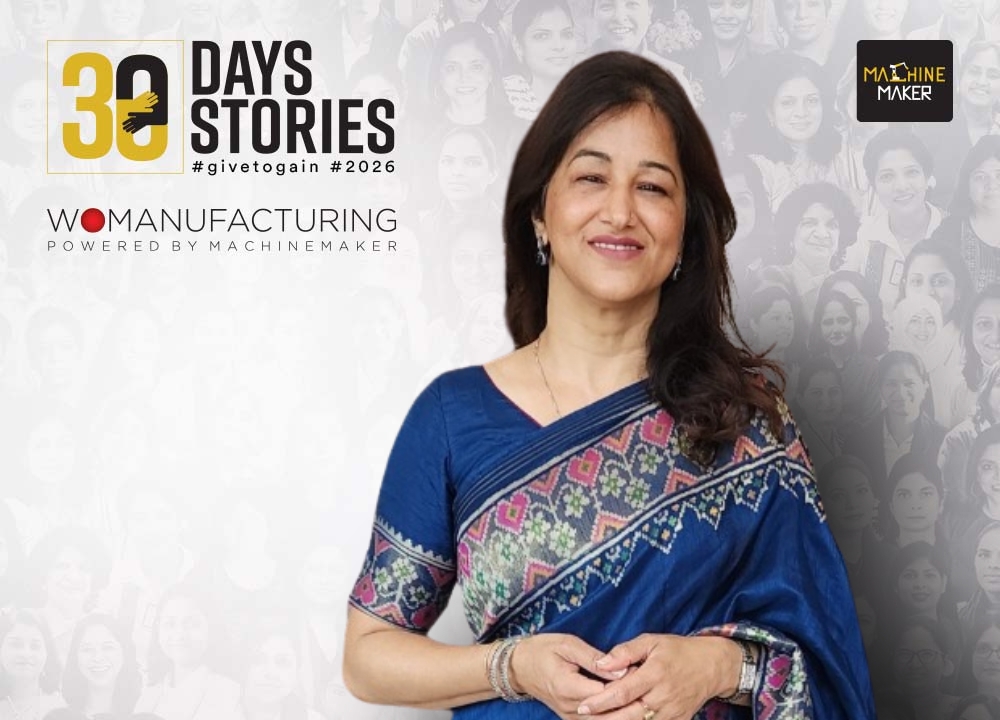
Ameeta Nehra holds a Master’s in English Literature. Today she leads corporate strategy at a deep tech nano bubble manufacturing company. Between those two facts sits a journey that has been anything but linear. Two decades of determination. A year in which she lost both her parents within months of each other.
Then, in 2013, a decision to start again with no safety net and no blueprint. She enrolled at the Image Consulting Business Institute (ICBI) in New Delhi, outperformed a room full of corporate professionals, earned the highest merits in her cohort, and then went back to the manufacturing sector she knew and gave pro bono training sessions until companies understood what training actually meant. NICO Nanobubble India found her. That is where she is now.
NICO Nanobubble India Co is a Delhi-based company working at the frontier of nano bubble technology, an area so new that global industry standards are still being written for it. The technology team is led by a woman post-doctorate; the exports division is managed by a woman; HR is led by a woman; and corporate strategy is led by Ameeta. The company is not following an established path. It is building one. Ameeta joined to help take it from ground zero to wherever it needs to go, and considers that mission the thing she gets up for every morning.
First Job, First Mentor, Lasting Impact
Ameeta started her career in 1997 at Schablona India Ltd., a sister concern of Somany Tiles and a German collaboration unit considered North India’s most prestigious tile manufacturing facility at the time. She came in as a lithographer, part of the design department, and enjoyed a short stint before moving on to start a family.
There were 60 people in the workforce. Two of them were women. The other woman was her HOD. Ameeta considers herself fortunate for that. In a factory far from the city centre, with screen printing units and production floors that no woman had reason to walk into, having a female head of department who navigated those spaces with confidence and brought Ameeta along made a quiet but lasting difference.
She is careful not to frame those early years as simply difficult. The men around her also had to adjust. They were not used to women on the floor. They had to readjust their habits, their language, the way they moved through the space. When she got promotions or increments, some colleagues questioned whether it was talent or preference. She understood why. She also knew it was talent. She made sure she conducted herself in a way that left no room for doubt.
One thing she has carried from those years into every room since: when women rise, it is partly because the men around them made space. She says this not to diminish what women build, but because she has seen it, and she thinks the acknowledgment matters.
The Trainer Who Tore the Assignment Four Times
In 2011, Ameeta’s mother fell seriously ill. She made a decision without much deliberation and paused her career to be with her. She could rebuild a career but could not get lost time back.
Her mother died. Her father died within the same year. By 2013, she had lost both of them and had to figure out how to start again.
She enrolled in a prestigious corporate training certification at ICBI, New Delhi. She came from a suburb, with no corporate background, into a room full of people who had come straight from offices in the capital. Her peers found it hard to accept that someone from her background could keep up, let alone excel.
There was one assignment her trainer tore up. She brought it back. She told the trainer: I will keep doing this until you give me a merit. The trainer tore it again. She did it again. It took four attempts in total before she got the merit.
By the time she graduated, she had the highest number of merits in her cohort. Her classmates, most of whom arrived with corporate track records she did not have, had difficulty accepting it.
She went back to the manufacturing sector. The companies in her area did not understand what corporate training was. She ran pro bono sessions until they did. Slowly, the work came. And then NICO Nanobubble found her.
An English Literature Graduate Leading Deep Tech Strategy
When Ameeta tells people her academic background is in English Literature, the reaction is usually surprise. She works in a company operating at the edge of nano bubble technology, in a space so new that industry standards are still being defined. She does not consider this a contradiction.
Her view is direct: technical knowledge is essential, but it is not sufficient. The ability to read a room, build trust, and understand what a company needs to communicate and to whom is just as critical. These are often dismissed as soft skills, but in practice they determine whether a technology stays in a laboratory or reaches the world.
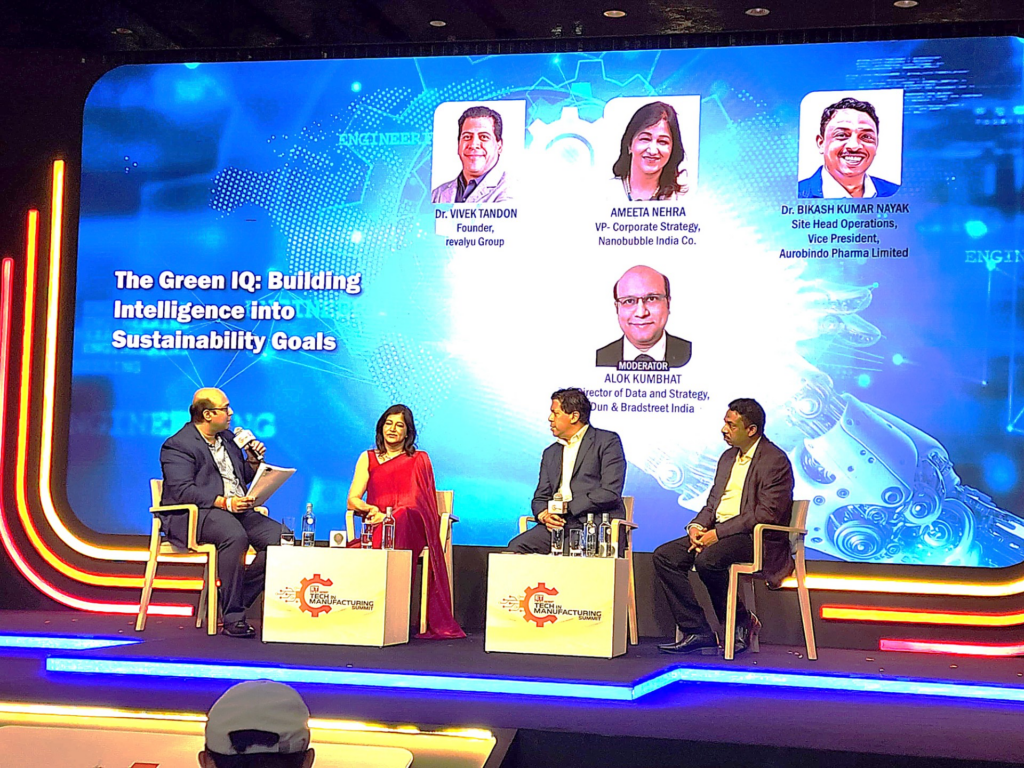
She also invests in the technical side. When she encounters engineering conversations she does not fully follow, she stays with them until she does. Her elder daughter, a software engineer from BITS Pilani now working at an AI company, trains her on AI integration. Ameeta takes those conversations into meetings with engineers and uses them. She is not embarrassed to learn from her own child. She considers it one of the more useful things she does.
For Ameeta, learning is not tied to hierarchy or age. It is continuous, and it is one of the most practical investments she makes.
Her Father’s Ethics, Her Mother’s Determination
Ameeta’s father served in the judiciary, and the principle he repeated most often was simple, but exacting: whatever you give, give it equally and without bias. Personal preferences are human. You may feel closer to one person than another, but duty does not allow for that distinction. What you owe must remain consistent.
It is a standard Ameeta carries into every part of her life, from her organisation, her relationships, to her role as a mother to her two daughters. In moments where a decision feels unclear, or when she senses herself leaning in a direction she cannot fully justify, she returns to a single question: What would her father have done here? The answer usually brings clarity.
From her mother she inherited something different but equally defining: determination. Not taught, but demonstrated, over and over. Today Ameeta sees that same determination appearing in her daughters. They did not receive it through instruction. They received it by watching. Her elder daughter will say she is dissatisfied with a situation and wants to change it. Ameeta recognises the sentence. She has been saying it herself, about different things, for over twenty-five years.
What Keeps Ameeta Going When the Work Is Never Done
When Ameeta joined NICO Nanobubble India, she told her family not to disturb her for two years. The company was building new verticals. The work would be hard and the ground unstable. She needed the space to focus. Two years passed. She called the family again and told them not to disturb her for another two. The journey was not ending the way she had calculated.
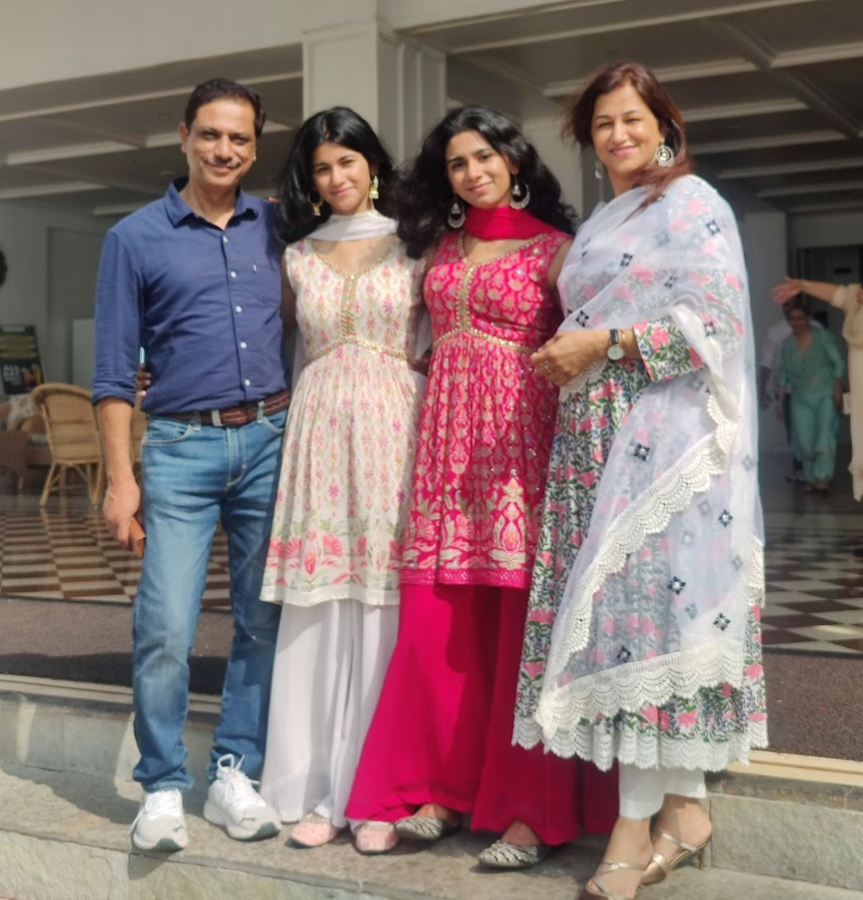
On difficult days, when a colleague disappoints or a strategy stalls, she returns to the same question she puts to her team: what matters more here, you or the organisation? If the purpose is larger than the person, then the person’s discomfort is not the most important thing in the room. She finds this clarifying. Not as a way to suppress frustration, but as a way to move through it.
She also wants the women around her to lead, not just participate. She is not interested in diversity ratios. She is interested in whether women are heard, whether they hold their ground in rooms that tend to interrupt, and whether they stay long enough to grow. When a woman speaks in a meeting, Ameeta makes sure the room listens. If she senses interruption, she addresses it directly.
Ameeta’s Message to Every Young Woman Starting Out
Ameeta Nehra’s advice comes in two parts. The first: keep learning. Not because it sounds virtuous, but because the moment you stop, you stagnate. In a manufacturing environment, stagnation shows up fast. It appears in decisions, in systems, in outcomes. At leadership level, upskilling is not optional. It is survival.
The second came from somewhere deeper. Invest in your financial independence. Not because work is everything, but because financial independence is what makes choice real. It is what lets you decide, without compromise and without hesitation.
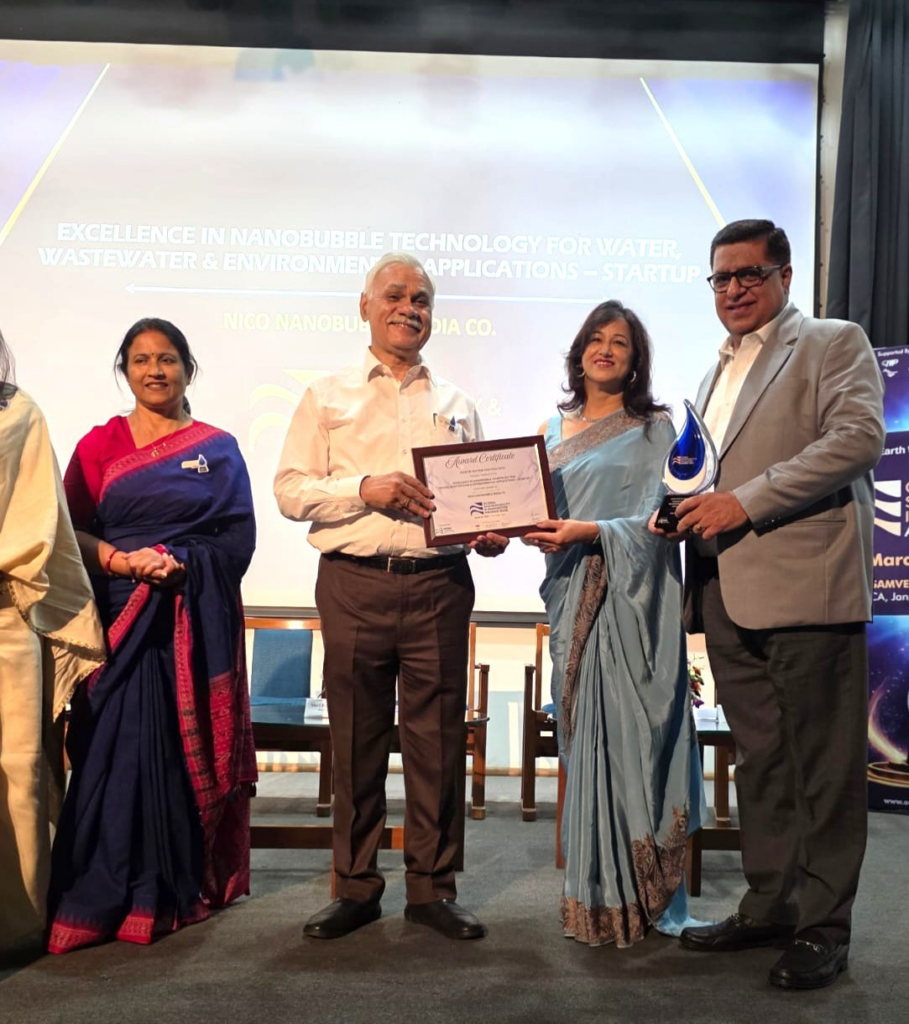
She says this as someone who stepped away from her career to sit beside her dying mother, then rebuilt from nothing at a stage of life when most people are thinking about stability, not reinvention. She had no plan B. She had determination, a father’s ethics, and the stubbornness to hand in the same assignment four times until it was good enough. “Invest in yourself. Keep learning. Build financial independence because it is the foundation of every decision you will ever make.”