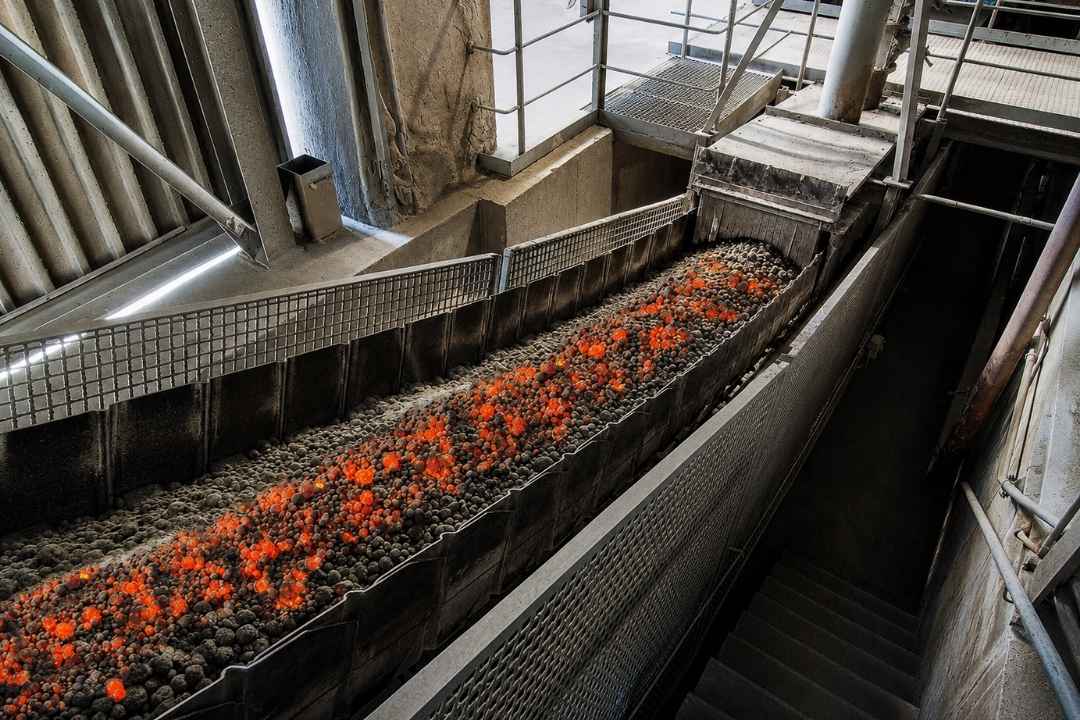
Clinker is discovered at the grate. That is the last place it is created. By the time fused ash appears on the bed, the chain that produced it has already run through the fuel yard, the reclaim system, and the feed line. The furnace only reports the result. Most plants still treat clinker as a combustion-chemistry problem: high silica, low ash fusion temperature, problematic alkali content, wrong biomass. Those factors are real. But field observation repeatedly shows that severe clinkering is amplified by something more operational — inconsistent fuel handling, poor blending, and unstable feeding. The chemistry sets the risk. The handling system decides whether that risk is realised.
The Real Beginning: Reception and Stratification
Biomass never arrives homogeneous. Rice husk, bagasse, mustard straw, briquettes, pellets, and agricultural residues each store and reclaim differently. The problem sharpens when different fuels are dumped in layers, when fines segregate during stacking, when moisture distributes unevenly, and when reclaim systems draw inconsistently from the pile.
This creates localised fuel pockets with different combustion characteristics. In operating yards it is common to see dry fines concentrated in one region, wet fibrous material trapped underneath, and high-alkali crop residue entering the furnace intermittently rather than uniformly. From a combustion standpoint this is no longer a stable fuel stream. It is a fluctuating thermal input.
Why Chemistry Alone Does Not Explain Clinkering
Biomass ash behaviour is highly sensitive to alkali compounds — chiefly potassium, sodium, silica, chlorides, and the calcium ratio. Certain agricultural residues carry elevated alkali levels that directly lower the Ash Fusion Temperature (AFT).
Under stable combustion, operators often manage these fuels reasonably well. Trouble starts when poor agitation and uneven feeding create concentrated zones of problematic material. A localised pocket with higher potassium, lower moisture, and finer particle size can soften meaningfully below the averaged laboratory AFT value.
The Mechanical Link Between Feeding and Clinker
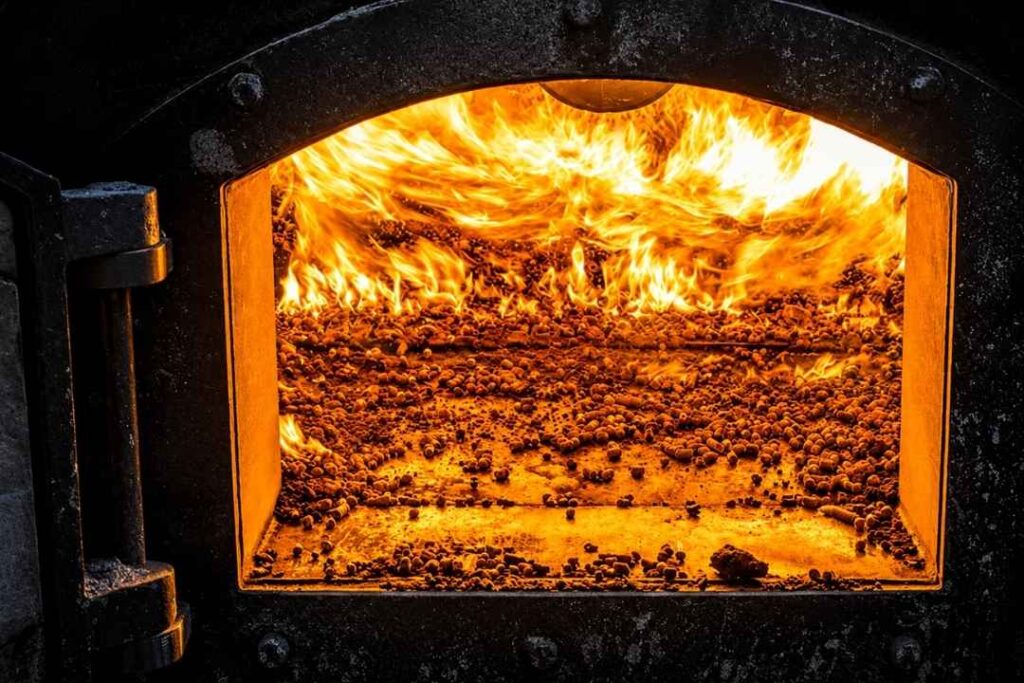
One of the most overlooked contributors is inconsistent fuel-feed geometry. Poor reclaiming and weak agitation produce intermittent surges of fines, inconsistent bulk density, irregular fuel-air interaction, and unstable bed temperatures. That drives localised combustion intensity.
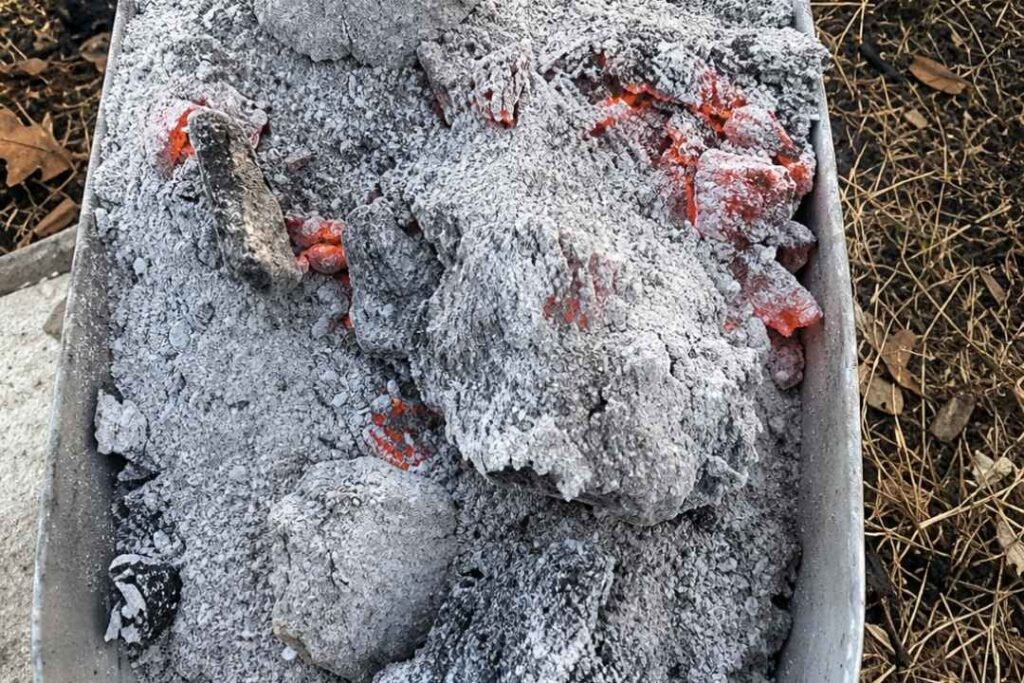
When concentrated alkali-rich material reaches a grate zone, the sequence is fixed. Combustion temperature rises sharply in that zone. Ash softening begins earlier than the average AFT predicts. Molten ash particles start adhering. Clinker nuclei form. Once the first deposits set, the process accelerates — airflow distribution is disturbed, heat concentrates further, and ash accumulation grows progressively harder to remove.
The Hidden Role of Moisture Stratification
Moisture variation inside the stockpile is a second instability that is routinely underestimated. Upper layers dry faster. Internal sections retain moisture. Reclaim pulls material inconsistently. The furnace then alternates between high-moisture fibrous fuel on one cycle and very dry fines on the next.
Dry biomass burns faster and hotter. Wet biomass suppresses temperature briefly, then changes the combustion profile again as it evaporates. The resulting thermal oscillation creates localised hot zones where ash melting becomes increasingly likely. The furnace runs in a continuously shifting combustion state instead of a stable thermal envelope.
Clinker as a Handling Signal
Plants handling identical biomass can show completely different clinker severity depending on storage discipline, reclaim strategy, agitation effectiveness, and feed stability. That alone tells you the fuel type is not the whole story.
Across biomass-handling assessments at Rollcon, the pattern we see repeatedly is that clinker severity correlates more strongly with feed consistency than with the nominal biomass type. Two plants on the same fuel, with different handling discipline, do not produce the same grate.
What Clinker Does to a Screw Conveyor
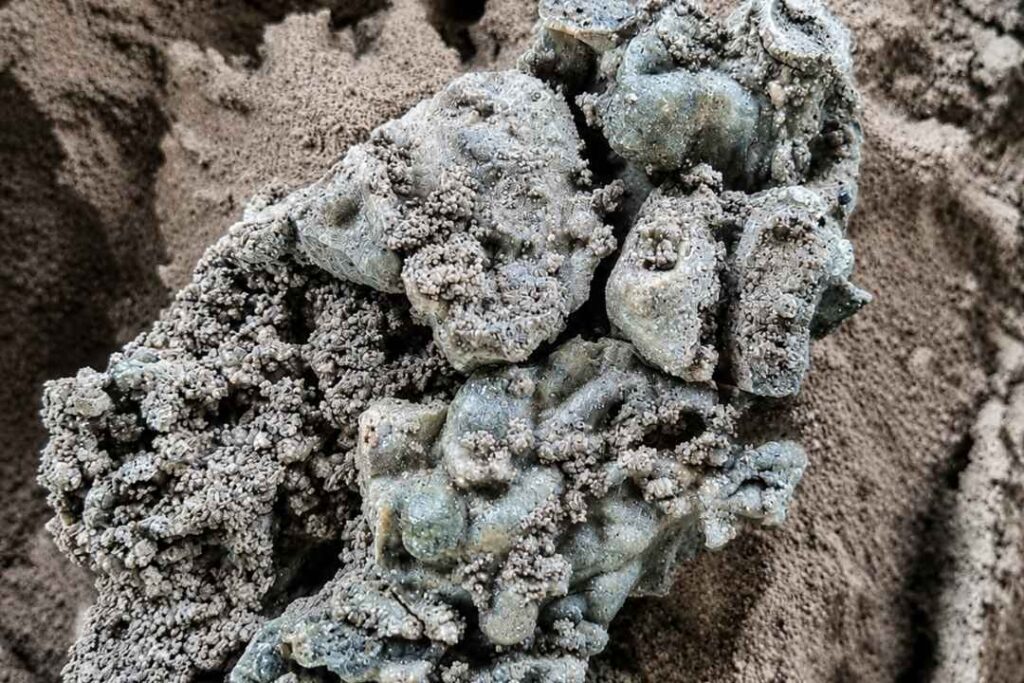
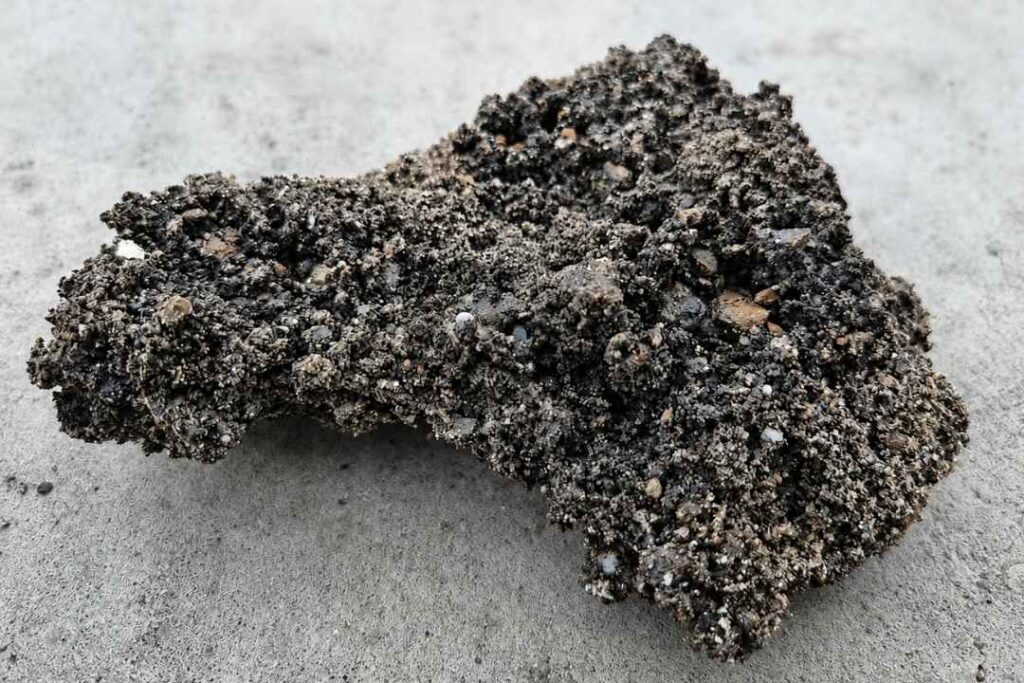
Once clinker forms, it has to be removed and conveyed. This is where the handling failure becomes a mechanical failure. When clinker enters the ash or fuel-handling chain, the screw conveyor is usually the first component to give way. A screw sized to standard biomass-handling parameters will stall, jam, or wear out in the large majority of clinker situations. That is not a manufacturing defect. It is a design-assumption failure.
A standard screw is sized on three assumptions: the material is reasonably free-flowing, low-to-moderately abrasive, and smaller than the radial clearance between the flight outside diameter and the trough. Clinker violates all three at once.
- Lump size. Fused clinker lumps are frequently larger than the radial clearance of a standard screw. A lump that does not fit between the flight edge and the trough wedges. The screw stalls, or the flight edge deforms.
- Abrasion. Clinker is hard and abrasive. Standard mild-steel flights wear at the periphery within a short service period. Uneven wear opens clearances, which worsens jamming.
- Torque. A lumpy, jamming material produces torque spikes far above the steady running load. A drive and shaft sized for the low material factor of free-flowing biomass carry no reserve for those spikes. Shafts twist, couplings shear, and drives trip.
Individually, each of these shortens life. Together they remove all margin. That is why a screw built for biomass almost always fails when it is asked to move clinker.
Handling clinker therefore requires deliberate design accommodations, each with a cost:
- Increased radial clearance and a larger trough so oversized lumps pass without wedging.
- Trade-off: lower volumetric efficiency for a given diameter.
- Hardfacing and liners. Abrasion-resistant overlay — typically chromium-carbide — on the flight periphery, with replaceable AR or Ni-hard trough liners.
- Trade-off: higher fabrication cost and added weight.
- Thicker flights, particularly at the outer edge where wear and lump contact concentrate.
- Trade-off: heavier assembly, higher driven inertia.
- Reduced rotational speed to cut impact and wear, with diameter increased to recover throughput.
- Trade-off: a larger, costlier machine for the same capacity.
- Heavier shaft and drive sizing, protected by a torque limiter or shear coupling so a jam trips a protective device instead of breaking the drive train.
- Trade-off: capex and, with shear protection, planned downtime to reset.
Where the clinker is discharged hot, material selection must be rated for temperature and the design must allow for thermal expansion. A screw specified for ambient ash will distort under a hot clinker load.
None of these accommodations is free, and over-building for clinker that rarely appears is its own waste. The correct specification depends on how much clinker the plant actually produces — which brings the problem back to the fuel yard, where the clinker was decided in the first place.
Clinker Is a System Problem
Biomass combustion cannot be separated from biomass handling. A stable furnace begins with controlled blending, predictable reclaiming, minimised segregation, uniform feed density, and consistent fuel-air interaction. Without that, even technically acceptable biomass generates severe operational problems — and the equipment downstream pays for it.
As biomass usage expands across thermal and process industries, including co-firing under the National Mission on Biomass (SAMARTH), feed conditions will only get more variable, not less. Treating clinker as a furnace defect leaves the cause untouched.