Manufacturing training is entering a new phase. For years, companies have invested in structured learning systems that look effective on paper but often fall short of the realities of the industry’s frontline and often bluecollar workforce. Agentic AI is now reshaping this model by moving workforce training from static content delivery to continuous, role-based capability building.
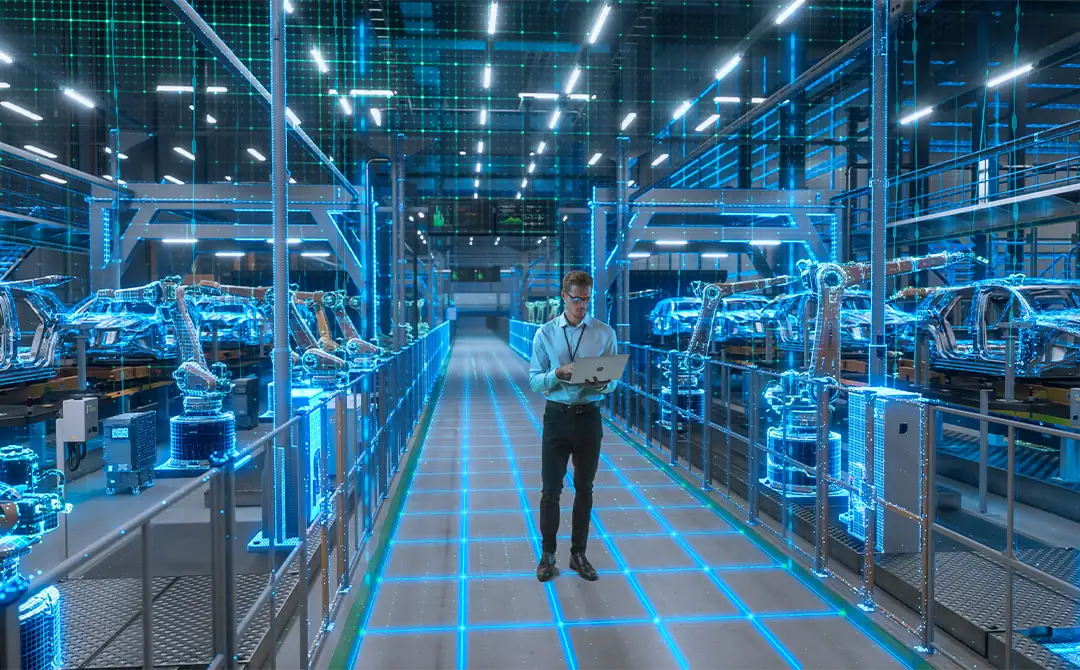
As factories become more automated, connected and data-driven, workforce capability is becoming a core determinant of productivity, safety and competitiveness. Across global manufacturing markets, investments in robotics, AI, IoT-led systems, advanced quality checks and predictive maintenance are increasing. India is moving in the same direction across automotive, electronics, pharmaceuticals, chemicals, textiles and industrial goods. However, technology adoption will only deliver value when the workforce is prepared to use it confidently and consistently.
The real gap is readiness
Manufacturing does not have a shortage of training content. It has a shortage of learning systems that can translate knowledge into operational readiness.
A large part of manufacturing training still depends on fixed modules, classroom sessions, dashboards, assessments and completion certificates. These systems bring process and visibility, but they do not always reflect how a machine operator, technician, supervisor or contract worker learns and applies skills on the shop floor. And new machine is only as effective as the person operating it. A safety protocol creates value only when it is understood at the point of risk. A quality process works only when employees can apply it correctly under real production conditions. This is why training can no longer be judged only by course completion or attendance. The more important question is whether the worker is role-ready.
In manufacturing, role readiness means a worker can operate a machine safely, follow SOPs, respond to deviations, understand quality parameters, use the right tools, escalate issues at the right time and perform consistently across shifts. For blue-collar and frontline workers, readiness has to be practical, observable and directly linked to the task they are expected to perform.
Why traditional learning models fall short
Traditional LMS models were not built for this reality. They expect the learner to come to the platform, sit through standardized content and complete a course. Manufacturing needs the opposite. Learning has to reach the worker in the flow of work, in a format they can use, in the language they understand and at the moment they need it.
The workforce challenge is becoming sharper. The World Economic Forum has estimated that 44% of workers’ skills are expected to be disrupted within five years. Deloitte and The Manufacturing Institute have projected that the manufacturing sector could need up to 3.8 million additional workers by 2033, with nearly 1.9 million roles at risk of remaining unfilled due to skills shortages. For India, where manufacturing growth is closely linked to employment, exports, productivity and Make in India ambitions, this is not only an HR concern. It is a business continuity and competitiveness concern.
Another challenge is that valuable shop-floor knowledge is often undocumented. It sits with senior operators, supervisors and maintenance teams: how a machine behaves before a breakdown, which deviations need immediate attention, where safety risks emerge and how quality issues are spotted early. Modern skilling systems must convert this tacit knowledge into repeatable, accessible learning.
How Agentic AI changes the equation
This is where Agentic AI-powered skilling platforms can create a real shift. Unlike static learning systems, Agentic AI can identify skill gaps, recommend role-specific learning, guide employees through development journeys and give managers better visibility into workforce readiness. It can move training from a periodic intervention to a continuous capability-building system.
For example, a technician being trained on new equipment may not need a 60-minute generic module. They may need a short visual SOP before the shift, multilingual reinforcement on mobile, troubleshooting guidance, safety prompts and a manager’s view of whether they are ready to handle the machine independently. A line worker may need repeated micro-learning around quality checks, while a supervisor may need insights into which workers are ready for which role, shift or process.
The value of Agentic AI becomes practical when it supports workers in the moments where learning and performance meet, and becomes a decision-support layer for the frontline workers and reduces errors. Intelligent learning agents can reinforce SOPs, surface process guidance, recommend refresher learning, support troubleshooting workflows and provide role-specific nudges based on the worker’s task, equipment, location or skill gap.
For manufacturing teams, this is useful in safety compliance, quality checks, maintenance readiness, equipment onboarding and process change management. A worker who receives timely, contextual guidance is better prepared to take the right action on the shop floor.
Why this matters for India
For India, this approach is especially relevant because the frontline workforce is large, diverse and multilingual. Training that works only in English, only on desktop or only in a classroom will struggle to scale. Modern skilling systems need to account for language, digital comfort, connectivity, shift schedules and job roles. They also need to work across suppliers, contract workforces and multi-location plants, where consistency is often difficult to maintain.
For India’s manufacturing ambitions, the speed at which skills can be transferred across this ecosystem will matter as much as the scale of skilling itself.
The shift to business outcomes
The future of manufacturing learning will be mobile-first, multilingual, offline-capable and deeply linked to work outcomes. It will help companies measure capability, not just participation.
Manufacturing leaders ultimately care about fewer errors, safer operations, better compliance, faster onboarding, higher productivity and quicker adoption of automation. If training does not improve these outcomes, it remains a checkbox.
Agentic AI can help turn skilling into an operating layer for manufacturing. For frontline and blue-collar workers, this means training that reflects how they actually work. For companies, it means a workforce that is not only trained, but ready.