Small and medium-sized manufacturing companies in India are facing increasing pressure to produce complex components faster, with greater accuracy and lower costs. CNC machines have become more capable, but many machining problems remain the same: chip control issues in threading, tool deflection in heavy cuts, long setup times, and inefficient programming of multi-task machines. These problems reduce productivity and make it harder for SMEs to compete in demanding industries such as aerospace, automotive, precision components and industrial equipment. Synchronising the movements of different axes and coordinating machining flows is vital for multi-tasking machines to fully realise their potential. Proper synchronisation ensures that multiple tools and spindles operate harmoniously, minimising idle times and maximising productivity. This coordination is essential to reduce cycle times and improve the overall efficiency of complex machining operations.
This article explains some practical machining strategies that directly address these challenges. The focus is on engineering the toolpath, improving process planning and reducing wasted time inside the machine, rather than only increasing cutting speed or buying higher-end machines.
The Changing Nature of Turning Work
Traditional CNC turning was designed for two-axis machining of round components. Today, however, even simple parts often require flats, grooves, non-cylindrical surfaces, cross-holes or pockets. Normally, these features require the part to be removed from the lathe and taken to a machining centre. Every time a part is re-clamped, accuracy is affected, and extra time is spent on handling and setup.

Y-axis turning is one approach that small manufacturers can use to address this issue. When the lathe has controlled movement in the Y direction, many milling-type features can be machined directly in the turning setup. This means that parts do not need to be transferred from one machine to another. In real production environments, Y-axis turning has helped reduce the number of setups by 25–30 per cent and shorten total cycle time by 20–27 per cent on mixed turning-milling components. The improvement does not come from cutting faster, but from eliminating unnecessary machine time.
Threading and the Chip Control Problem
Thread cutting is a difficult operation because many materials produce long, continuous chips that wrap around the tool, scratch the surface or block coolant flow. Operators often need to stop the machine to clear chips manually. Many workshops deal with this by reducing speed or using manual chip-breaking techniques, which slows production.

Intelligent Threading
Modern threading strategies solve the problem differently. Instead of changing the cutting parameters, the toolpath itself includes a small oscillation during rough passes. This controlled movement automatically breaks the chip into shorter segments. The oscillation is turned off during the final finishing pass so that thread accuracy is not affected. Shops using this method have reported around 30 per cent improvement in threading productivity and better tool life, especially in stainless steel and superalloys. Because the chip problem is solved within the toolpath, operator involvement is reduced, and the process becomes more predictable.
Tool Deflection in Deep or Heavy Cuts
Tool deflection is another major limitation in turning and milling. When the cutting forces are high, or when small-diameter tools are used in deep areas, the tool bends slightly. This results in tapered walls, poor surface quality and reduced tool life. Many shops try to solve this by lowering feeds and speeds, but this makes machining slower.

Rib Cut Plunge approach
A structured solution to this is the Rib Cut Plunge approach. In this method, roughing is done in two stages. First, the tool makes several deep plunge cuts that are spaced more than one tool diameter apart. These plunges leave “ribs” of material that help support the cut. In the second pass, the ribs are removed at higher feed rates because the tool is now cutting under more stable conditions. Reports from industrial users show a 40–50 per cent reduction in tool deflection and 25–35 per cent longer tool life. The method focuses on controlling the cutting forces rather than modifying the tool or lowering the cutting parameters.
Programming Multi-Task Machines More Efficiently
Multi-task machines (MTMs) allow cutting with multiple turrets and spindles at the same time. They are ideal for reducing setups, but the programming can become complicated. If one tool is waiting while another is cutting, a lot of machine time is wasted. Many shops do not fully use MTM capability simply because it is hard to visualise everything that is happening inside the machine.
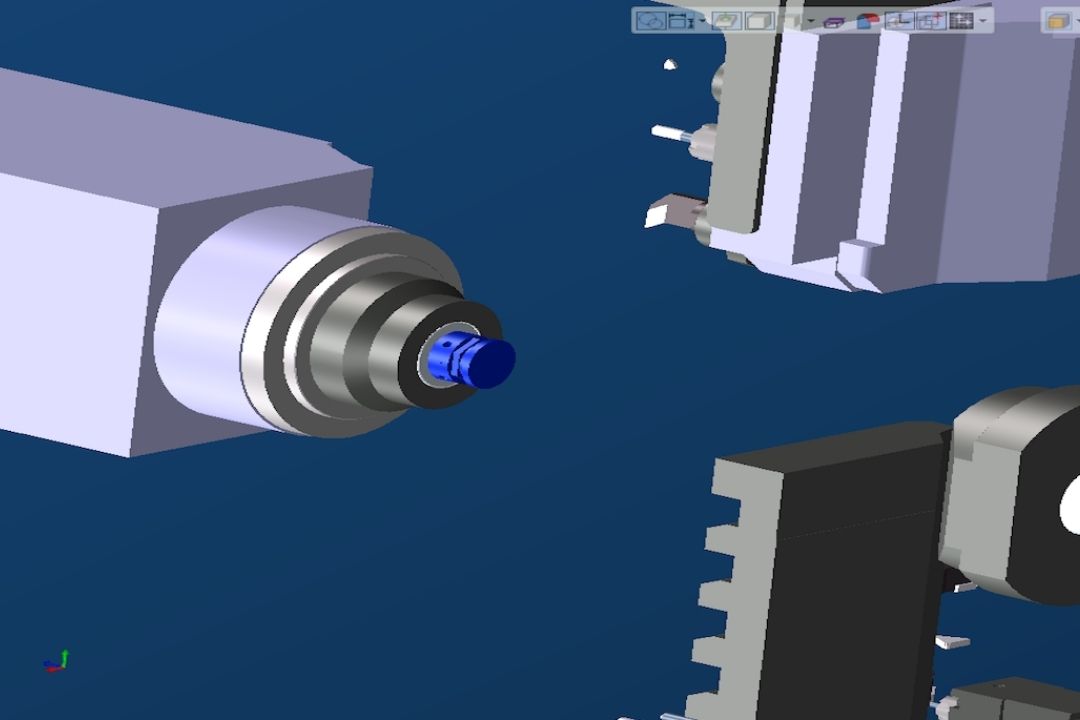
Process visualisation tools help solve this problem. They allow programmers to see all machining flows on the screen or isolate each spindle or turret individually. This makes it easier to understand where idle waiting occurs and adjust the operations so that the workload is balanced. In many workshops, such visualisation has led to 15–20 per cent faster MTM programming and around 22 per cent reduction in total machining time, without modifying feeds, speeds or tools.
Verifying Programs Before Cutting
With several tools cutting in parallel, programming mistakes are expensive. A robust simulation system can check tool movements, spindle direction and potential interference before the job reaches the machine. Shops that rely on full simulation before machining report up to 95 per cent reduction in setup-related errors on complex jobs, especially on MTMs.
All the above strategies are now widely available in modern CAM systems. GibbsCAM is one such platform that provides engineered toolpath options, visualisation features and simulation environments that help machinists apply these techniques in real production. For Indian MSMEs, this means it is possible to improve cycle time, accuracy and predictability using the machines they already own, simply by running better-engineered programs rooted in sound manufacturing principles.