Mastercam, one of the world’s most widely used CAD/CAM software platforms, has made a decision to acquire Mastercam India, which marks far more than a change in ownership. It represents a strategic shift that places one of the world’s fastest-growing manufacturing markets at the centre of the company’s global growth plans. The acquisition follows nearly a decade of collaboration between the two entities. Since October 2016, Mastercam India has served as the company’s distributor for South Asia and the Middle East, building a customer base of more than 5,000 manufacturers.
Mastercam enables manufacturers to transform product designs into precise CNC machining programs for milling, turning, multi-axis machining, wire EDM, routing and advanced manufacturing applications. Trusted by machine shops, OEMs and educational institutions across more than 100 countries, the software has become a cornerstone of digital manufacturing.
In 2021, Mastercam joined the Sandvik Group as part of Sandvik’s expanding Manufacturing and Machining Solutions business, and today operates under Sandvik Manufacturing Intelligence (Digital Manufacturing) alongside brands such as Cimatron, GibbsCAM and SigmaNEST. Reinforcing its long-term commitment to India, Sandvik recently inaugurated its India Innovation Hub in Pune, bringing together engineering, software development, AI and digital manufacturing expertise to accelerate innovation, strengthen global product development and support customers with next-generation intelligent manufacturing solutions. The acquisition of Mastercam India fits squarely into this broader strategy, positioning India not just as a key market but as a strategic centre for developing the future of digital manufacturing.
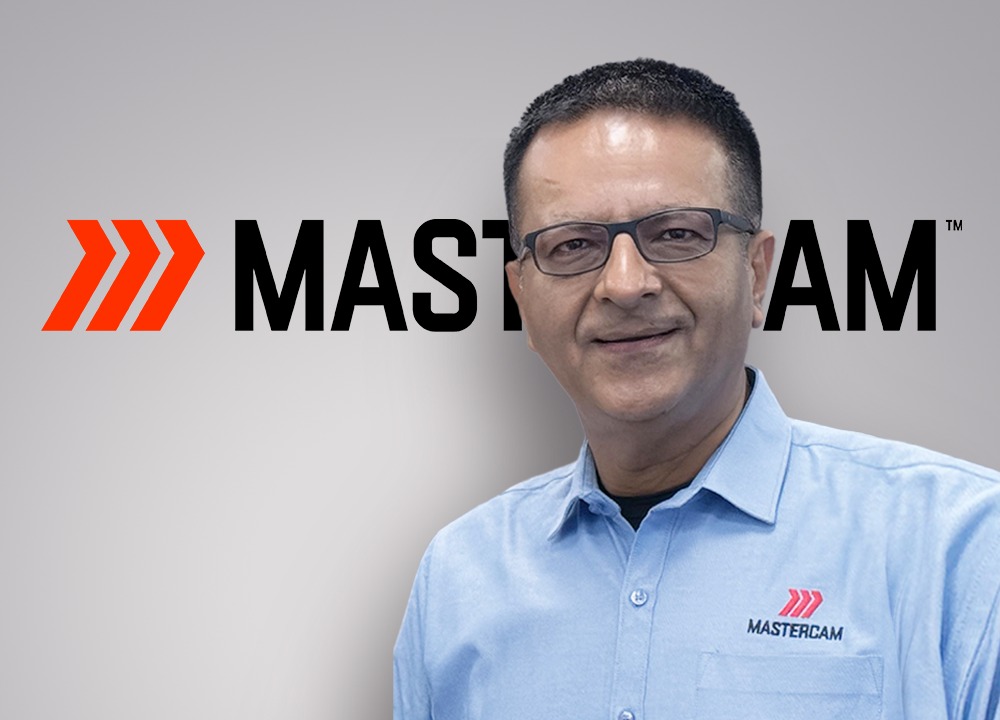
While speaking with the Machine Maker, Vineet Seth, Regional Executive Director – APAC, Mastercam, said the acquisition aims to strengthen customer engagement, accelerate technology adoption, and build a more integrated manufacturing ecosystem that supports India’s manufacturing ambitions. He further said the relationship had evolved to the point where direct ownership was the natural next step.
Vineet Seth described the acquisition as closely aligned with Sandvik’s strategy to strengthen direct sales channels for its software solutions while expanding its digital manufacturing portfolio. More importantly, the move eliminates the gap that previously existed between Indian customers and Mastercam’s global product development teams. “Our long-term vision is to build Mastercam India into a full-spectrum organisation that supports customers not only with licensing and implementation, but across the entire manufacturing engineering value chain,” Vineet Seth said.
A Stronger Connect Between Indian Manufacturers and Global Expertise
While acquisitions often create uncertainty for customers, Vineet Seth stressed that continuity has been the company’s foremost priority. Existing customers will continue working with the same sales teams, technical engineers, application specialists and account managers they have relied on for years. Training programmes, maintenance agreements and reseller partnerships will also continue without interruption. According to him, preserving these relationships is essential because successful CAM implementation depends on a deep understanding of customers’ manufacturing environments, not simply on supplying software.
The real advantage of the acquisition, however, lies behind the scenes. Mastercam India’s technical and application engineers now have direct access to Mastercam’s global product specialists in Tolland, Connecticut, as well as to Sandvik’s broader digital manufacturing ecosystem. This will enable faster resolution of complex machining challenges, quicker escalation of technical issues and earlier access to upcoming product developments.
Equally important, Indian manufacturers will now have a stronger voice in shaping future product enhancements. Seth said customer requirements related to Indian machine tools, cutting tools, and production workflows can now be incorporated directly into the global product roadmap. The company’s reseller network, which has played a significant role in expanding Mastercam’s footprint across the country, will continue to remain central to its business strategy. Rather than replacing channel partners, the acquisition is expected to strengthen them through closer collaboration with the OEM, enhanced technical certification programmes and joint go-to-market initiatives.
Aligning with India’s Manufacturing Transformation
Vineet Seth believes the timing of the acquisition coincides with a significant transformation underway in Indian manufacturing. Government initiatives such as Make in India, coupled with rising investment across aerospace, automotive, electronics, and defence manufacturing, are driving strong demand for advanced manufacturing software.
He pointed out that India’s aerospace sector is steadily moving beyond build-to-print manufacturing towards higher-value engineering work involving structural components, engine parts and maintenance, repair and overhaul (MRO). Such applications increasingly require sophisticated five-axis machining, advanced post-processors and highly optimised CAM strategies.
The automotive industry remains the largest volume driver in manufacturing, even as it transitions towards electric mobility. At the same time, India’s die and mould sector is witnessing growing demand for highly precise moulds used in electric vehicle components, medical devices and consumer electronics. Seth noted that advanced technologies such as Dynamic Motion machining strategies and Accelerated Finishing toolpaths are becoming increasingly valuable as manufacturers seek shorter machining cycles and improved surface finishes.
Looking ahead, he said emerging technologies like EverPath are expected to further enhance CAM programming capabilities. Medical devices and precision engineering represent another major opportunity. Seth observed that manufacturers in these industries are increasingly adopting Swiss-type turning, micro-machining, toolpath traceability and regulatory compliance as standard manufacturing requirements.
As part of the global Mastercam organisation, Indian manufacturers will have easier access to proven manufacturing workflows already being used by leading companies across North America and Europe. Mr Seth believes this will particularly benefit manufacturing clusters in Pune, Bengaluru, Chennai, Hyderabad, Coimbatore, Rajkot and the National Capital Region. “At its core, the Make in India initiative requires manufacturing engineering capabilities to advance alongside capital investment. That is precisely where Mastercam operates and delivers value,” Mr Seth said.
Building Skills and Strengthening the Manufacturing Ecosystem
Beyond software, Vineet Seth believes India’s long-term competitiveness will depend on creating a highly skilled manufacturing workforce. Mastercam has already established partnerships with Industrial Training Institutes (ITIs), polytechnics, engineering colleges, Centres of Excellence under national skilling initiatives, and Centres of Invention, Innovation, Incubation and Training developed in collaboration with Tata Technologies and several state governments. These initiatives, he said, will continue to expand following the acquisition.
Students and institutions are expected to gain greater access to Mastercam University, internationally benchmarked certification programmes and advanced learning content that aligns more closely with evolving industry requirements. The company also plans to strengthen its technical capabilities by investing in applications engineering, post-processor development, and specialised expertise for the aerospace, medical manufacturing, and die and mould industries. Rather than focusing solely on increasing employee numbers, Mr Seth said the emphasis will remain on enhancing technical depth, improving engineering support and strengthening customer engagement.
India to Play a Bigger Role in Mastercam’s Global Journey
Looking ahead, Vineet Seth identified seamless integration as the company’s immediate priority over the next two to three years. Systems, customer data, contracts and internal processes are currently being integrated into the global Mastercam organisation while ensuring customers experience no disruption.
He also reaffirmed that the reseller ecosystem will remain central to the company’s growth strategy. Instead of moving towards a direct-only sales model, Mastercam plans to invest further in reseller enablement, vertical specialisation and technical capability, particularly across Tier-II and Tier-III manufacturing centres where MSMEs are increasingly embracing digital manufacturing.
Innovation will be another major area of focus. Seth pointed to Sandvik’s Innovation Hub in Pune as an important milestone that reflects the group’s long-term commitment to engineering excellence and digital manufacturing in India. While core product development will continue to be led globally, Seth said India will increasingly contribute customer insights, workflow requirements and engineering expertise that can influence future software development. For Mastercam, therefore, the acquisition represents a strategic investment in India’s manufacturing future. As manufacturers move towards higher precision, greater automation and more sophisticated machining technologies, Vineet Seth believes closer integration between global product development and Indian manufacturing expertise will enable Mastercam to play a larger role in supporting the country’s transition into a globally competitive manufacturing hub.