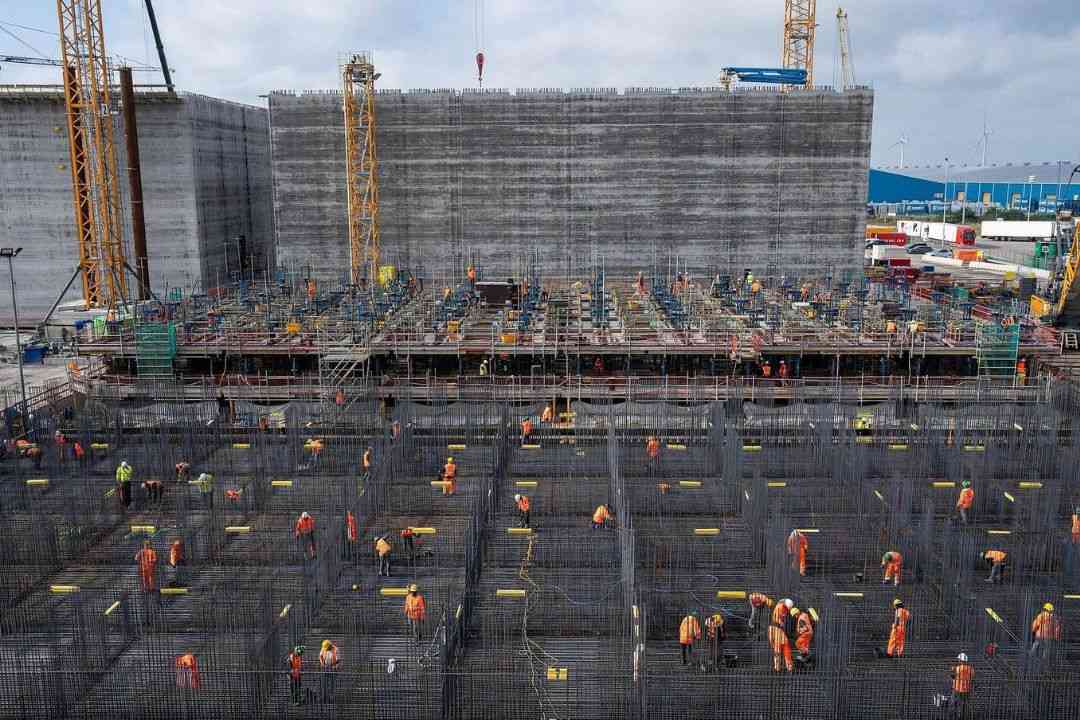
Wacker Neuson is playing a key role in the construction of the Princess Elisabeth Island, a pioneering offshore energy project located approximately 45 kilometres off the Belgian coast in the North Sea. Once operational from 2030, the island is expected to serve as a central hub for Europe’s renewable energy network.
The project involves the creation of a six-hectare artificial island built on 23 massive concrete caissons, each measuring around 60 metres in length, 30 metres in width, and 22 metres in height. Designed to withstand the harsh marine environment, the construction demands exceptional precision and durability, particularly in concrete consolidation.
To meet these requirements, Wacker Neuson has deployed more than 120 high-frequency internal vibrators at the construction site in Vlissingen, Netherlands. These machines operate continuously during extended concrete pours, which can last up to eight days for each caisson. Consistent and reliable consolidation is critical to ensuring the structural integrity and long-term resilience of the island.
A standout innovation on-site is the company’s battery-powered converter backpack, which enables cable-free operation of internal vibrators. This system enhances mobility for operators and significantly improves safety by eliminating trip hazards in wet concrete environments.
The backpack is powered by a robust lithium-ion battery system that can be quickly replaced, allowing uninterrupted operation during demanding construction cycles. This solution supports both efficiency and sustainability, aligning with the project’s broader environmental objectives.
Wacker Neuson brings decades of expertise to the project, with a legacy in concrete technology dating back to the development of its first internal vibrators in the 1930s. Today, the company continues to advance its capabilities through innovation and customised solutions for complex infrastructure projects.
The use of electric and battery-powered equipment reflects Wacker Neuson’s long-term focus on reducing emissions in construction. Its “zero emission” product line demonstrates how high-performance machinery can support environmentally responsible building practices without compromising productivity. By contributing advanced technology and expertise to the Princess Elisabeth Island project, Wacker Neuson is helping to shape the future of sustainable energy infrastructure in Europe.