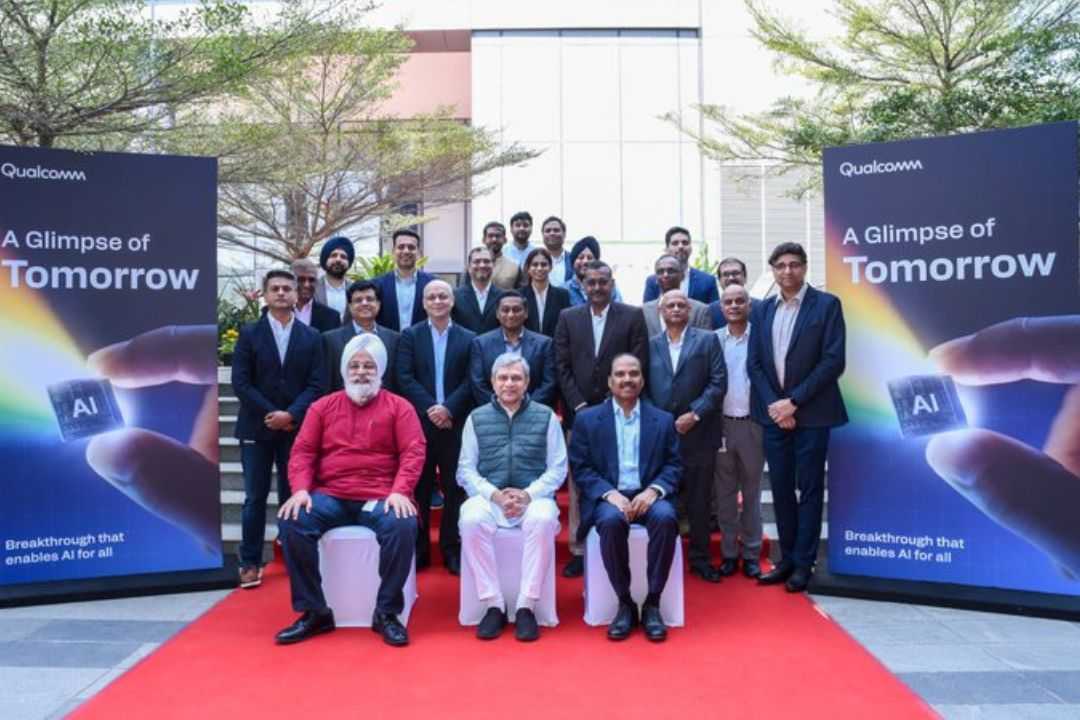
Union Minister for Railways, Information & Broadcasting, and Electronics & Information Technology, Ashwini Vaishnaw, today inaugurated Qualcomm’s 2 nanometre semiconductor chip design initiative in Bengaluru, highlighting India’s growing role in advanced semiconductor engineering and global product development. Addressing industry leaders and engineers, the Minister said India’s talent base continues to attract global attention and confidence.
He noted that the next phase of technological progress would be driven by innovation emerging from India, supported by collaboration between government, industry, and academia. Shri Vaishnaw referred to India’s evolving semiconductor journey, noting that earlier opportunities in the sector were missed due to a lack of strategic focus. He said the current semiconductor mission reflects a clear national priority, backed by long-term planning and execution.
The Minister explained that India’s initial focus on 28-nanometre fabrication was designed to address a wide range of applications, including automotive electronics, telecommunications, power management, and strategic systems. He added that progress under the program has been steady, with 10 semiconductor units currently under construction, and four facilities having entered pilot production.
These units are undergoing product qualification and customer validation, with commercial production expected in the near term. Highlighting talent development, Shri Vaishnaw said more than 315 universities across India are now equipped with leading Electronic Design Automation (EDA) tools from global providers such as Synopsys, Cadence, and Siemens. Students across the country are actively designing, taping out, and validating semiconductor chips, helping build a strong and widely distributed engineering talent pipeline.
Looking ahead, the Minister outlined the roadmap for India Semiconductor Mission (ISM) 2.0. He said the next phase will prioritize three areas: supporting semiconductor design companies and startups that can take products to market; strengthening the domestic ecosystem for equipment, materials, testing, and validation; and deepening India’s talent base through closer partnerships with universities and research institutions.
He emphasized that as the global economy moves toward the fifth industrial revolution, India must focus on deep technology innovation and skill development. Industry–academia collaboration, curriculum alignment, and continuous upskilling, he said, will be essential to ensure India delivers high-value solutions to global markets.