Tata Steel has signed a preliminary agreement — a Joint Letter of Intent (JLoI) — with the Dutch national government and the Province of North Holland. This marks the first step in a broader effort to reduce carbon emissions and improve the living environment around its IJmuiden facility.
The agreement outlines shared goals for the project’s first phase but is not legally binding, except for a mutual commitment to continue good faith negotiations. All parties aim to reach a final, tailor-made agreement in the coming months, including after the formation of the new Dutch government. Tata Steel’s final investment decision will depend on the terms agreed upon in that detailed plan.
Tata Steel CEO & MD TV Narendran, who also chairs Tata Steel Nederland’s Supervisory Board, thanked the Dutch government and provincial representatives for their cooperation over the past two years. “We still have a long road ahead,” he said. “Internally, we need to finalize engineering work for this complex transition and address regulatory approvals, especially around the coke and gas plants. Externally, we are waiting for clarity on key policies that impact the investment case, and we need to secure the necessary permits and reach final terms on the binding agreement.”
Mr Narendran also highlighted the importance of aligning the project timeline and spending with broader EU and Dutch policy developments, including rules around carbon emissions and energy infrastructure costs. He emphasized Tata Steel Nederland’s focus on strengthening operations and finances to be ready for the scale of the investment ahead. Support from labor unions has been key, and the company is committed to ensuring customers continue to receive uninterrupted product supply during the transition.
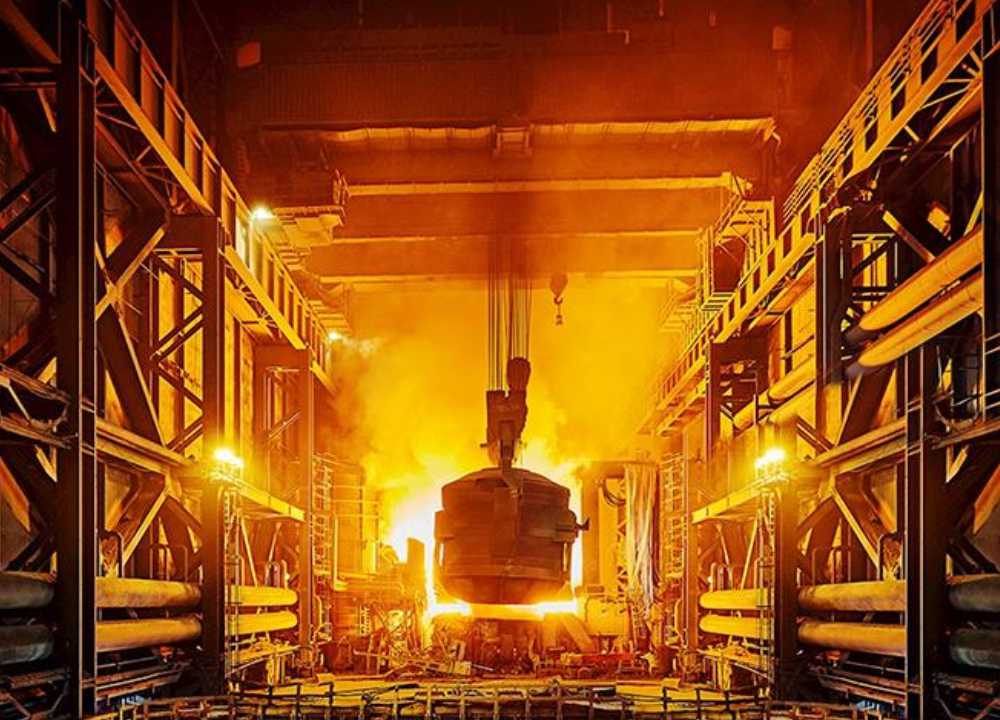
The first phase of Tata Steel Nederland’s transformation project focuses on making steel production cleaner while improving air quality for surrounding communities. A key step in this process is the decommissioning of Blast Furnace #7 and Coke and Gas Plant 2. These will be replaced with a new Direct Reduced Iron (DRI) facility, initially operating on natural gas, along with an Electric Arc Furnace (EAF) that uses more recycled scrap metal. Together, these changes are expected to lower annual direct CO₂ emissions by 5.4 million tonnes.
Looking ahead, further emission cuts are planned through the adoption of Carbon Capture and Storage (CCS) technology, as well as switching the DRI plant to biomethane or hydrogen when these fuels become available at scale. With these steps, Tata Steel Nederland aims to reduce its direct CO₂ output by approximately 7.2 million tonnes a year — more than half of the current maximum of 12.6 million tonnes. This marks a major milestone in the company’s path toward low-carbon steelmaking.
In addition to lowering greenhouse gas emissions, the project places strong emphasis on reducing local environmental impacts. The company will introduce measures to limit dust, noise, and odors from its facilities, including covering pellet and iron ore stockpiles, building wind barriers around the sinter plant, and installing dust control systems at slag processing areas. Noise and odor reduction technologies will also be put in place. Many of these initiatives are designed to go beyond existing legal requirements, ensuring that nearby communities benefit from cleaner air and a healthier living environment.
Several of these upgrades are scheduled to be completed by 2030, offering near-term improvements even as the larger decarbonisation process unfolds. By taking early action on air quality and noise, Tata Steel Nederland seeks to demonstrate its commitment to both environmental responsibility and community well-being, making the transition more immediate and tangible for local residents.
Finally, the company is also working to improve circularity in its production processes. Plans are underway to enhance the treatment and reuse of steel slag and to significantly increase scrap steel usage, targeting a rise from 17% in 2019 to 30% in the coming years. By doing so, Tata Steel Nederland not only reduces its dependence on raw materials but also aligns its operations more closely with circular economy principles, strengthening both sustainability and competitiveness.
The JLoI lays out certain conditions that must be met before a final agreement is signed. For Tata Steel, this includes protection from future cost spikes due to Dutch carbon pricing or changes in energy or slag-related regulations. For the Dutch government, TSN must address its legacy environmental liabilities — especially those tied to the coke and gas plants.
The full engineering scope and capital costs are still being developed. Once complete, the company will finalize the project timeline and financing plan. The Dutch government intends to provide up to €2 billion in support, and TSN has applied for another €300 million from the EU Innovation Fund. The rest of the funding will come from a mix of internal cash, debt, and support from Tata Steel’s parent company.
Tata Steel’s commitment to responsible steel production is reflected in its achievements, including the first ResponsibleSteel™ certification for its Jamshedpur plant, with over 90% of its steel production in India now coming from certified sites. The company has also received numerous accolades, such as the Prime Minister’s Trophy for the best-performing integrated steel plant in 2016-17 and the 2024 Steel Sustainability Champion award from worldsteel, underscoring its leadership in both sustainability and performance within the global steel sector.