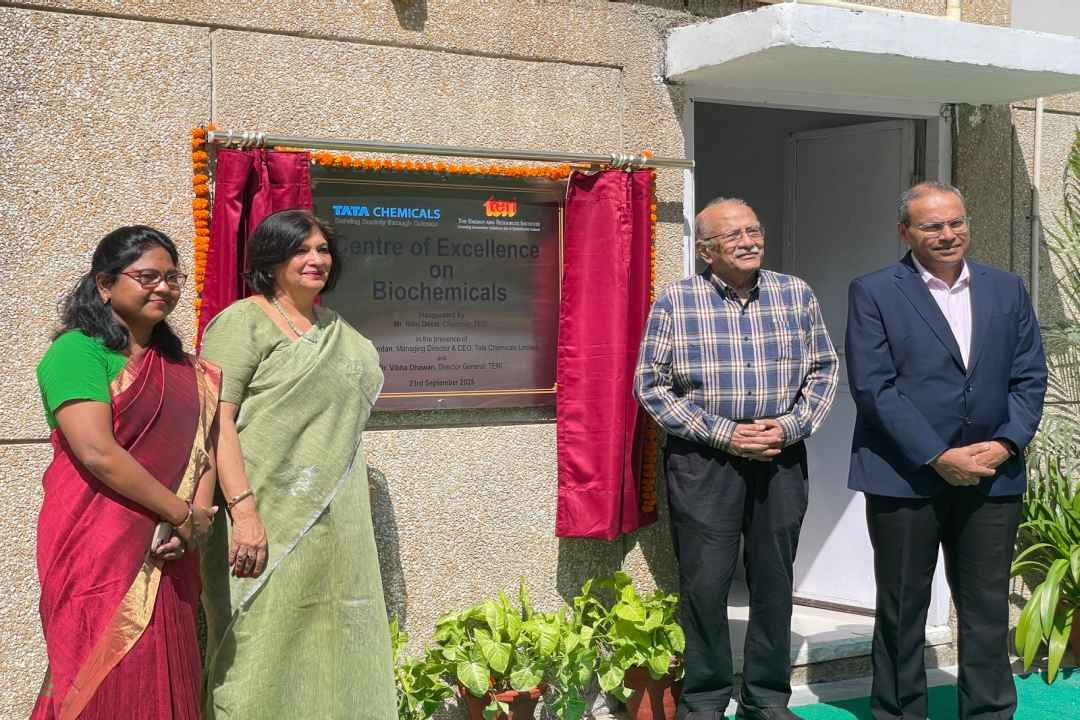
Tata Chemicals Limited (TCL) and The Energy and Resources Institute (TERI) have officially opened a jointly developed Centre of Excellence (CoE) for Biochemicals. The facility was inaugurated by Nitin Desai, Chairman, TERI; R Mukundan, Managing Director & CEO, Tata Chemicals; and Dr Vibha Dhawan, Director General, TERI.
The new Centre has been established to develop and scale advanced, cost-efficient technologies for producing both platform and specialty biochemicals using renewable raw materials, including first- and second-generation feedstocks. Equipped with bioreactors of varying capacities and pilot-scale recovery systems, the facility is set up to test and validate integrated bioprocesses on a demonstration scale—laying the groundwork for future commercial deployment.
The initial focus of research is on producing 2,3-Butanediol, a high-demand chemical used across industries such as polymers, paints, pharmaceuticals, food additives, and biofuels. This work builds upon TERI’s earlier research in this space and will serve as a stepping stone toward establishing domestic production capabilities for similar bio-based chemicals.
Dr Sanjukta Subudhi, Associate Director at TERI, is leading the Centre’s coordination efforts, with the aim of turning lab-scale innovations into market-ready solutions. The facility will also act as a platform for skill development and knowledge transfer in the growing field of industrial biotechnology.
In his address, Mr Desai emphasized the urgent need to shift away from fossil fuel dependence “To meet both our economic and climate goals, the chemical industry must pivot toward greener alternatives. This initiative is a practical example of how research and industry can work together to support that transition.”
Mr Mukundan highlighted the strategic importance of biomanufacturing “This Centre is a key step in our efforts to enable future-ready chemical production using biotechnology. As the industry moves towards a circular and more sustainable model, we see this facility as a catalyst for innovation, scale, and skilled workforce development.”
Dr Vibha Dhawan added that the Centre goes beyond being just a research setup “It’s a complete biomanufacturing ecosystem aimed at bridging the gap between early-stage research and industrial-scale implementation. Through partnerships and infrastructure, we aim to make India a frontrunner in sustainable chemical manufacturing.”
India’s chemical sector, currently valued at around USD 220 billion, is on track to touch USD 1 trillion by 2040. However, it remains largely dependent on petrochemical feedstocks. Biotech-based alternatives, such as fermentation-derived chemicals, offer a cleaner route but face challenges in cost—especially in downstream recovery, which accounts for a major share of production expenses.
The TCL–TERI Centre aligns with the Government of India’s Bio-E³ (Biotechnology for Economy, Environment, and Employment) policy, aimed at promoting sustainable biotechnology through public-private partnerships. It is expected to boost India’s capabilities in high-value biochemical production and reduce dependence on fossil-based imports.
A key part of the USD 165 billion Tata Group, Tata Chemicals is a leading supplier to the glass, detergents, and general chemical industries. It also has a strong footprint in the agriculture sector via its subsidiary, Rallis India. The company operates world-class R&D centers in Pune and Bangalore focused on innovation across its core business areas.