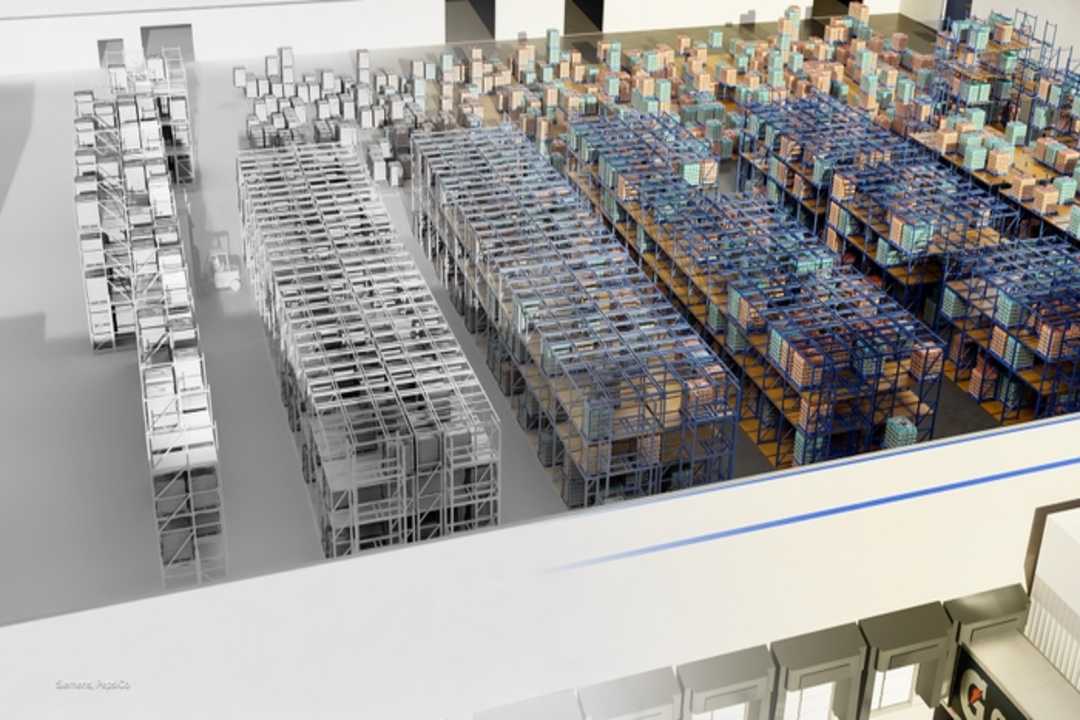
Siemens AG and NVIDIA have announced an expanded strategic collaboration focused on accelerating the adoption of artificial intelligence across industrial design, manufacturing, and operations. The partnership aims to develop industrial AI solutions that connect software-based simulation with real-world production environments. NVIDIA will provide AI computing infrastructure, simulation libraries, models, and development frameworks, while Siemens will contribute industrial software, automation platforms, hardware, and specialist engineering expertise.
Under the expanded collaboration, the companies plan to enable AI-driven capabilities across the entire industrial lifecycle—from product design and virtual testing to factory operations and optimisation. A key objective is the development of adaptive manufacturing sites powered by AI-enabled digital twins, with the Siemens Electronics Factory in Erlangen, Germany, serving as the initial reference site from 2026.
By integrating software-defined automation with NVIDIA’s Omniverse platform and AI infrastructure, manufacturing systems will be able to analyse digital twins continuously, validate changes in virtual environments, and implement improvements directly on the shop floor.
The collaboration also extends to electronic design automation, where Siemens will integrate GPU acceleration and NVIDIA CUDA-X libraries across its EDA portfolio. These enhancements are expected to significantly reduce simulation and verification times while improving accuracy and yield in semiconductor design workflows.
In addition, the companies will jointly develop reference architectures for next-generation AI factories, addressing challenges related to power density, cooling, automation, and lifecycle efficiency. These blueprints are intended to support the growing demand for industrial-scale AI infrastructure worldwide.
Siemens and NVIDIA will also deploy the jointly developed technologies within their own operations before scaling them for customers, providing validated use cases and performance benchmarks. Several industrial customers are already evaluating selected capabilities under the expanded partnership.
Through this collaboration, the two companies aim to strengthen the connection between digital engineering and physical production, enabling faster innovation, more resilient manufacturing systems, and improved energy efficiency across industries.