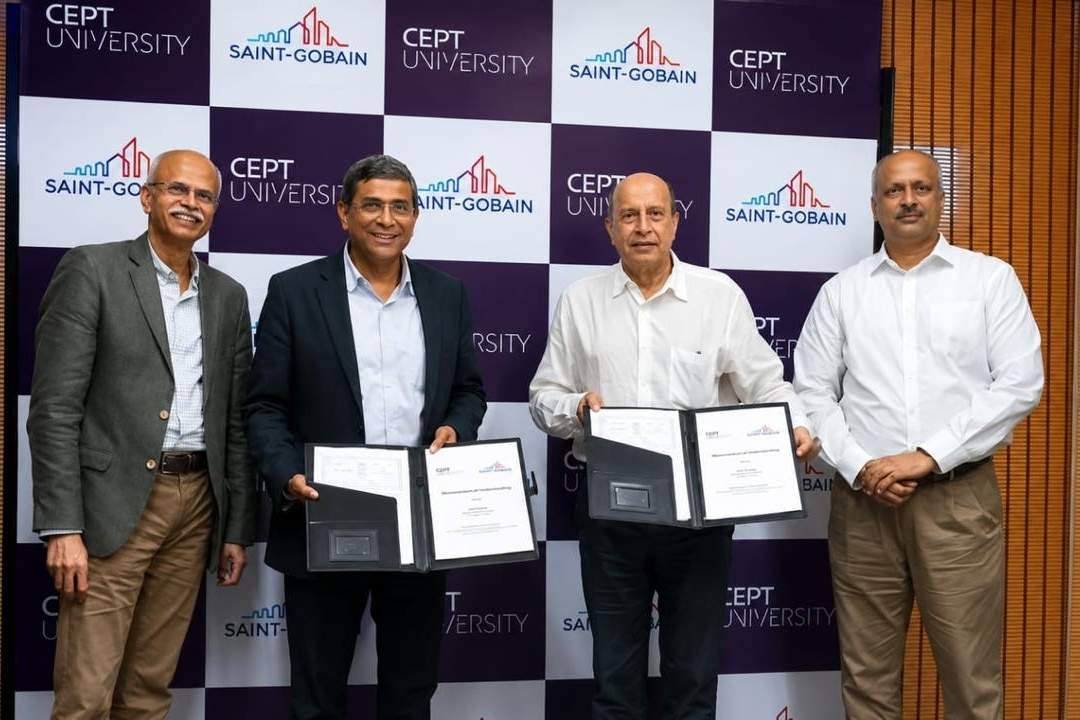
Saint-Gobain and CEPT University have entered into a strategic partnership to promote sustainable building practices, energy-efficient construction and climate-resilient infrastructure in India. As part of the collaboration, the two organisations will establish a Tech Commons Centre, which will serve as a dedicated platform for research, innovation, skill development and industry-academia collaboration in the field of sustainable construction.
The partnership combines Saint-Gobain’s expertise in light and sustainable construction with CEPT University’s strengths in architecture, design, planning and research. The initiative aims to bridge the gap between academic learning and industry requirements by providing students, researchers and professionals with opportunities to work on real-world challenges related to the built environment.
The Tech Commons Centre will function as an integrated hub for building science, climate resilience, prototyping, digital technologies and knowledge exchange. It will support collaborative research on sustainability, energy efficiency, occupant well-being and emerging construction technologies while encouraging innovation tailored to India’s climatic and urban development needs.
The centre will feature four specialised hubs focusing on Building Science and Climate Resilience, Urban Intelligence and Digital Twins, Computational Design and Visualisation, and Communications and Media. These facilities will provide students and faculty members with access to advanced technologies, practical research opportunities and interaction with industry experts, helping translate academic knowledge into practical solutions.
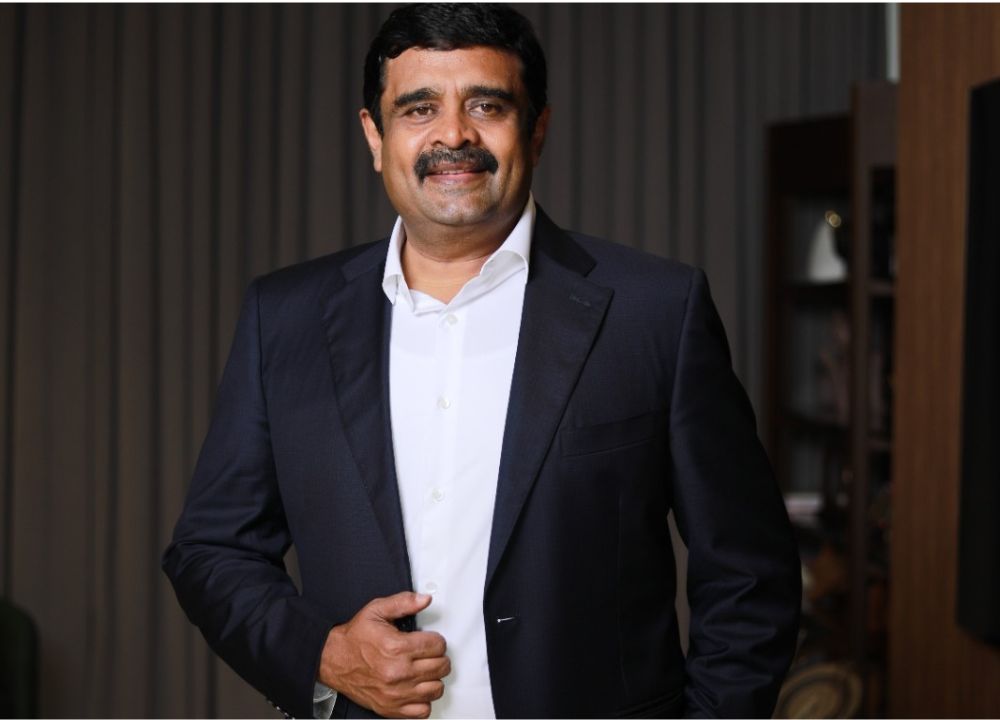
Speaking on the partnership, Sreedhar N, Senior Vice President and Chief Executive Officer – Asia Pacific and India Region at Saint-Gobain, said sustainable building solutions play a vital role in creating climate-resilient spaces that consume significantly less energy while improving indoor comfort, durability and environmental performance. He noted that Saint-Gobain’s solutions can help reduce energy consumption in buildings by up to 40%, lower embodied carbon and improve circularity while enhancing thermal comfort, indoor air quality, acoustics and fire safety.
He added that the collaboration with CEPT University will provide future architects and designers with a living laboratory to understand sustainable construction practices suited to India’s unique requirements and prepare the next generation of professionals to build environmentally responsible infrastructure.
Professor Barjor Mehta, President of CEPT University, said universities have an important responsibility in developing knowledge that addresses real-world challenges. He said the Tech Commons Centre will allow students and faculty to engage directly with building performance, sustainability and innovation while strengthening the connection between academic research and professional practice.
India’s rapidly growing construction sector is expected to play a critical role in achieving the country’s energy security and climate goals. As the nation moves towards its long-term development and net-zero ambitions, energy-efficient buildings are becoming increasingly important for reducing electricity consumption, lowering carbon emissions and improving the quality of indoor environments.
Saint-Gobain said its Made-in-India building solutions are designed to improve thermal efficiency, natural daylight, acoustics, indoor air quality and fire safety while reducing operational energy requirements. Such technologies can help create healthier homes, more productive workplaces, improved educational spaces and better healthcare facilities.
Headquartered in France, Saint-Gobain is a global leader in light and sustainable construction, operating in 81 countries with more than 162,000 employees. The company develops building materials and solutions for residential, commercial and infrastructure projects and remains committed to achieving net-zero carbon emissions by 2050 through continuous innovation and sustainable manufacturing practices.