Rolls-Royce Submarines has entered into a strategic partnership with INFINITY to develop large-scale prototypes of advanced defence components and expand the UK’s sovereign advanced manufacturing capabilities. The partnership will support the development of new manufacturing technologies and processes for strategically important components used across defence, aerospace, nuclear and fusion applications.
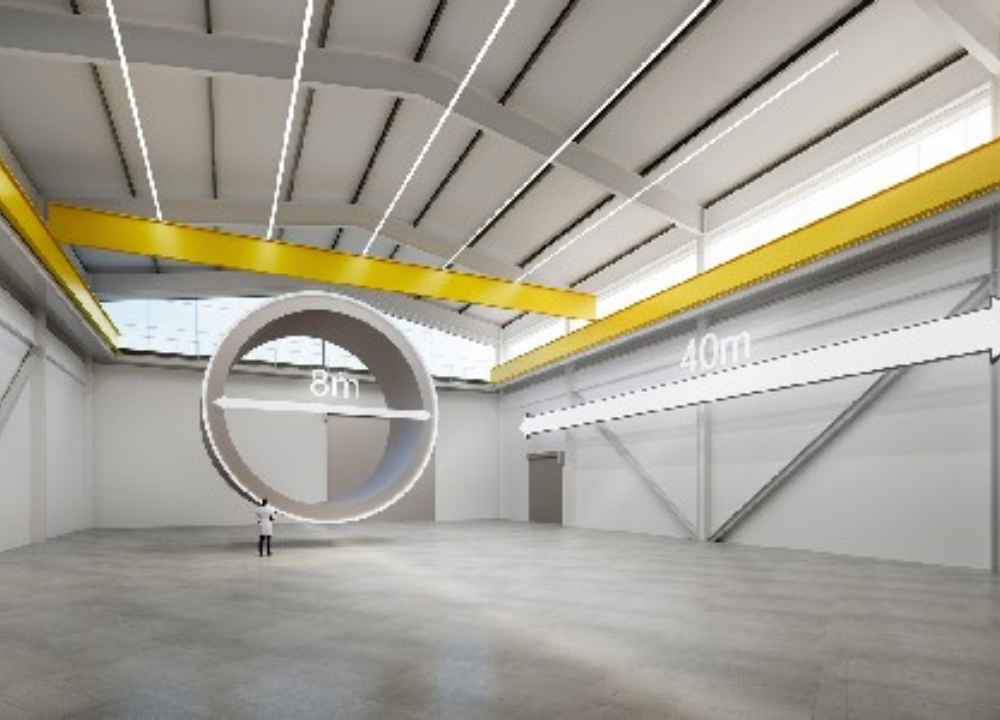
INFINITY is developing a 200-acre technology park in Derby that will bring together full-scale prototyping, digital engineering, testing and validation, skills development and supply chain collaboration. The site is intended to provide industrial partners, specialist suppliers, universities and skills providers with access to advanced facilities, helping them develop and scale manufacturing capabilities for highly regulated industries.
Under the partnership, Rolls-Royce Submarines will work with INFINITY to develop capabilities in hot isostatic pressing, power beam welding and additive manufacturing. These technologies are expected to shorten development cycles, improve manufacturing capacity and reduce material consumption and production costs. The project will also strengthen domestic industrial capacity supporting the UK’s submarine programmes.
The Rolls-Royce Nuclear Skills Academy already operates at the site. The additional facilities will enable the company to pursue advanced manufacturing development at INFINITY while maintaining its focus on production and delivery at its Raynesway facility in Derby.
Lee Warren, Engineering & Technology Director, Rolls-Royce Submarines, said, “As our business grows to meet the demand for our naval nuclear propulsion work, including increasing our manufacturing drumbeat and providing reactors to Australia as part of the AUKUS agreement, we need to ensure we are continually exploring new technologies.” He added that the technology park would allow the company to concentrate on delivery at Raynesway while continuing to develop advanced manufacturing techniques for the next generation of nuclear power.
Professor Gary Jones, Chief Executive of INFINITY, said, “A key objective of INFINITY is to support sovereign manufacture of advanced components and this agreement will help to achieve that by providing new capabilities for the UK Defence programme.” He said the partnership would help provide advanced manufacturing scale-up capabilities in support of UK defence requirements.
The wider project is expected to create an estimated 17,500 skilled jobs, contributing to the East Midlands economy and strengthening the region’s role in advanced engineering and manufacturing. UK Fusion Energy has also entered into a strategic partnership with INFINITY to help shape the site’s future capabilities around the requirements of STEP Fusion, the UK’s programme to develop a prototype fusion power plant at West Burton, Nottinghamshire.
Rolls-Royce Submarines employs more than 5,500 people and has designed, manufactured and supported the pressurised water reactors powering the Royal Navy’s nuclear submarine fleet for more than 65 years. The business supports the Astute and Dreadnought programmes, delivering reactor plants and associated components to the UK Ministry of Defence. It also provides operational and technical support to submarine reactor plant equipment from its Derby Operations Centre and at naval bases and shipyards across the UK.
Rolls-Royce provides power and service solutions across civil aerospace, defence and power systems. Its products and services support airlines, armed forces, navies, marine and industrial customers in more than 100 countries. The company has a presence in 47 countries and reported underlying revenue of £20.1 billion and underlying operating profit of £3.46 billion in 2025. Rolls-Royce Holdings plc is listed on the London Stock Exchange (LSE: RR.; ADR: RYCEY).
For more than 65 years, Rolls-Royce Submarines has designed, supplied and supported the nuclear propulsion plants powering all of the UK’s Royal Navy nuclear submarines. Its responsibilities include delivering nuclear steam-raising plants and elements of secondary propulsion systems to the Ministry of Defence, as well as managing these assets throughout their lifecycle.