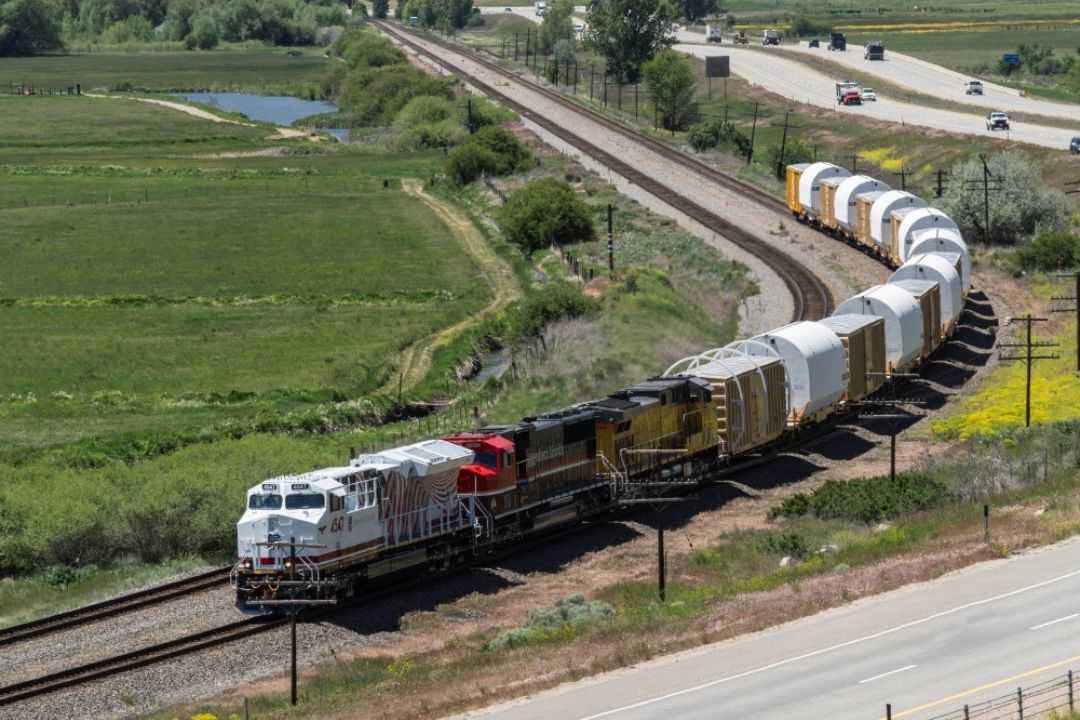
Northrop Grumman has completed the delivery of the final eight solid rocket booster segments for NASA’s Artemis III mission, marking a significant milestone in preparations for the agency’s next crewed lunar expedition. The hardware has been shipped to NASA’s Kennedy Space Center, where assembly activities are scheduled to begin in the coming months.
The newly delivered segments will join booster components that arrived earlier this year, becoming the first major hardware integrated onto the mobile launch platform. Together, the components will form the twin solid rocket boosters that provide the majority of the thrust required to launch NASA’s Space Launch System (SLS), the most powerful rocket developed for deep-space exploration.
Artemis III represents a pivotal step in NASA’s long-term lunar exploration strategy. The mission is designed to transport astronauts aboard the Orion spacecraft and support critical operations that will advance human exploration capabilities beyond low-Earth orbit. The mission will also contribute to future plans for establishing a sustained human presence on the Moon and laying the groundwork for eventual crewed missions to Mars.
Northrop Grumman’s solid rocket boosters have a long heritage of supporting complex spaceflight missions. For Artemis III, the boosters are expected to generate approximately 7.2 million pounds of thrust at liftoff, delivering the immense power needed to propel the Space Launch System through the initial phase of ascent.
The boosters are among the most extensively tested and proven propulsion systems in the space industry. Their performance and reliability continue to play a critical role in NASA’s efforts to expand human exploration capabilities and execute increasingly ambitious deep-space missions.
As Artemis launch activities accelerate, Northrop Grumman has also highlighted its ability to support future mission requirements through advanced manufacturing capabilities, specialized facilities and a highly skilled workforce. The company has invested in production capacity and engineering expertise to support NASA’s plans for an increased launch cadence under the Artemis program.
Beyond lunar exploration, these capabilities contribute to a broader portfolio supporting national security missions, scientific research and commercial space initiatives. The company’s propulsion technologies remain an essential component of America’s space infrastructure and future exploration ambitions.
The delivery of the final Artemis III booster segments represents another important step toward humanity’s return to the lunar surface. As assembly progresses at Kennedy Space Center, the mission moves closer to becoming a reality, advancing scientific discovery, technological innovation and international cooperation in space exploration.