

MC² Foundation, India’s energy innovation platform operating under the Ministry of Petroleum and Natural Gas (MoPNG), has launched the Grand Butanol Challenge, a national innovation programme aimed at accelerating the development of indigenous technologies for the production of bio-Iso-Butanol and n-Butanol. Introduced in Bengaluru on July 17, the initiative seeks scalable solutions at Technology Readiness Levels (TRL) 4 to 7, supporting the country’s efforts to strengthen clean energy technologies and reduce dependence on imported fuels.
The Grand Butanol Challenge has been designed to identify promising technologies that can be developed into commercially viable solutions through milestone-based funding, technical guidance and industry support. The programme focuses on bridging the gap between laboratory research and commercial deployment by providing innovators with financial assistance and access to industry partners.
MC² Foundation has been established to promote deep-tech innovation in the energy sector and operates under the aegis of the Ministry of Petroleum and Natural Gas. The foundation is jointly promoted by seven leading central public sector enterprises—HPCL, ONGC, Indian Oil Corporation Limited (IOCL), BPCL, GAIL, Oil India Limited and Petronet LNG Limited. Through grant funding, pilot-scale opportunities and commercialisation support, the platform aims to accelerate the adoption of advanced energy technologies across India.
The challenge is being implemented in partnership with the Centre for Cellular and Molecular Platforms (C-CAMP), which will serve as the implementation and mentorship partner. The collaboration will leverage India’s biotechnology, life sciences and synthetic biology ecosystem to identify and support innovators working on next-generation biofuel technologies.
The programme offers a prize pool of up to ₹5 crore and grant funding of up to ₹7.5 crore. Applications are invited for solutions under three broad categories: fermentation-based production technologies, catalytic production methods and other innovative approaches for manufacturing n-Butanol and Iso-Butanol. The initiative specifically targets technologies that have reached intermediate stages of development and require support for scaling and commercial validation.
Priority areas include microbial production using non-food feedstocks, energy-efficient separation technologies, bio-derived cetane improvers and portable quality-control hardware for field applications. In addition to funding, selected innovators will receive mentorship, technical guidance and opportunities to work with MC² Foundation’s public sector partners for pilot projects, validation and market deployment.
The programme is being led by the Ministry of Petroleum and Natural Gas, with CHT serving as the technology partner, while the Department of Science and Technology (DST) and the Department of Biotechnology (DBT) are knowledge partners. The application process will remain open until August 15, 2026.
Speaking at the launch, Sandeep Maheshwari, Director and Chief Executive Officer of MC² Foundation, said India has the scientific talent, research infrastructure and industrial base required to become a global leader in energy innovation. He said the foundation has been created to connect startups, research institutions, academia and industry through a collaborative platform that supports indigenous technology development, enhances energy security and promotes a cleaner energy future.
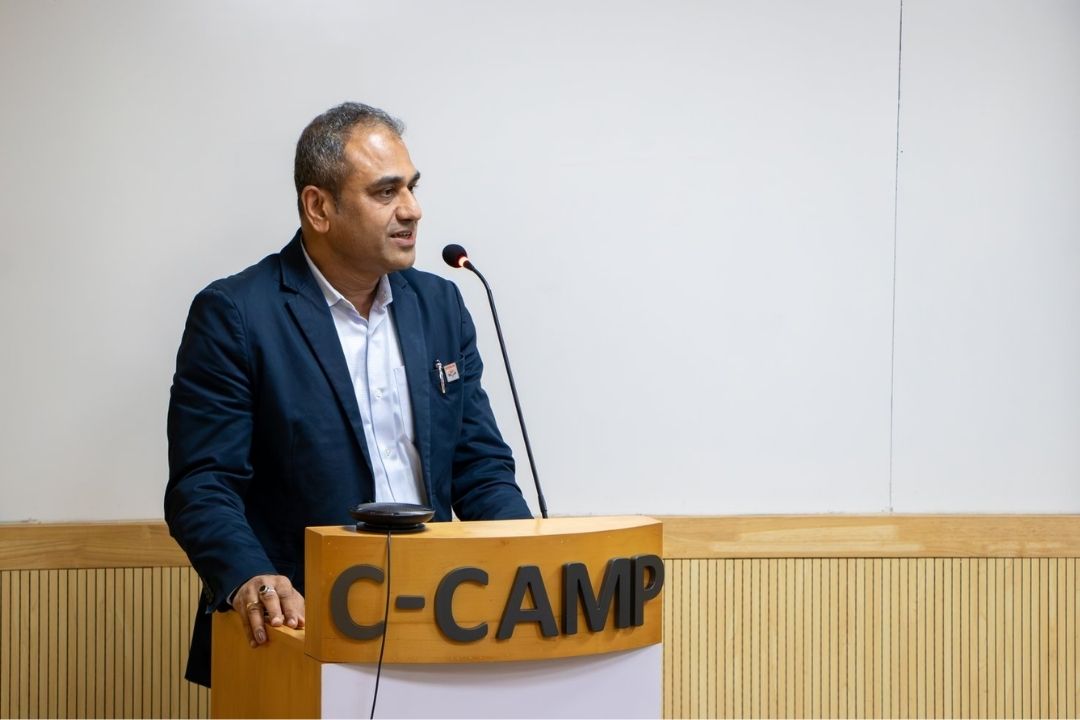
Addressing the gathering, Dr Taslimarif Saiyed, Director-CEO of C-CAMP, said recent advances in microbial engineering and next-generation fermentation technologies have created favourable conditions for accelerating biofuel innovation. Dr Madhukar Onkarnath Garg delivered the keynote address, highlighting the evolution of biofuel technologies, the remaining technical and commercial challenges, and the opportunities for advancing sustainable fuel production in India through research-led innovation and industry collaboration.








