A strong call for a shift from unstructured urban expansion to thoughtfully planned, sustainable, and inclusive development echoed across the fifth edition of the Saifee Burhani Expo (Construction 360), held in Mumbai. The three-day exhibition, inaugurated by Rahul Narwekar, Speaker of the Maharashtra Vidhan Sabha, brought together leaders from construction, real estate, infrastructure, and allied industries to deliberate on innovation, collaboration, and India’s development vision for 2047. Key panel discussions such as “Building India’s Sustainable Future: Infrastructure Roadmap to 2047” and “Form, Function & Finish: The Material Palette of Future-Ready Buildings” underscored the urgency of responsible urban growth.
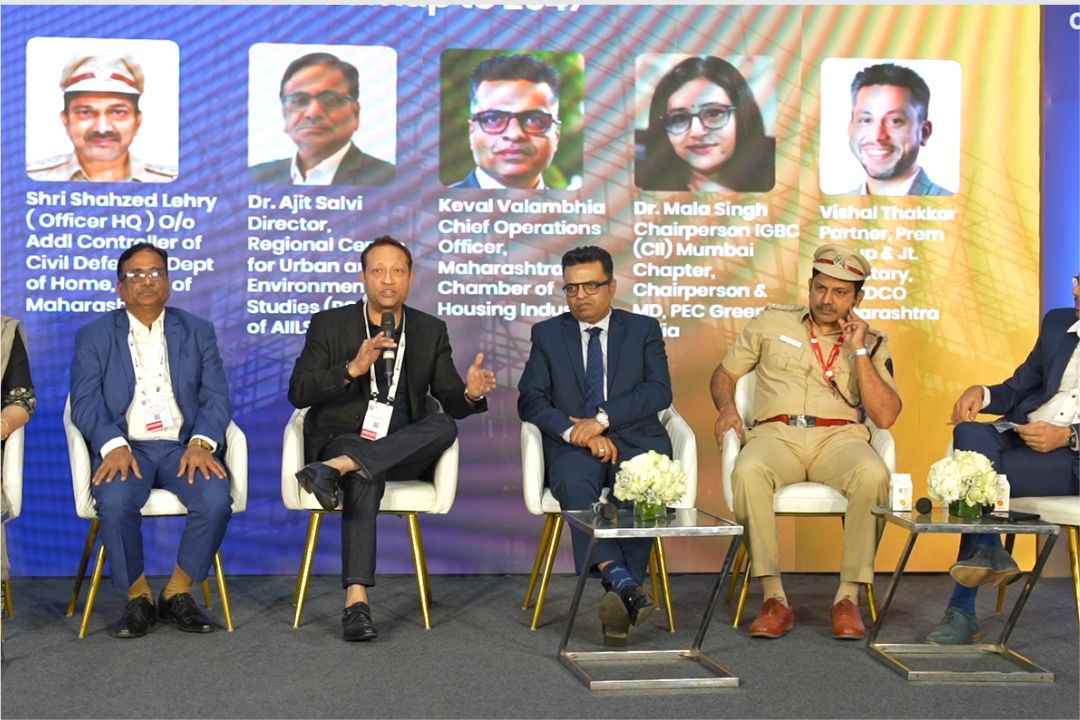
Highlighting the imbalance in India’s urban development, Keval Valambhia, COO, Maharashtra Chamber of Housing Industry (MCHI), stressed that sustainability must extend beyond green buildings to include green cities. He pointed out that metro-centric infrastructure investment has placed immense pressure on cities like Mumbai, which sees hundreds of new residents daily, while emerging cities with strong economic potential remain underserved. According to him, decentralised development, regional planning, and horizontal expansion models such as Mumbai 3 are essential to balance growth with environmental responsibility.
Shifting the focus from intent to implementation, Vishal Thakkar, Partner, Prem Group and Joint Secretary, NAREDCO Maharashtra, noted that despite multiple sustainability frameworks, on-ground adoption remains low. He highlighted gaps in solar energy usage and wastewater reuse, emphasising the need for coordinated efforts among government, developers, and communities. True sustainability, he said, must integrate environmental, social, and safety considerations through collective action rather than isolated initiatives.
Addressing the importance of city identity, Jimmy Mistry, Chairman, Della Group, called for development controls that go beyond floor space norms to prioritise architecture, heritage, and urban character. He cited the success of planned precincts in Mumbai as evidence that design-led development enhances long-term liveability. Reinforcing the role of innovation, Sachin Gupte, Head – Technical, Green Buildings, Pidilite, highlighted passive building solutions and insulation as critical tools to reduce energy consumption and environmental impact.
Safety and sanitation emerged as equally vital pillars of sustainable cities. Shri Shahzed Lehry, Civil Defence HQ Officer, Government of Maharashtra, emphasised that safety must become a cultural value rather than a compliance exercise. Dr Ajit Salvi, Director, RCUES, AIILSG, highlighted the importance of integrated sanitation infrastructure, noting that water, wastewater, and solid waste management must be planned together to ensure urban resilience. Dr Mala Singh, Chairperson, IGBC Mumbai Chapter, stressed the urgency of climate-responsive design and deep decarbonisation to address biodiversity loss and climate risks.
The expo also showcased industry expansion and benchmark projects. Leaders from Kansai Nerolac, Saifee Burhani Upliftment Trust, and the Dawoodi Bohra community shared insights into sustainable redevelopment, technological adoption, and collaboration-led growth. In his inaugural address, Shri Rahul Narwekar reaffirmed the Maharashtra government’s commitment to supporting the construction and real estate sector through policies that encourage innovation, investment, and sustainable development.
With participation from over 120 exhibitors from India and abroad, Construction 360 served as a vital platform for shaping the future of India’s urban and infrastructure landscape, reinforcing the message that cities must be built not just for scale, but for identity, resilience, and quality of life.