

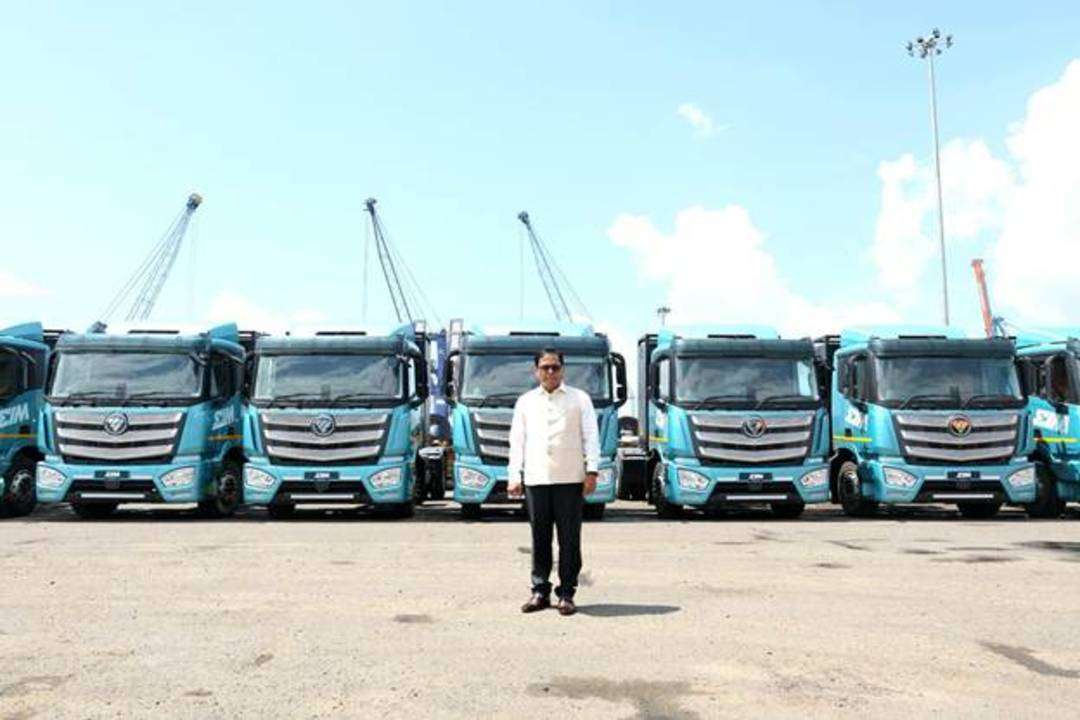
The Union Minister of Ports, Shipping & Waterways, Sarbananda Sonowal, today inaugurated India’s first fleet of electric heavy-duty trucks with swappable batteries at the Nhava Sheva Distribution Terminal, Jawaharlal Nehru Port Authority (JNPA). With this, JNPA becomes the first port in the country to operate the largest electric truck fleet, advancing its commitment to sustainable logistics.
A dedicated battery-swapping station for heavy vehicles was also commissioned during the event. JNPA has set an ambitious target to convert 90% of its internal trucking fleet—around 600 vehicles—by December 2026. On this occasion, JNPA also signed a Memorandum of Understanding with the Isaac Centre for Public Policy (ICPP), Ashoka University, to develop a reference framework for tariff determination, benchmarking both costs and performance across cargo categories.
Highlighting the significance of the initiative, Shri Sonowal said “By electrifying its logistics fleet, JNPA is setting a new benchmark for sustainability and innovation in the Indian maritime sector. This step demonstrates our ports’ readiness to embrace clean energy, reduce emissions, and enhance efficiency. Across the country, we are accelerating adoption of renewable energy, LNG and hydrogen infrastructure, and electrified cargo-handling systems under the leadership of Prime Minister Shri Narendra Modi ji. Together, these efforts ensure that India’s maritime sector not only matches but also leads global sustainability standards.”
As part of today’s rollout, 50 EV trucks were inducted into operations, with the fleet expected to expand to 80 by the end of the year. This milestone further strengthens JNPA’s roadmap for decarbonisation and energy transition in port-led logistics.
Chairperson of JNPA and CMD of VPLL Unmesh Sharad Wagh, remarked “The induction of this EV truck fleet represents a transformative leap for JNPA. As India’s largest container port, we hold a responsibility to drive innovation that balances economic growth with environmental stewardship. These vehicles are more than just an operational upgrade—they embody our vision for a greener, more resilient future in maritime logistics.”
The initiative directly supports India’s commitment to achieving net-zero emissions by 2070 and advancing national clean mobility objectives. By showcasing commercial-scale electric vehicle (EV) deployment in high-volume logistics, it brings the National Electric Mobility Mission Plan to life, proving that large-scale electrification is both practical and impactful.
Beyond immediate benefits, the project helps cut carbon emissions, particulate pollution, and noise levels in port operations, creating a cleaner and quieter environment. It also sets a replicable model for other ports across India, offering a framework that can accelerate the adoption of EV-based logistics nationwide.
The initiative also complements PM Gati Shakti, the National Logistics Policy (NLP), and the Maritime India Vision 2030, strengthening JNPA’s role as a frontrunner in integrating sustainability with operational excellence. Handling nearly half of India’s container traffic, JNPA’s adoption of EV trucks sets a powerful precedent for the future of green logistics across the nation.









